
Grace and Strength: Practicing the Chrysanthemum
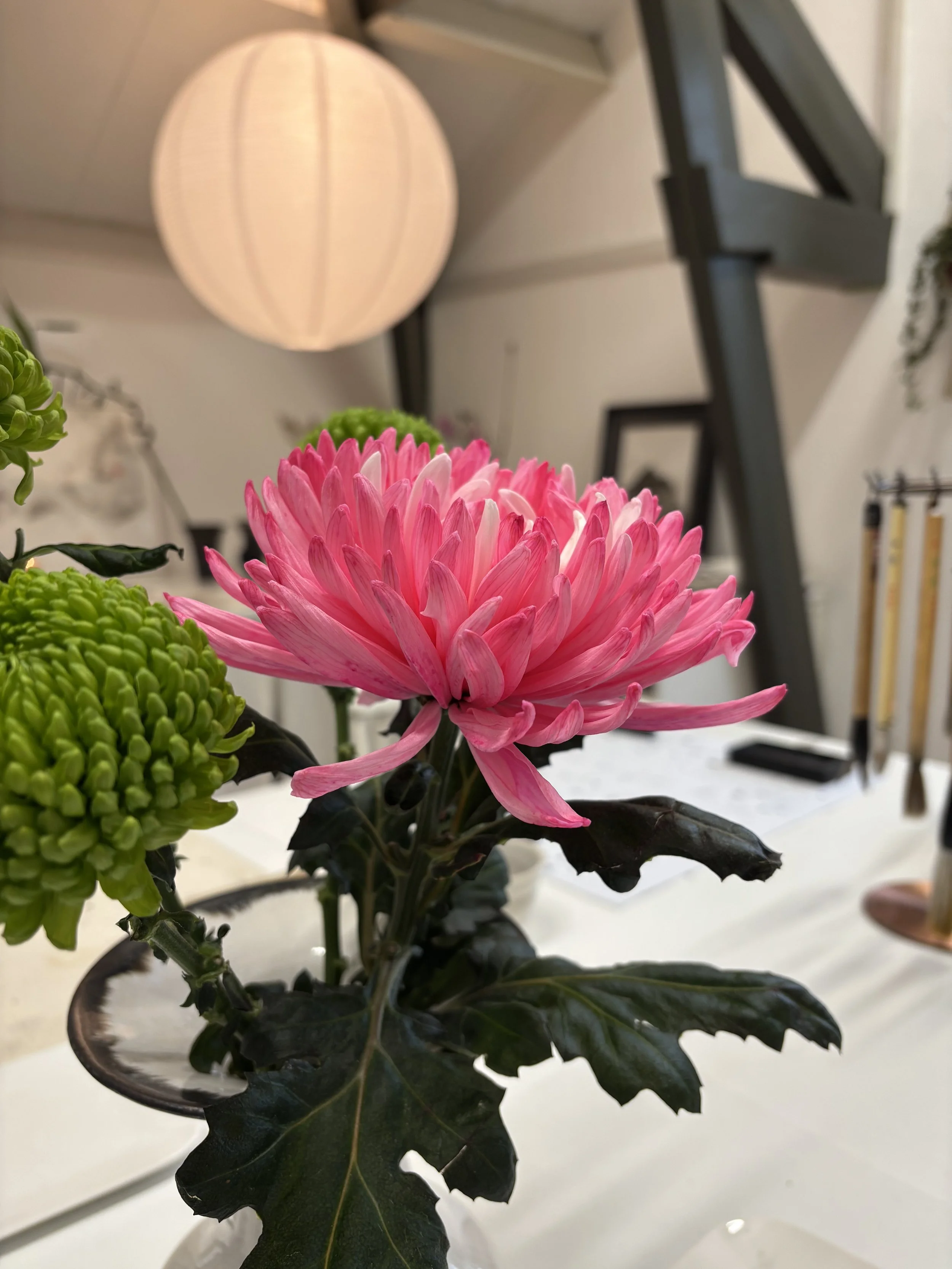
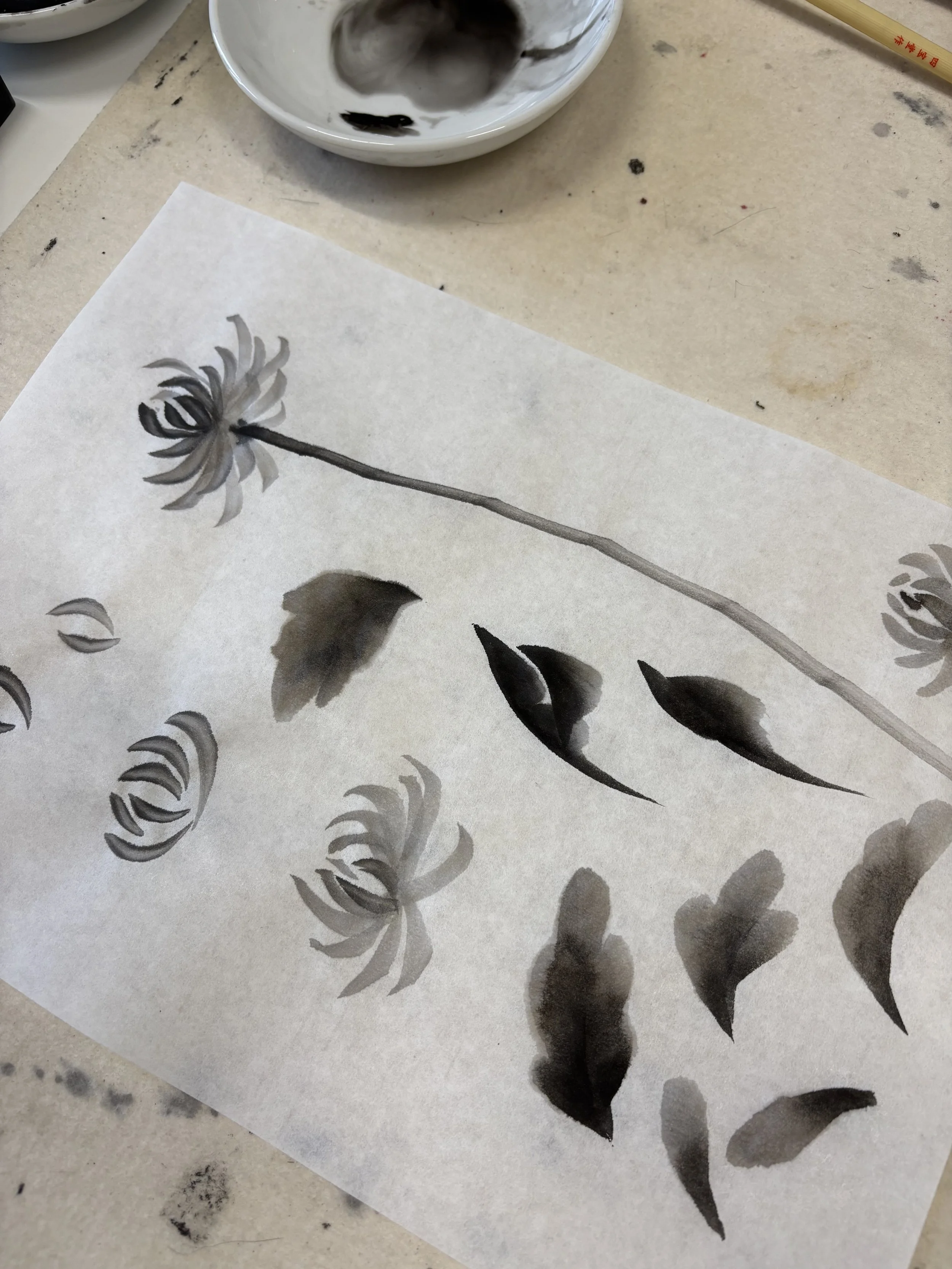
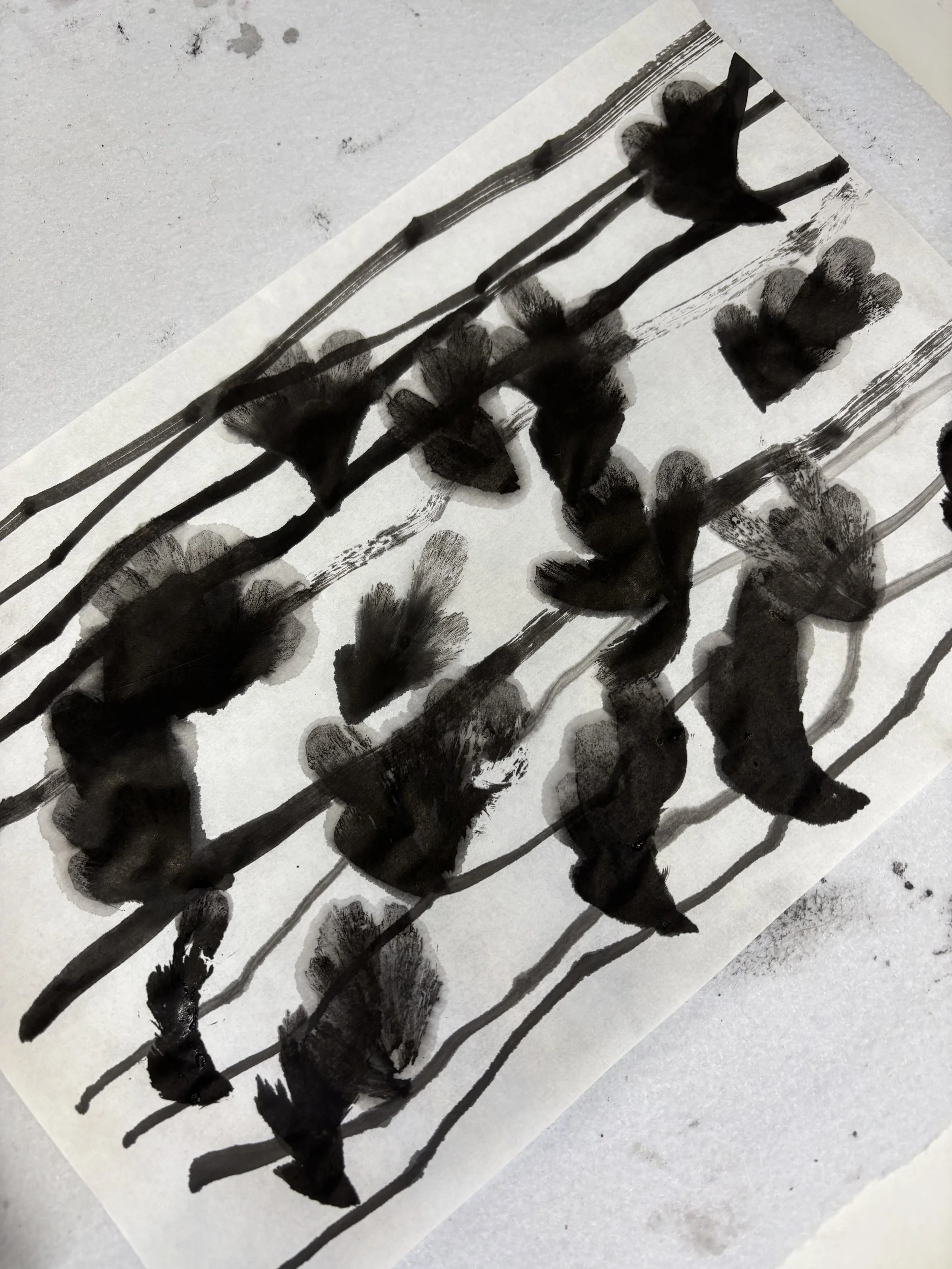
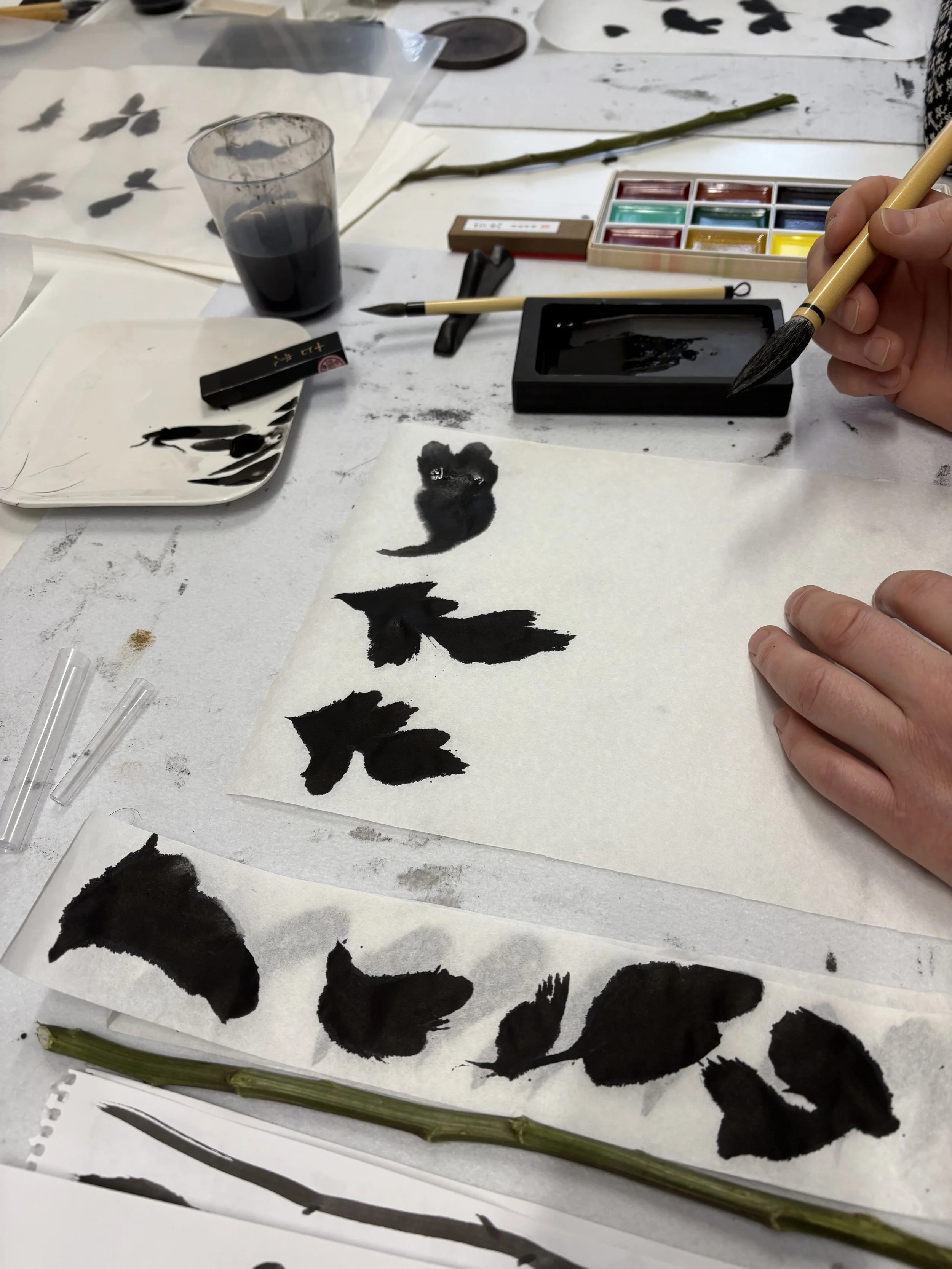
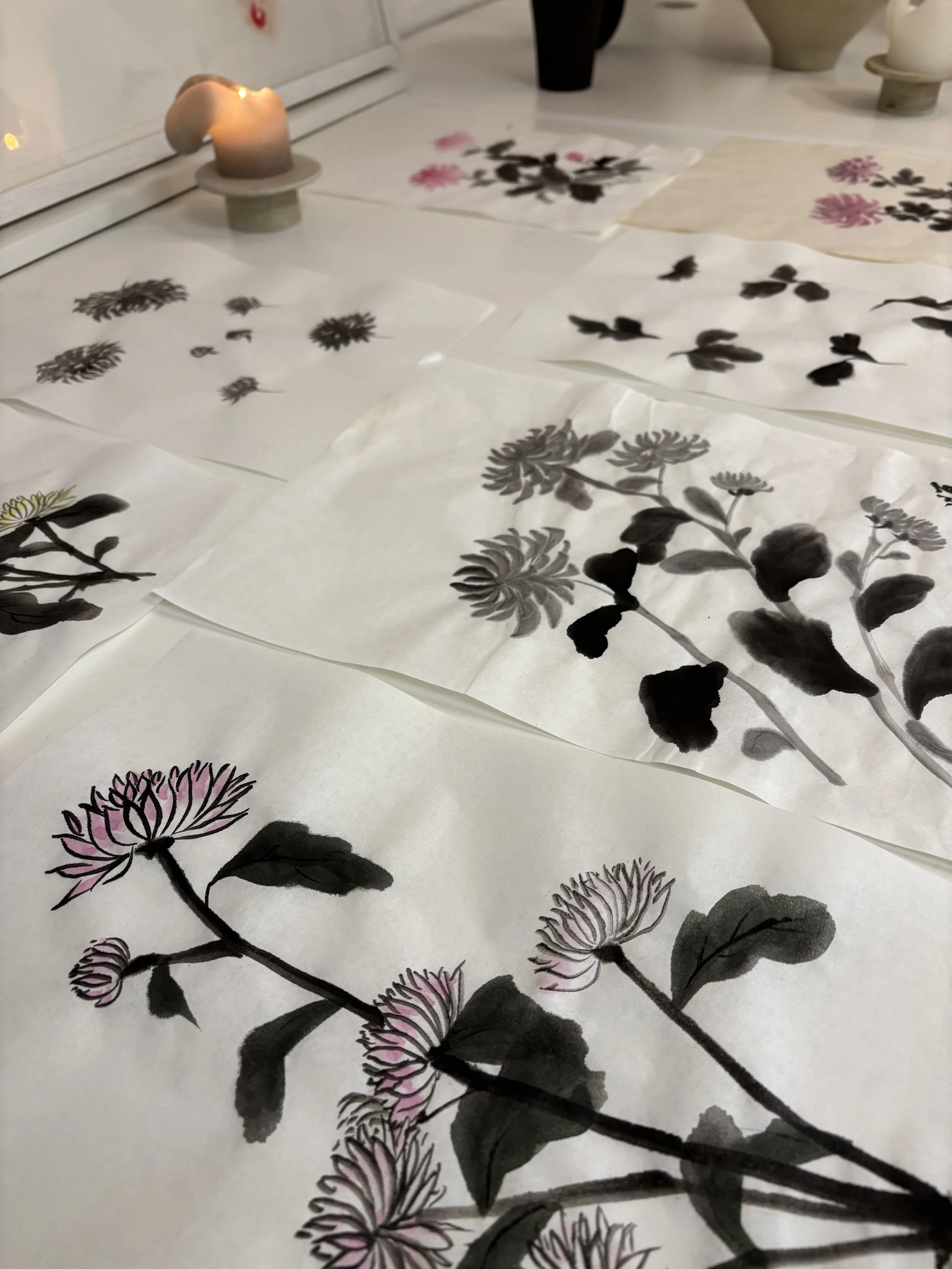
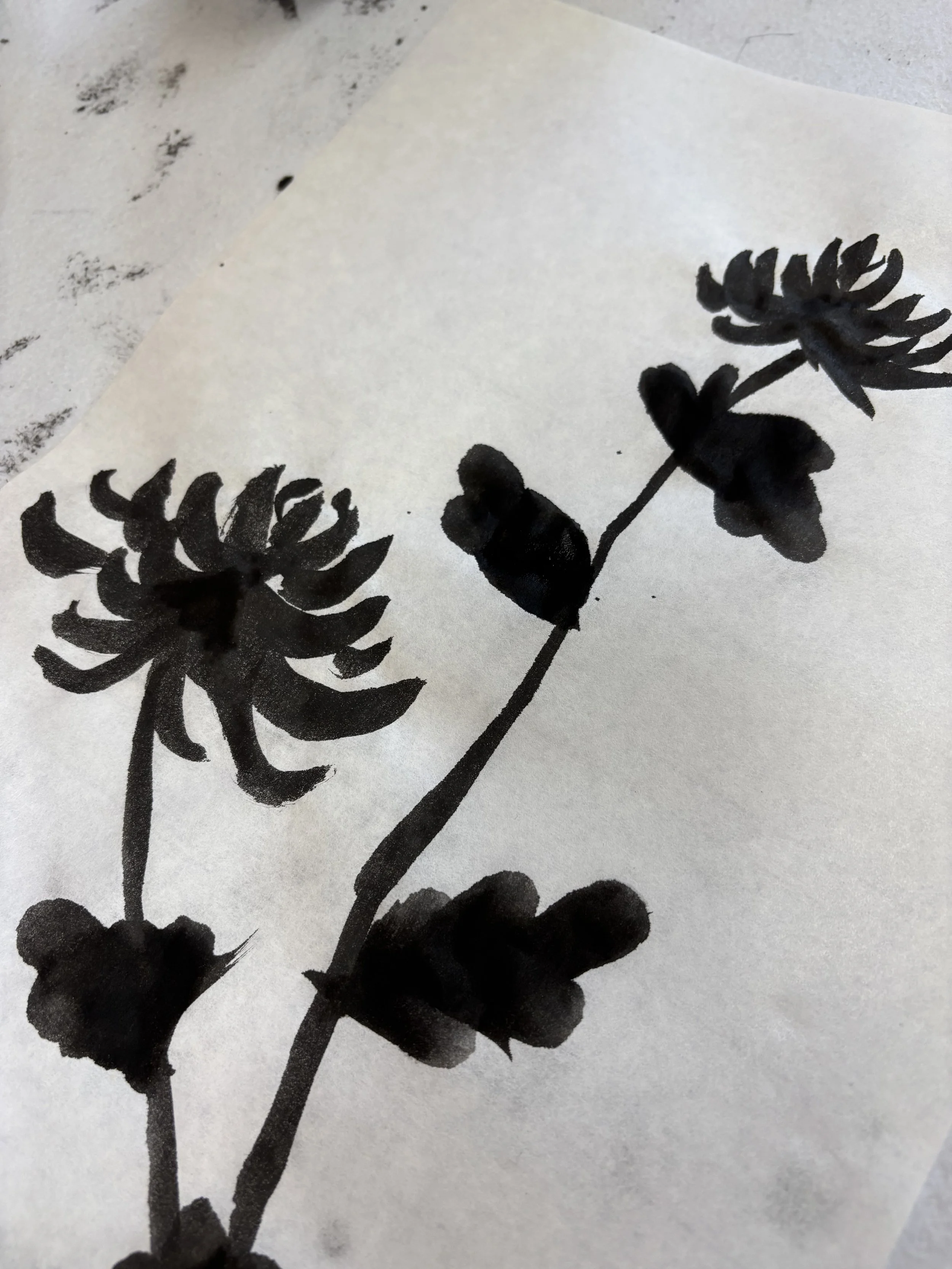
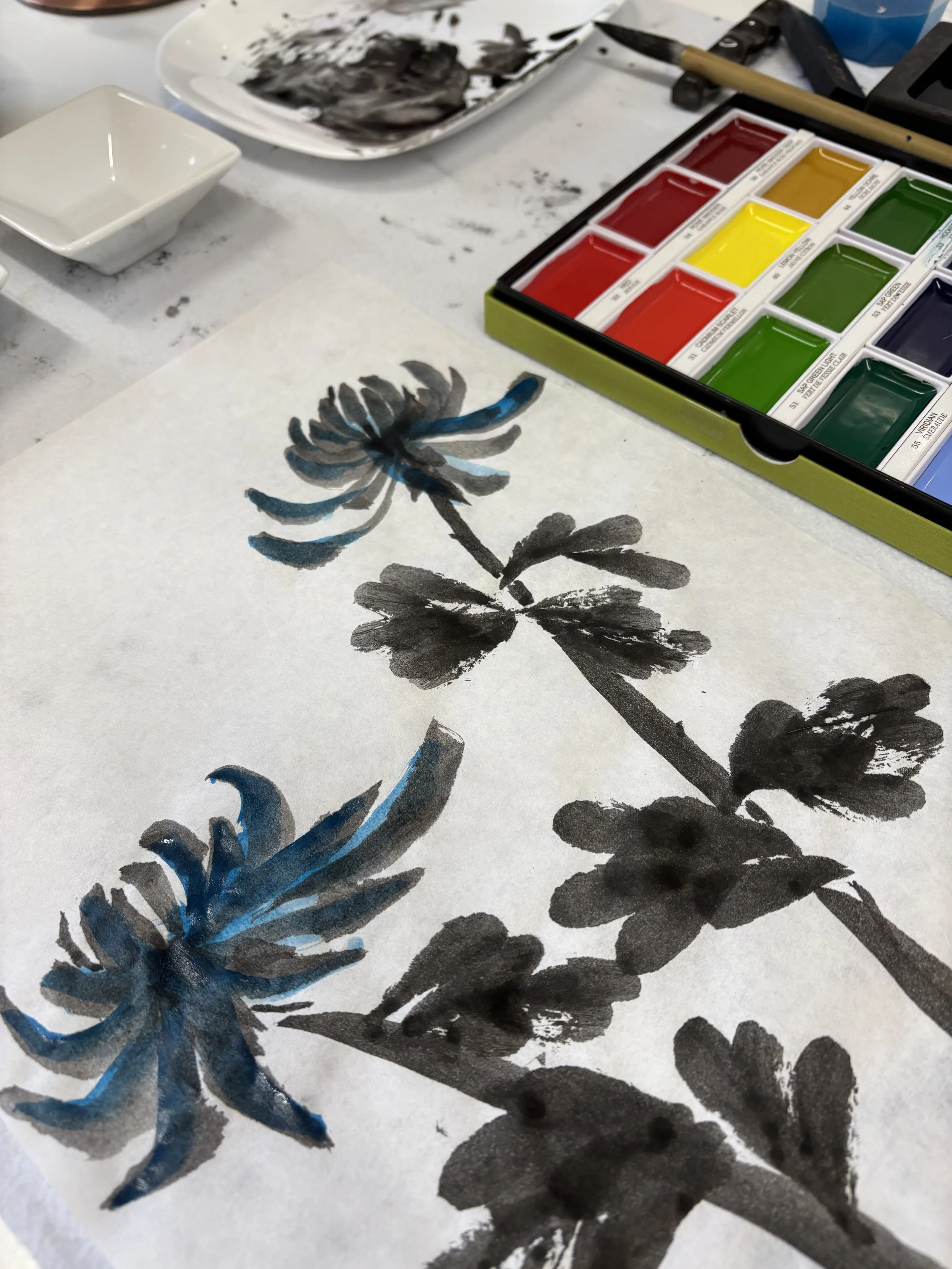
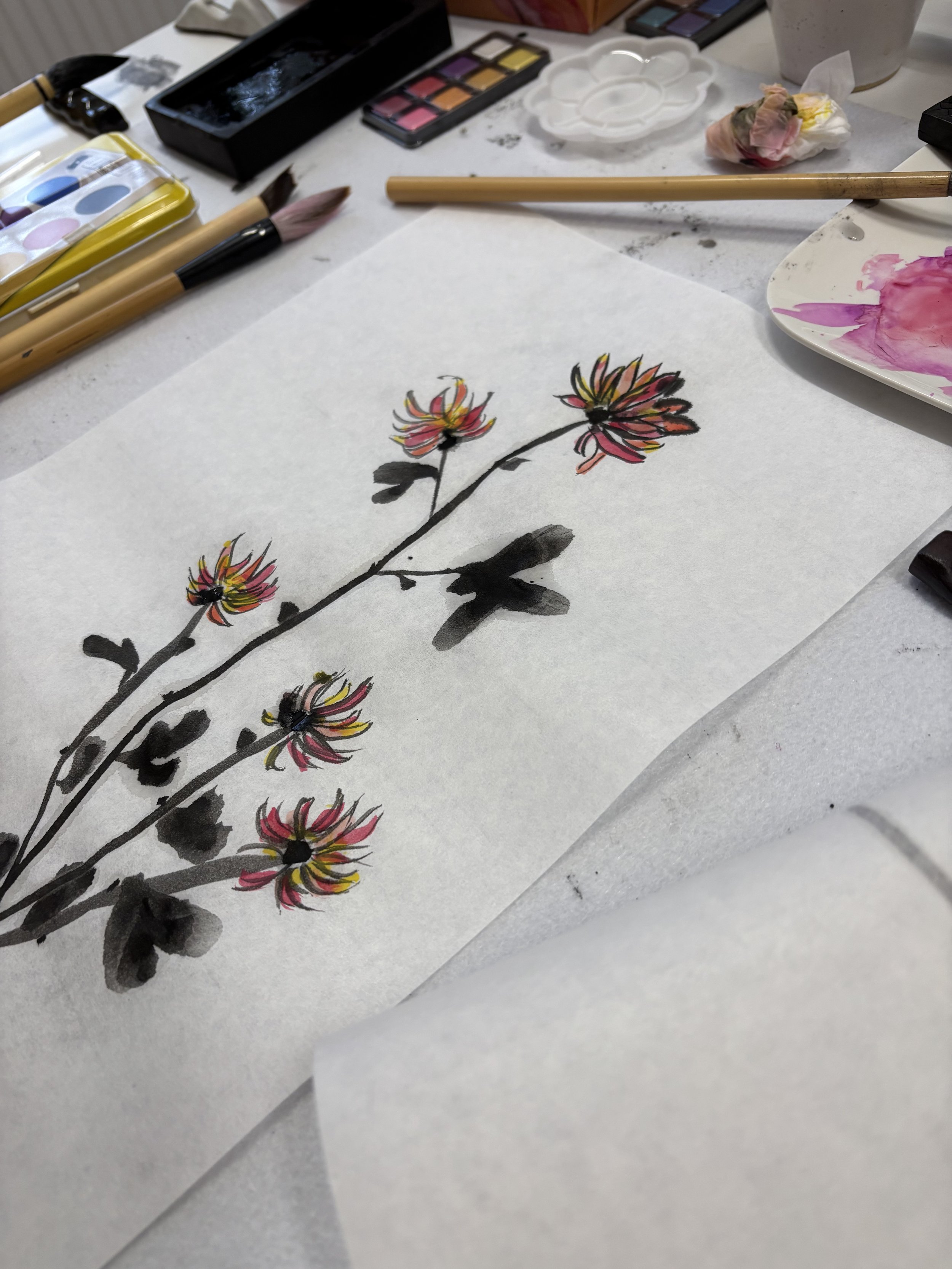
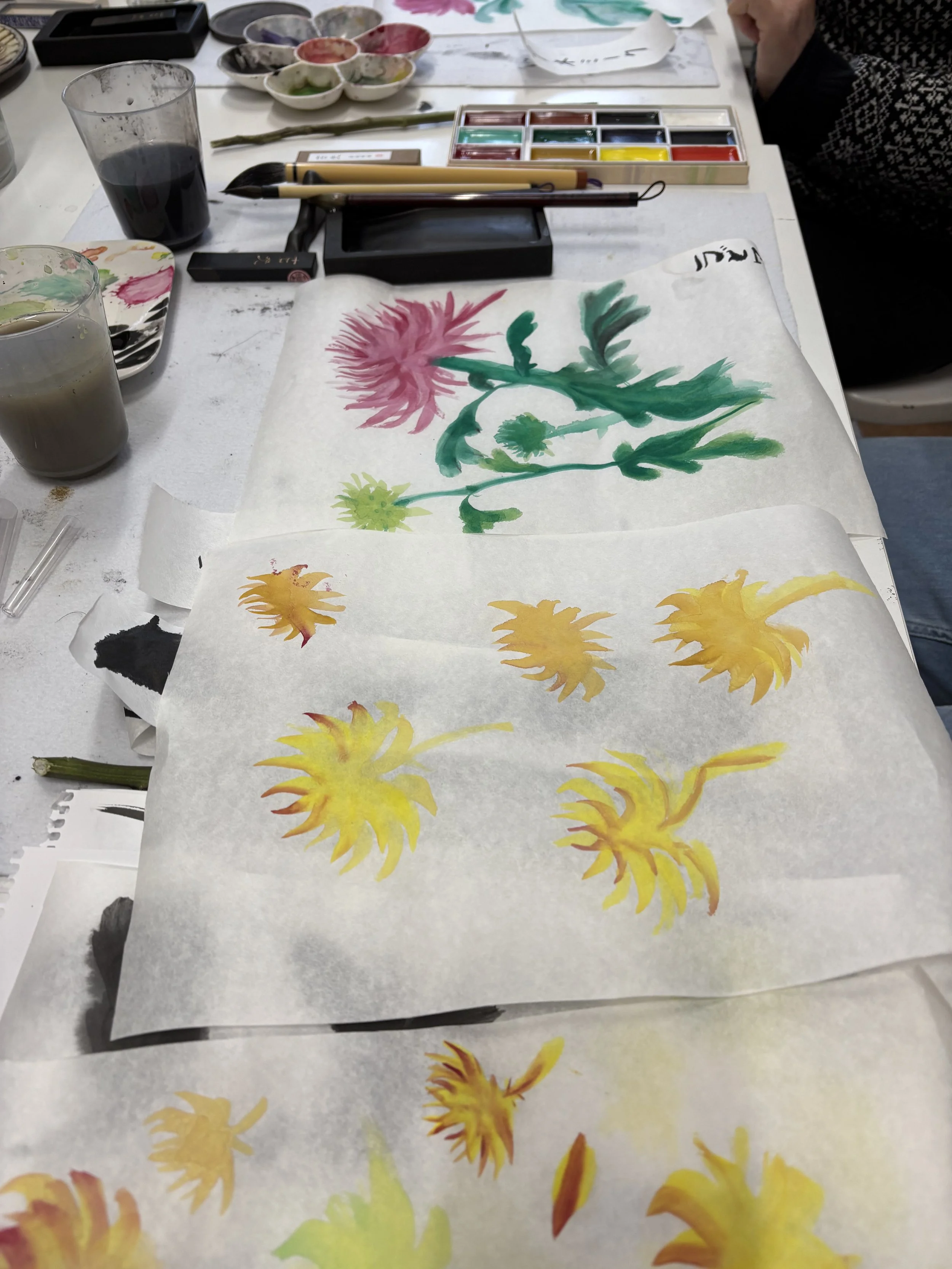
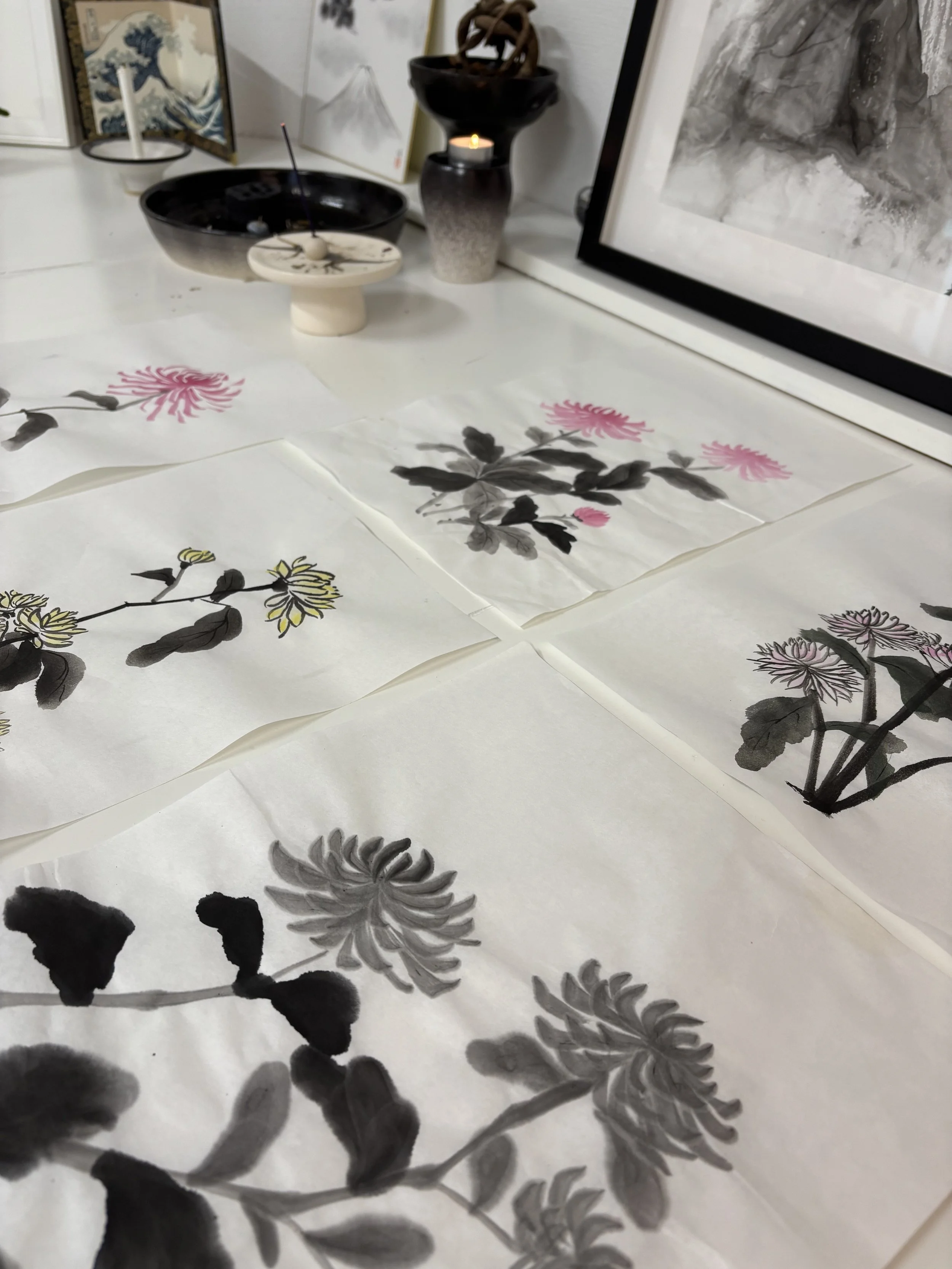
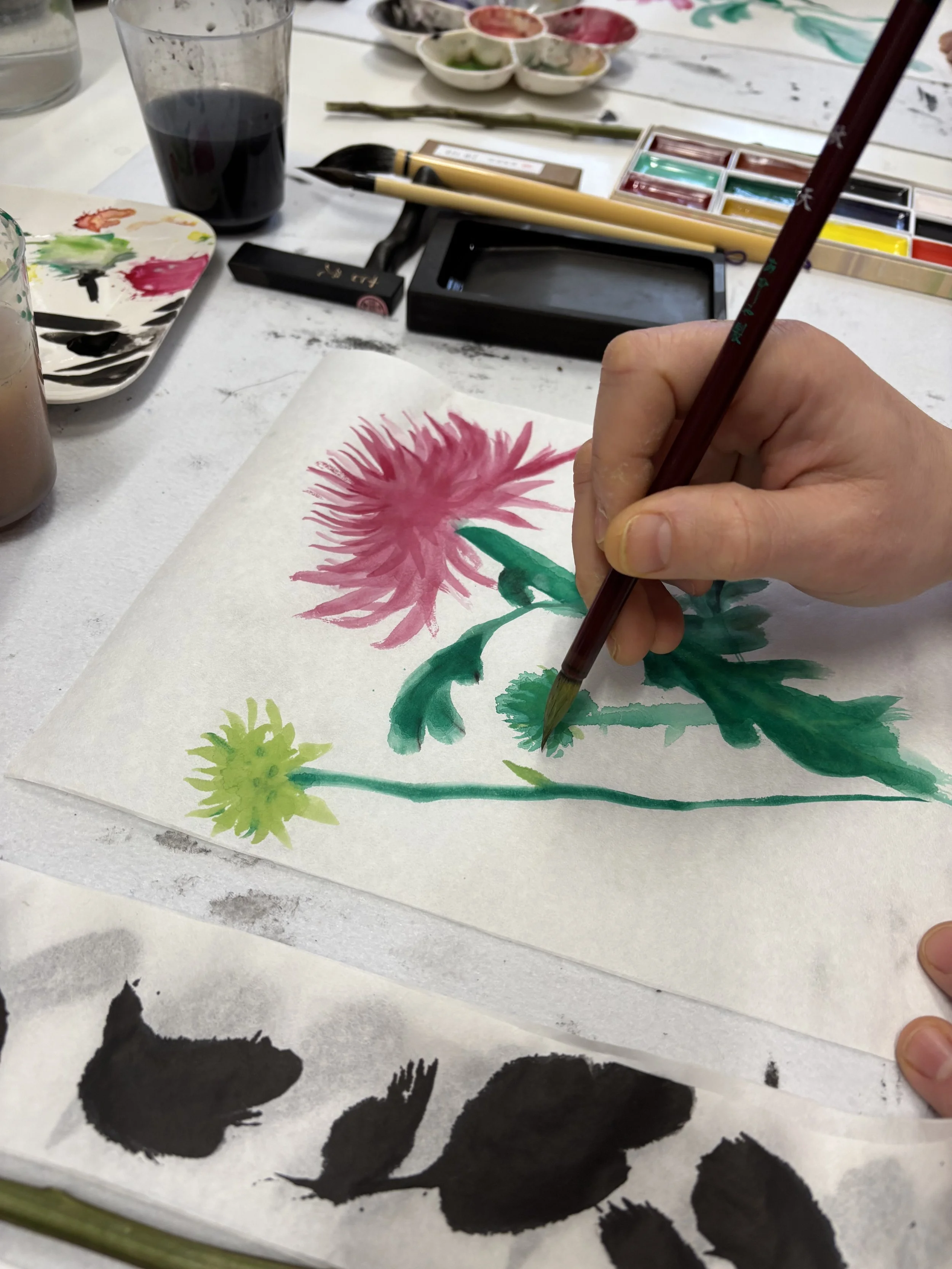
In this lesson, we practiced painting the chrysanthemum, one of the subjects known as the Four Noble Ones. Representing autumn, the chrysanthemum blooms with quiet dignity even in the cold of late autumn, when many other plants have withered. Because of this, it has long been regarded as a symbol of nobility and longevity.
As I have written before, painting the Four Noble Ones — bamboo, orchid, chrysanthemum, and plum — allows students to learn the fundamentals of ink painting. Through repeated practice, one develops brush control and gradually becomes able to approach a wide range of subjects. In this sense, these motifs serve as both essential foundations for beginners and profound themes to which artists can return throughout their lives. Each time you paint them, new discoveries emerge.
While studying various compositions myself, I came to an important realization. Sumi-e: Japanese ink painting manuals sometimes explain that bamboo leaves should be painted with the forms of the kanji characters (Chinese characters which Japanese is also using) for kokoro (heart), hito (person), and kai in mind, while the trunk of a plum tree may be drawn by imagining the shape of the character for woman. But how should we convey this to those who have not been exposed to calligraphy?
Ink painting originally developed from brush movements cultivated through calligraphy. For this reason, understanding the principles of calligraphy can be a great support when learning ink painting. In my lessons, I therefore introduce aspects of calligraphic thinking and brush movement whenever helpful.
The chrysanthemum is a fascinating subject to paint: while the flower itself is elegant and delicate, the stems and leaves are strong and resilient. Everyone approached the challenge with sincerity, even when it proved difficult. I hope that painting the chrysanthemum has deepened their enjoyment of exploring ink painting.
Note on terminology
The traditional translation of 四君子 is "The Four Gentlemen," a term long used in the history of East Asian ink painting. Here, however, I have chosen to use "The Four Noble Ones." The word 君子 refers not only to men, but to a person of integrity, cultivation, and moral character. By saying "Noble Ones," I hope to reflect a more inclusive and universal spirit — one that speaks to the qualities these plants embody rather than to gender.
優雅さと強さ — 菊を描く
今回のレッスンでは、四君子のひとつである菊を描きました。菊は秋を代表する花であり、他の植物が枯れていく晩秋の寒さの中でも、静かな気高さを湛えて咲き誇ります。その姿から、古くより「高潔」や「長寿」の象徴とされてきました。
これまでにも書いてきたように、竹・蘭・菊・梅からなる「四君子*(ここでは “Four Noble Ones” と表現しています)」を描くことは、水墨画の基本を学ぶことにつながります。繰り返し練習することで筆遣いが自然と身につき、やがて多様な題材へと向き合えるようになります。これらのモチーフは初心者にとっての基礎であると同時に、経験を重ねた後でも初心へと立ち返らせてくれる奥深い題材です。描くたびに、新たな発見があります。
私自身もさまざまな構図を学ぶ中で、ひとつの気づきがありました。日本の水墨画の教本では、たとえば竹の葉は漢字の「心」「人」「介」を意識して描き、梅の幹は「女」の形を思い浮かべながら描くように説明されることがあります。では、書道に親しんだ経験のない方には、どのように伝えればよいのでしょうか。
もともと水墨画は、書道によって培われた筆の動きを基盤として発展してきました。そのため、書の要素を理解することは、水墨画を学ぶうえで大きな助けとなります。私のレッスンでは、必要に応じて書道の考え方や筆の運びについてもお伝えしています。
菊は、花の優雅さと繊細さに対して、茎や葉には力強さがあり、描いていて非常に興味深い題材です。皆さん少し苦戦しながらも真摯に向き合っていました。菊を描くことで、水墨画に挑戦する楽しさがさらに広がっていれば嬉しく思います。
*表記について
四君子は英語では伝統的に The Four Gentlemen と訳されてきました。ここでは The Four Noble Ones という表現を用いています。「君子」という言葉は本来、男性に限らず、徳や品格、教養を備えた理想的人格を意味します。"Noble Ones" という言葉には、これらの植物が体現する精神性を、より普遍的で包摂的に伝えたいという思いを込めています。