
Embracing the Four Noble Ones: Bamboo and the Art of Practice
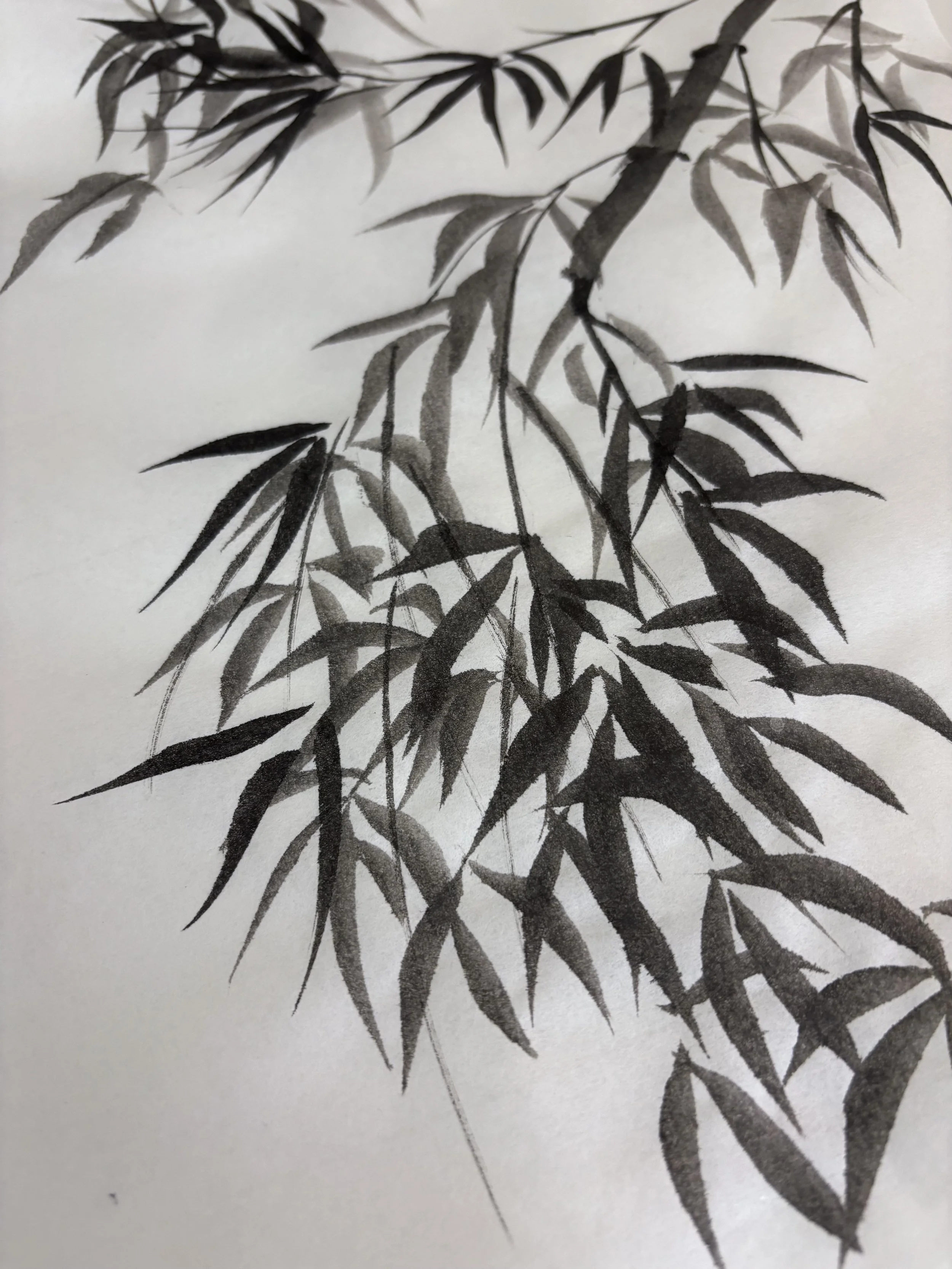
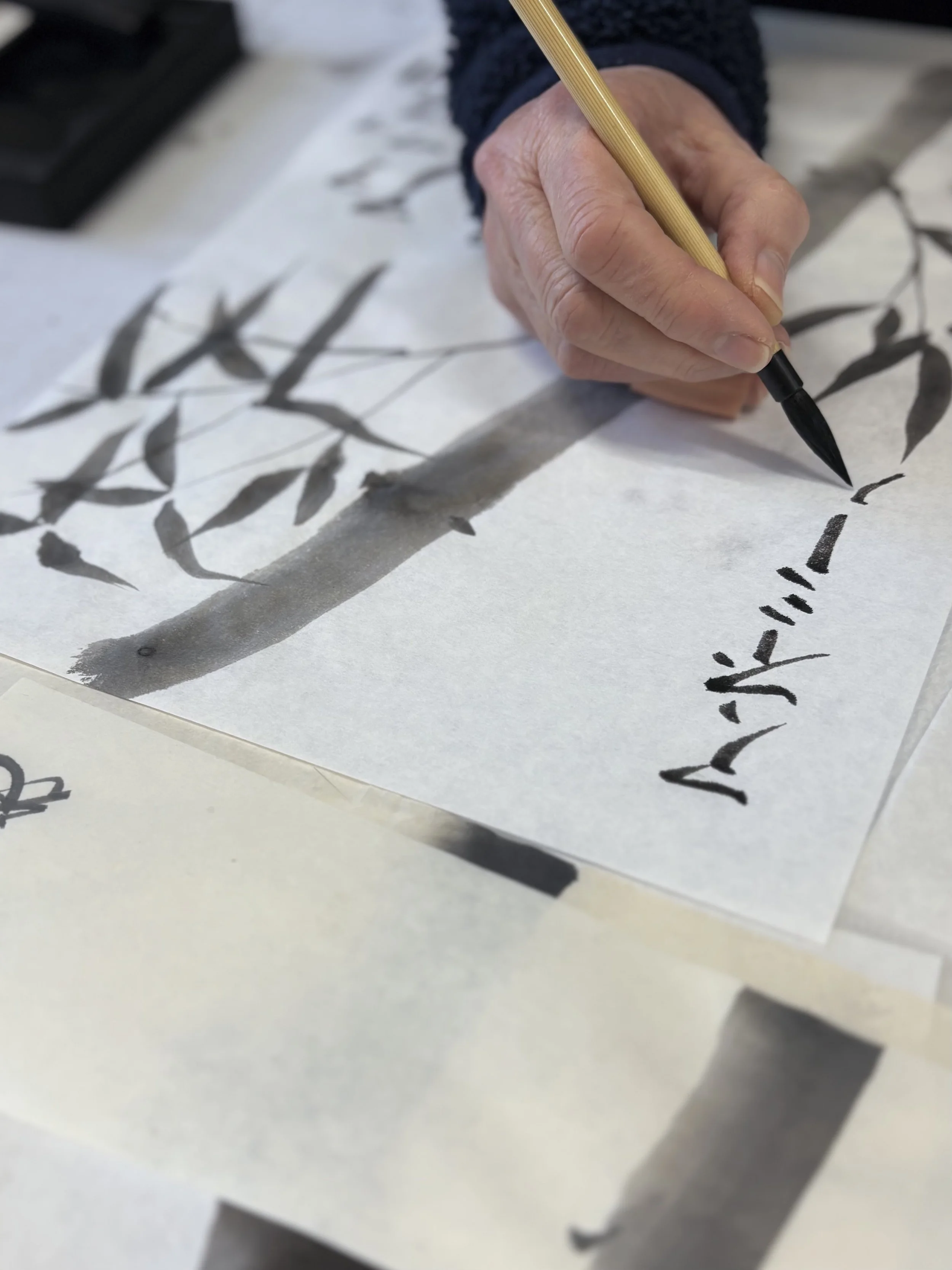
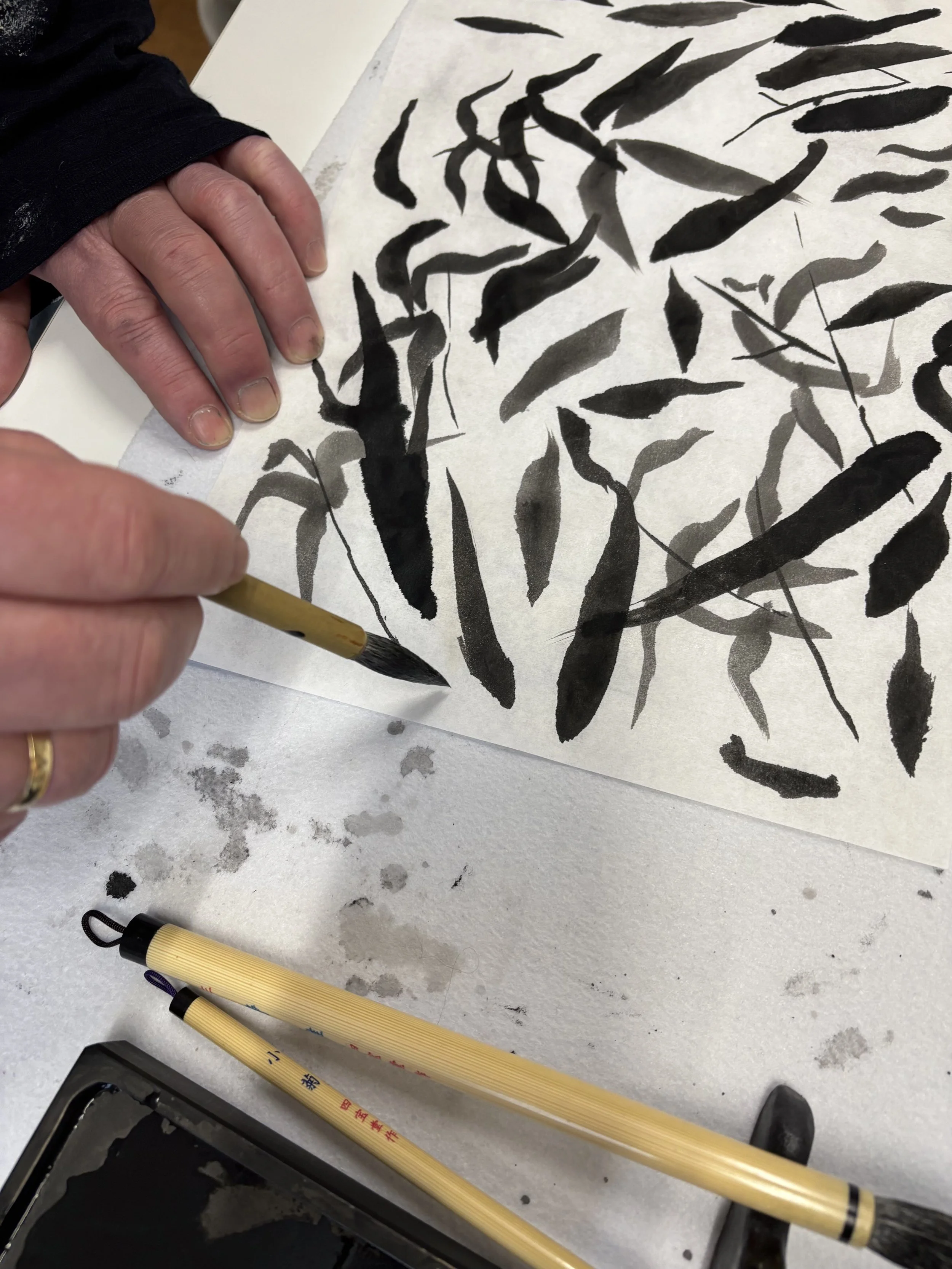
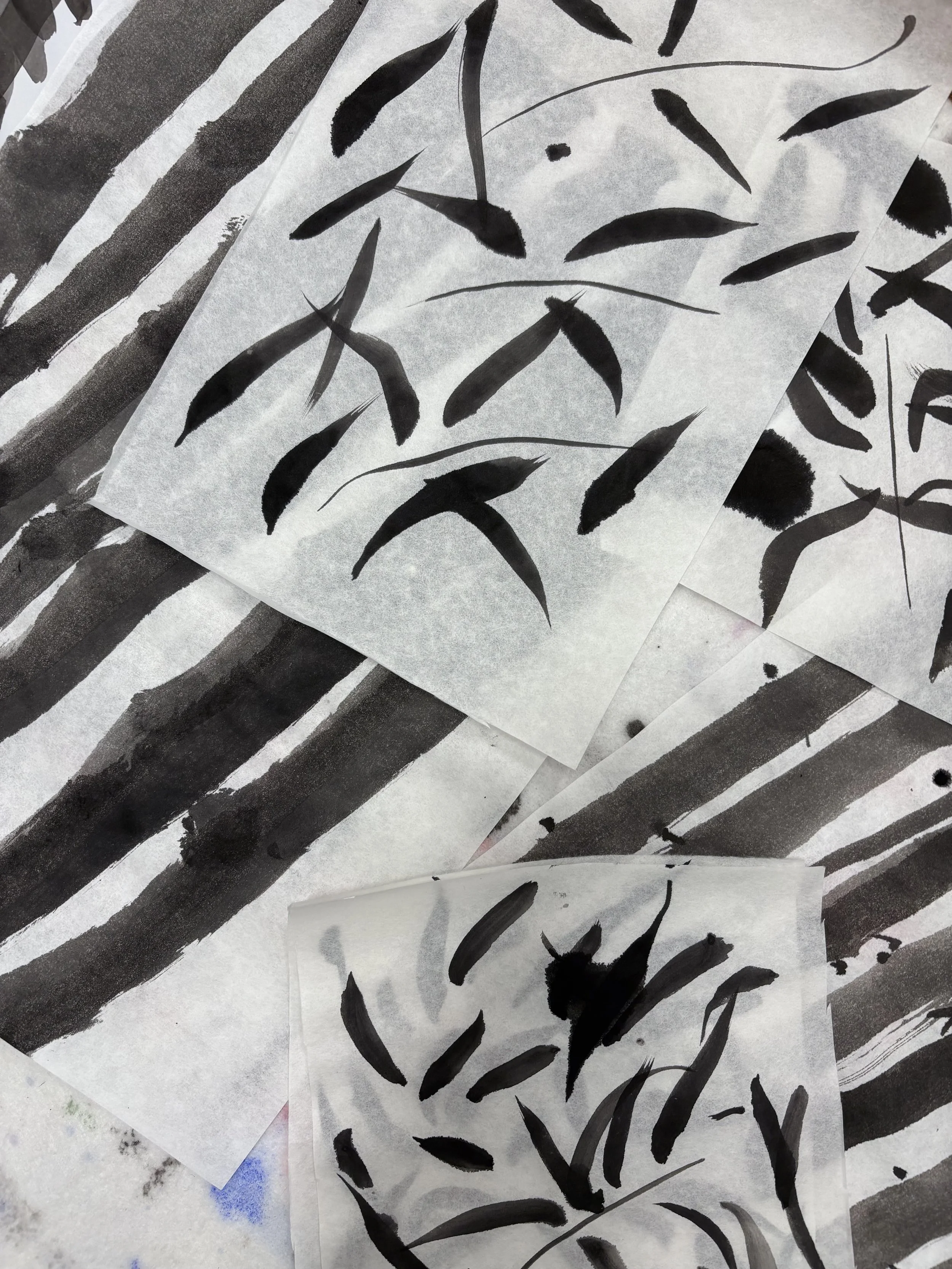
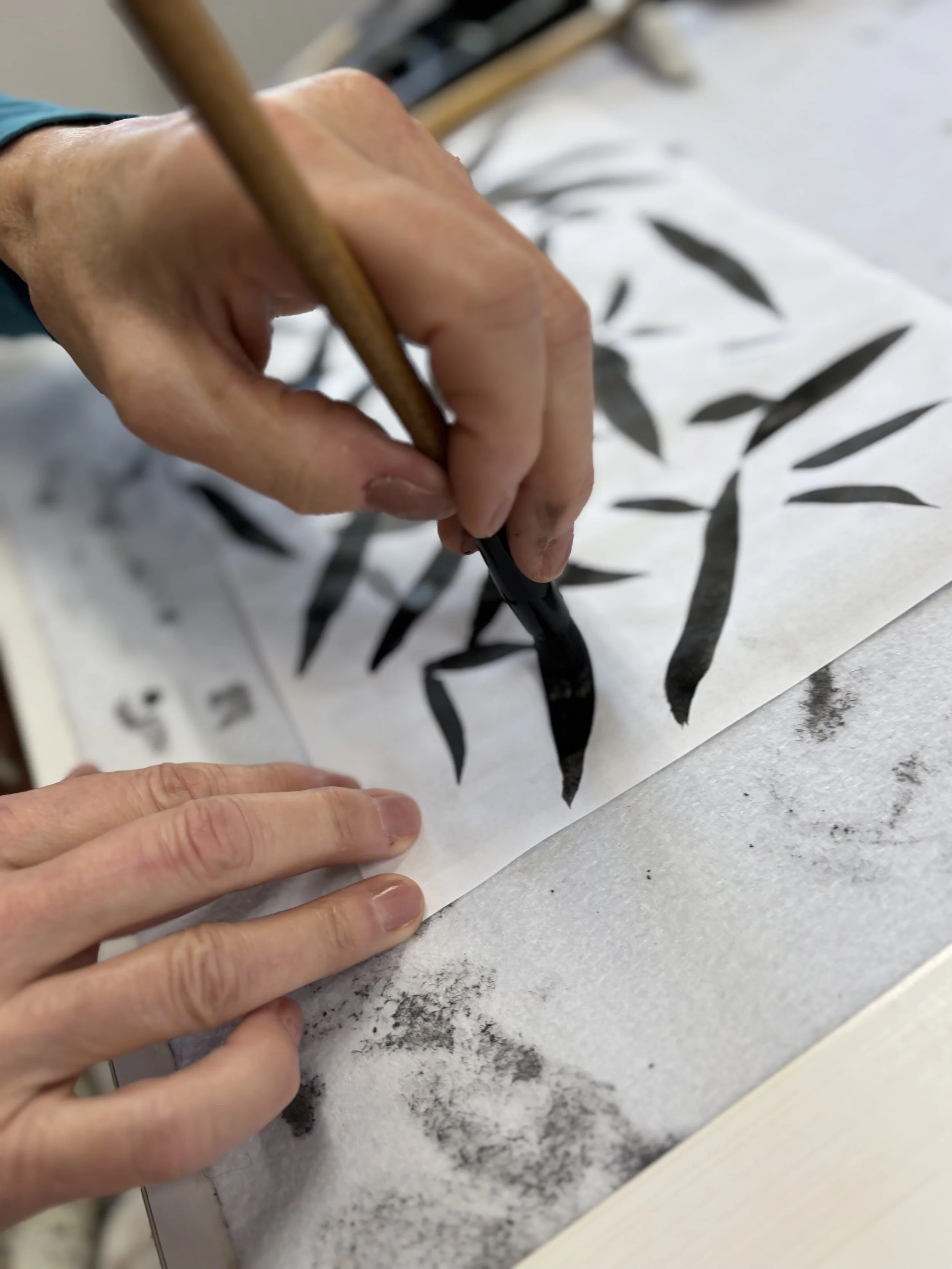
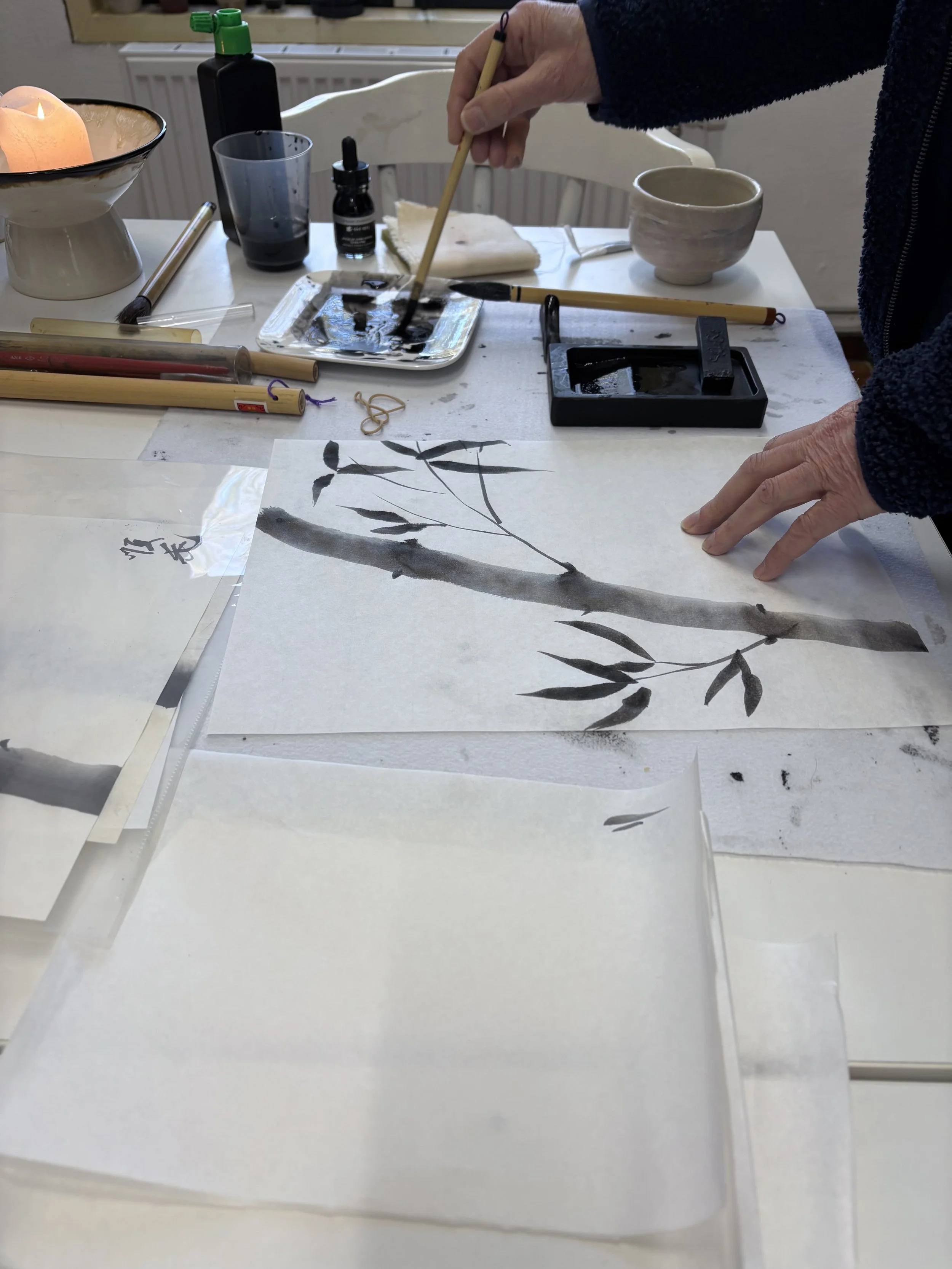
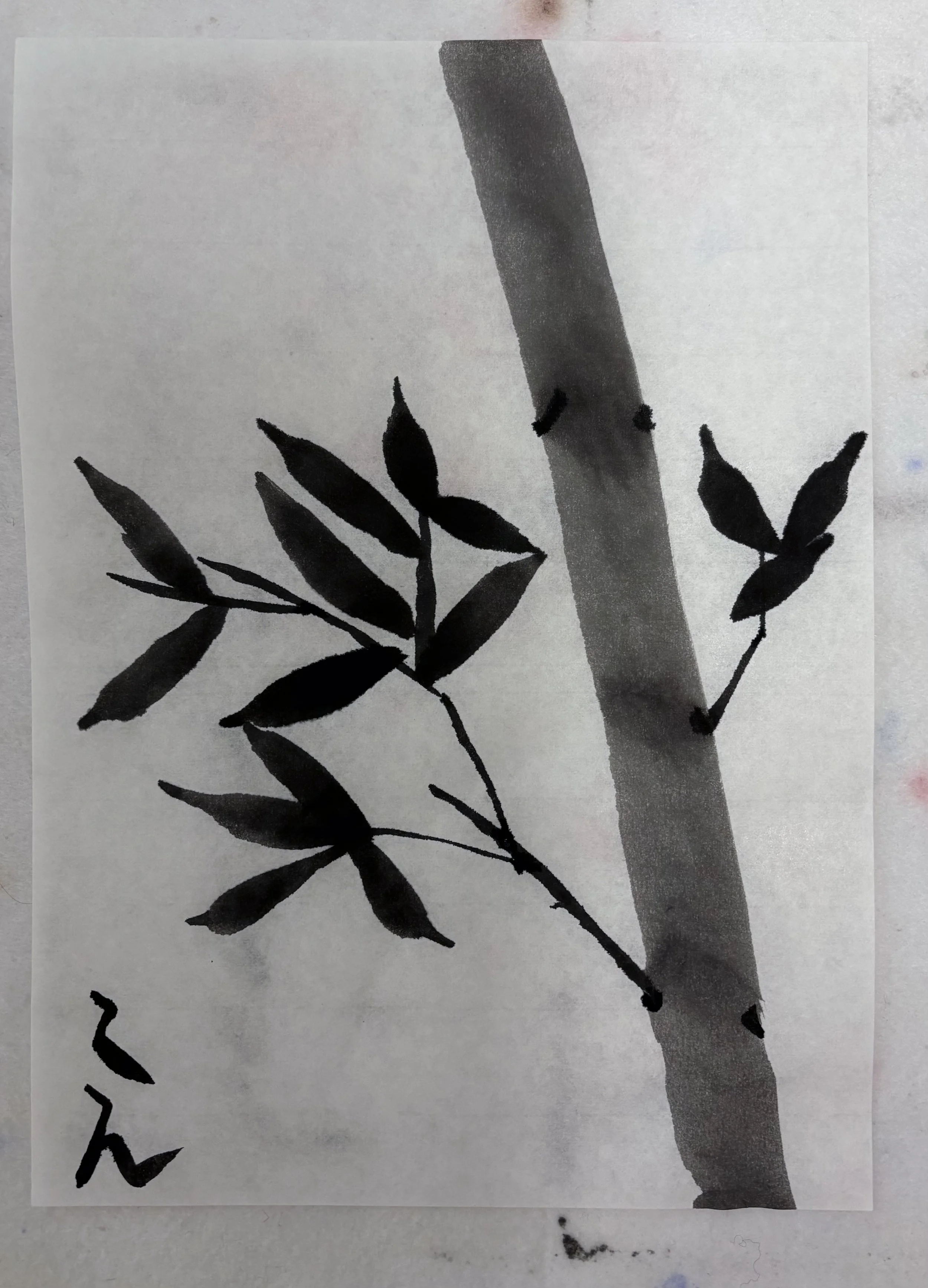
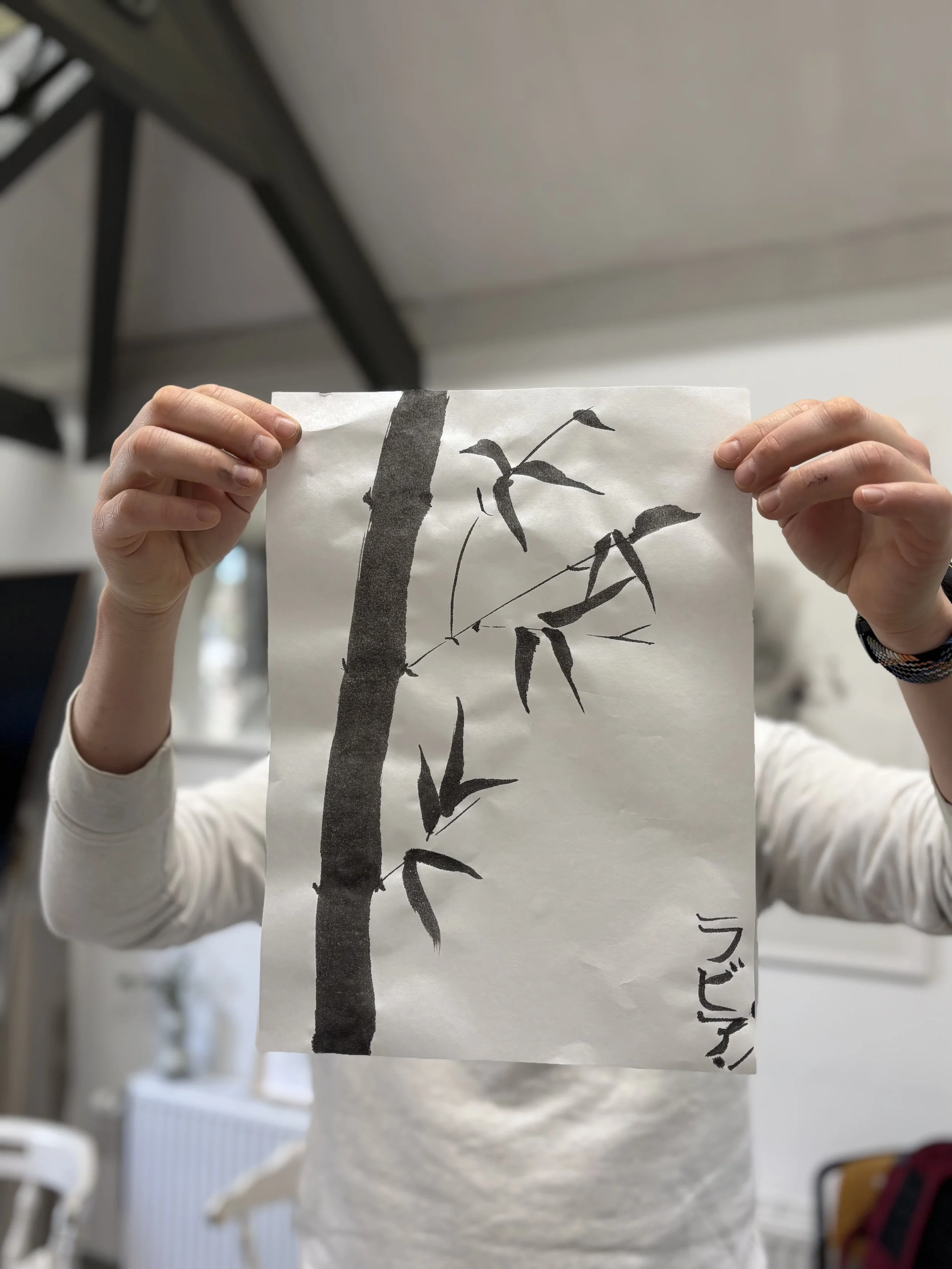
With the arrival of a new year, a new Sumi-e course has begun.
This month, we start with bamboo, one of The Four Noble Ones (also called The Four Gentleman).
The Four Noble Ones is a central theme in East Asian ink painting, consisting of four plants—plum blossom, orchid, bamboo, and chrysanthemum—each symbolizing an ideal character and spiritual quality. This concept was systematized and developed in China during the Song Dynasty around the 10th to 11th century. However, these plants themselves had already appeared in Chinese poetry and painting as early as the 7th century. The philosophy of the Four Noble Ones later spread to Korea and Japan.
The plum blossom, which blooms in the harsh cold of winter, represents endurance and renewal. The orchid, quietly flowering in hidden valleys in spring, symbolizes humility and refinement. The bamboo, growing straight and flexible without breaking in summer, expresses inner strength and resilience. And the chrysanthemum, blooming at the end of autumn, stands for integrity and spiritual freedom.
Why is it important to practice the Four Noble Ones?
Because the foundations of ink painting are all contained within these four plants. Through them, we learn the relationship between brush, ink, water, and paper—not intellectually, but physically.
At the same time, reflecting on the spiritual qualities each plant represents invites us to look inward and observe our own state of mind. Practicing the Four Noble Ones quietly questions not only our technique, but also our way of being.
During one of the lessons, a participant with a background in Judo said,“Practicing Sumi-e feels like uchikomi in judo.” I am not very familiar with judo, but uchikomi refers to repeatedly practicing a single technique, allowing the body to absorb its form and timing through repetition. Hearing this, I felt that Sumi-e practice works in much the same way. This idea also resonated with me, as I have practiced Korean dance and Chinese martial arts at a personal level.
Recently, I have come to realize that the time I spent living in Japan and the time I have spent living in different cultural contexts have become almost equal. This has made me reflect more on different approaches to education. In some traditions, repetition and discipline are emphasized, while in others, more space is given to freedom and individual exploration.
Rather than one being right and the other wrong, I believe both have their own value. In my lessons, I try not to focus solely on rules and forms, but to allow space for freedom and openness within them. Even so, when I see students sincerely engaging with Sumi-e and committing themselves to practice, I find myself feeling quietly encouraged and energized as well.
Next time, we will paint the chrysanthemum. I hope you are looking forward to it.
P.S. One of our new students kindly introduced a shop where you can purchase Sumi-e materials. I will share it with everyone:) Thank you Jan!
Dekwast.nl
https://dekwast.nl/trefwoord/chinese
Other shops I often use in The Netherlands:
’t Japanse winkeltje (Amsterdam)
https://www.japansewinkeltje-webshop.nl/hobby/kalligrafie
Ta-Hwa (Amsterdam)
https://tahwa.nl/chinese-japanse-kalligrafie/
新しい年を迎え、新しい墨絵のコースがはじまりました。今月は、四君子の中でも「竹」から学んでいきます。
四君子とは、東アジアの水墨画において非常に重要なテーマで、梅・蘭・竹・菊という四つの植物が、それぞれ理想的な人格や精神性を象徴しています。それぞれの植物自体は、すでに7世紀頃から中国の詩や絵画の中に描かれてきましたが、この四君子という概念は、10〜11世紀ごろの中国(宋代)に体系化され、発展しました。その思想は、後に韓国や日本へと伝わっていきます。
厳しい冬の寒さの中で花を咲かせる梅は、忍耐や再生を、人目につかない谷間にひっそりと咲く春の蘭は、謙虚さや品格を、まっすぐに伸び、折れずにしなやかな夏の竹は、柔軟性と内なる強さを、そして秋の終わりに咲く菊は、高潔さや精神的自由を表しているとされています。
厳しい冬の寒さの中で花を咲かせる梅は、忍耐や再生を、人目につかない谷間にひっそりと咲く春の蘭は、謙虚さや品格を、まっすぐに伸び、折れずにしなやかな夏の竹は、柔軟性と内なる強さを、そして秋の終わりに咲く菊は、高潔さや精神的自由を表しているとされています。
では、なぜ四君子を練習することが大切なのでしょうか。それは、水墨画の基礎が、この四つの植物の中にすべて含まれているからです。
筆・墨・水・紙の関係性を、頭ではなく身体で学ぶこと。そして、それぞれの植物が象徴する精神性を通して、自分自身の心の状態を見つめ直すこと。四君子の練習は、技術だけでなく、心の在り方にも静かに問いかけてきます。
今回のレッスンの中で、柔道の経験がある方がこんなことを言っていました。
「墨絵の練習は、柔道の“打ち込み”みたいですね。」
私は柔道について詳しくはないのですが、打ち込みとは、一つの技を繰り返し連続して練習し、形やタイミングを身体に覚え込ませていく稽古のことだそうです。それを聞いて、まさに墨絵の練習も同じだと感じました。この考え方は、韓国舞踊や中国武道を個人的なレベルで学んできた私自身にも、自然としっくりきました。
最近、私自身が日本で過ごした時間と、さまざまな文化的背景の中で過ごしてきた時間が、ほぼ同じくらいになってきました。それに伴い、教育の在り方について考えることが増えました。ある伝統では、繰り返しや鍛錬が重視され、また別のところでは、自由や個人の探究により多くの余白が与えられています。どちらが正しいということではなく、どちらにもそれぞれの良さがあるのだと思っています。
私のレッスンでは、規則や型だけにとらわれず、その中に自由や余白を持つことを大切にしています。それでも、真剣に墨絵に向き合い、練習を重ねている姿を見ると、私自身も不思議と元気をもらいます。
次回は「菊」を描きます。
どうぞお楽しみに。