
Sumi-e Tools — What to Buy and Where to Find Them
If you’re new to Sumi-e, you may wonder: What tools do I need? Where can I buy them? Which ones should I choose?
These are very natural questions. Sumi-e tools are highly personal — they are best understood through practice and experience. What suits one person may not suit another. Many of the tools I use come from International Sumi-e Association, so exact equivalents in the Netherlands can be difficult to recommend. Still, this guide will help you get started with confidence.
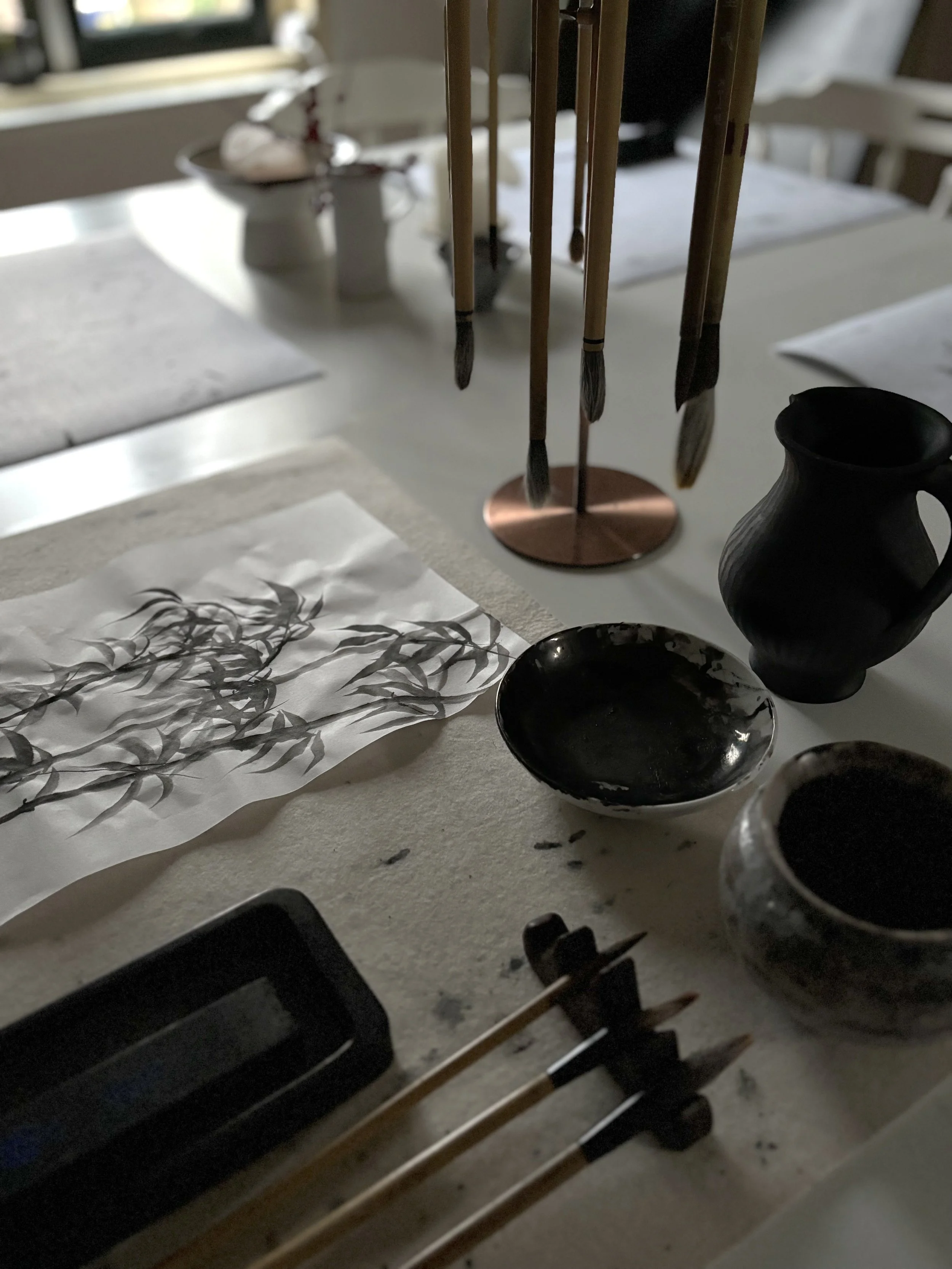
Essential Sumi-e Tools
(Japanese – English – Dutch)
和紙 — Washi
Rice paper — Rijstpapier
Paper plays a crucial role in Sumi-e, as it directly affects how ink spreads, absorbs, and settles on the surface.
For beginners, calligraphy paper can also be used as an alternative. It usually has a smooth surface, is easy to access in art shops, and allows for clearer control of brush and ink. Some papers absorb moisture quickly and are well suited for wet-on-wet techniques, while others allow for dryer strokes and sharper textures.
There is no single “correct” paper. Trying different types and observing how the ink behaves is an important part of learning. Asking advice from shop staff can also be very helpful.
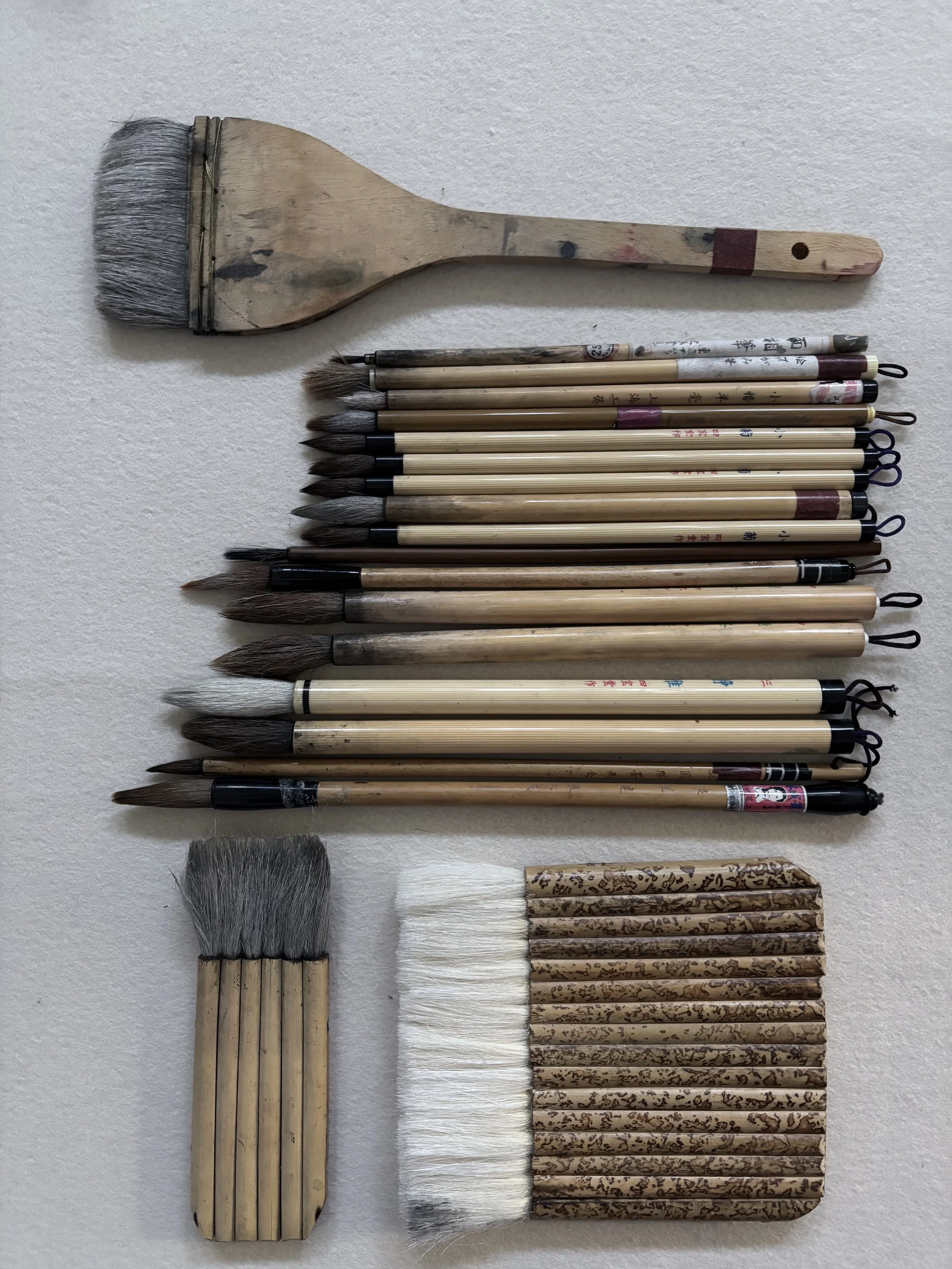
筆 — Fude
Brush — Penseel
I recommend preparing at least three brush sizes: large, medium, and small. This gives you flexibility for expressive strokes, structural lines, and fine details.
Brushes come in many hair types and qualities. Personally, I like mixed-hair brushes. They hold moisture well, allowing the ink to flow smoothly, while still offering enough resilience to create sharp edges and controlled lines. This balance makes them especially suitable for both beginners and more experienced practitioners.
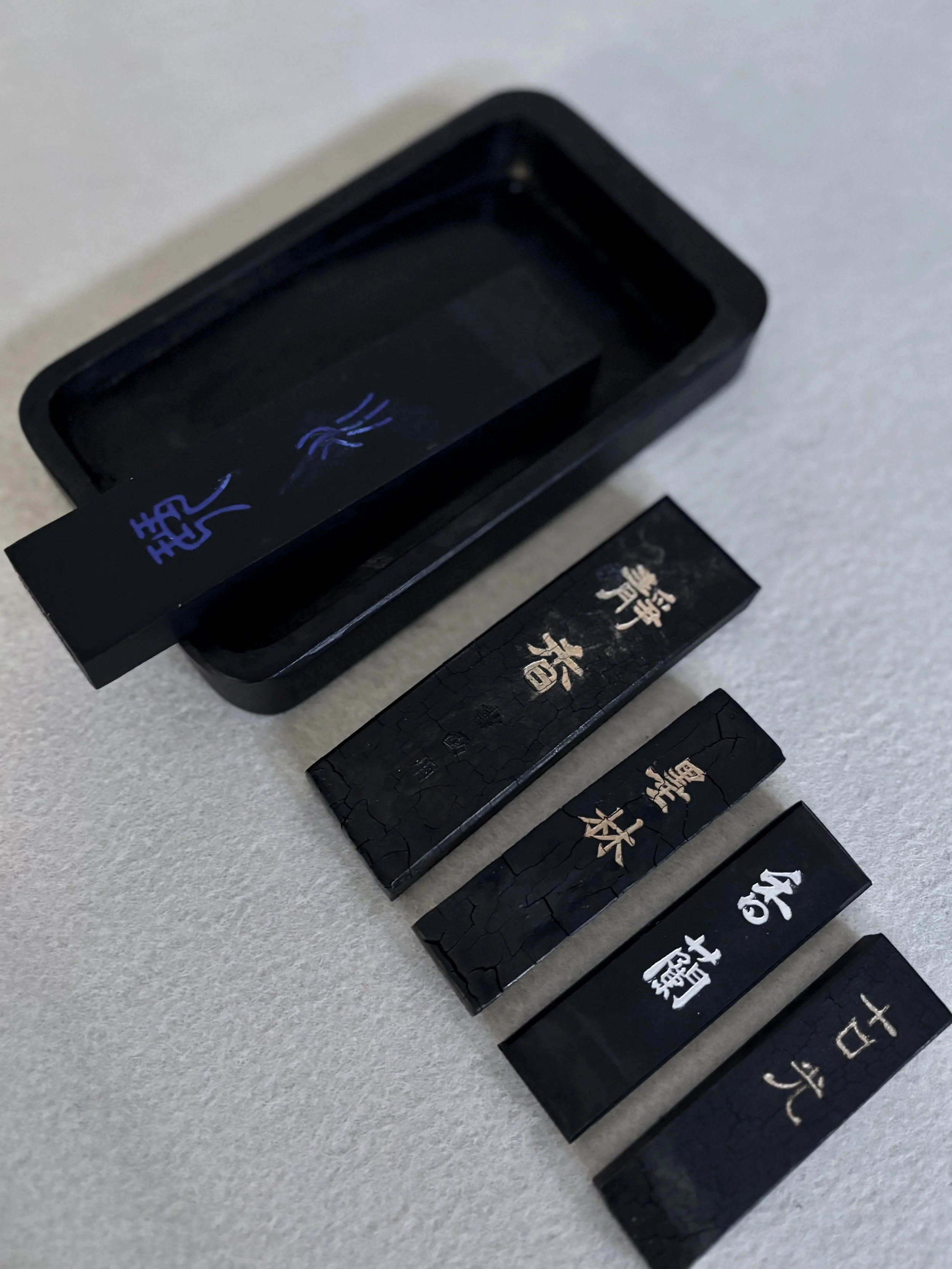
墨 — Sumi
Ink stick — Inktstaaf
Although sumi ink appears simply “black,” it contains subtle tonal qualities. Some inks appear cooler and bluish, while others feel warmer and brownish, especially when diluted.
Traditionally, Japanese aesthetics tend to favor cooler, bluish-black tones, while Chinese traditions often appreciate warmer, brownish-black tones. This is not about manufacturing differences, but about aesthetic preference and cultural taste. Through practice, you may naturally discover which tone resonates more with your own expression.
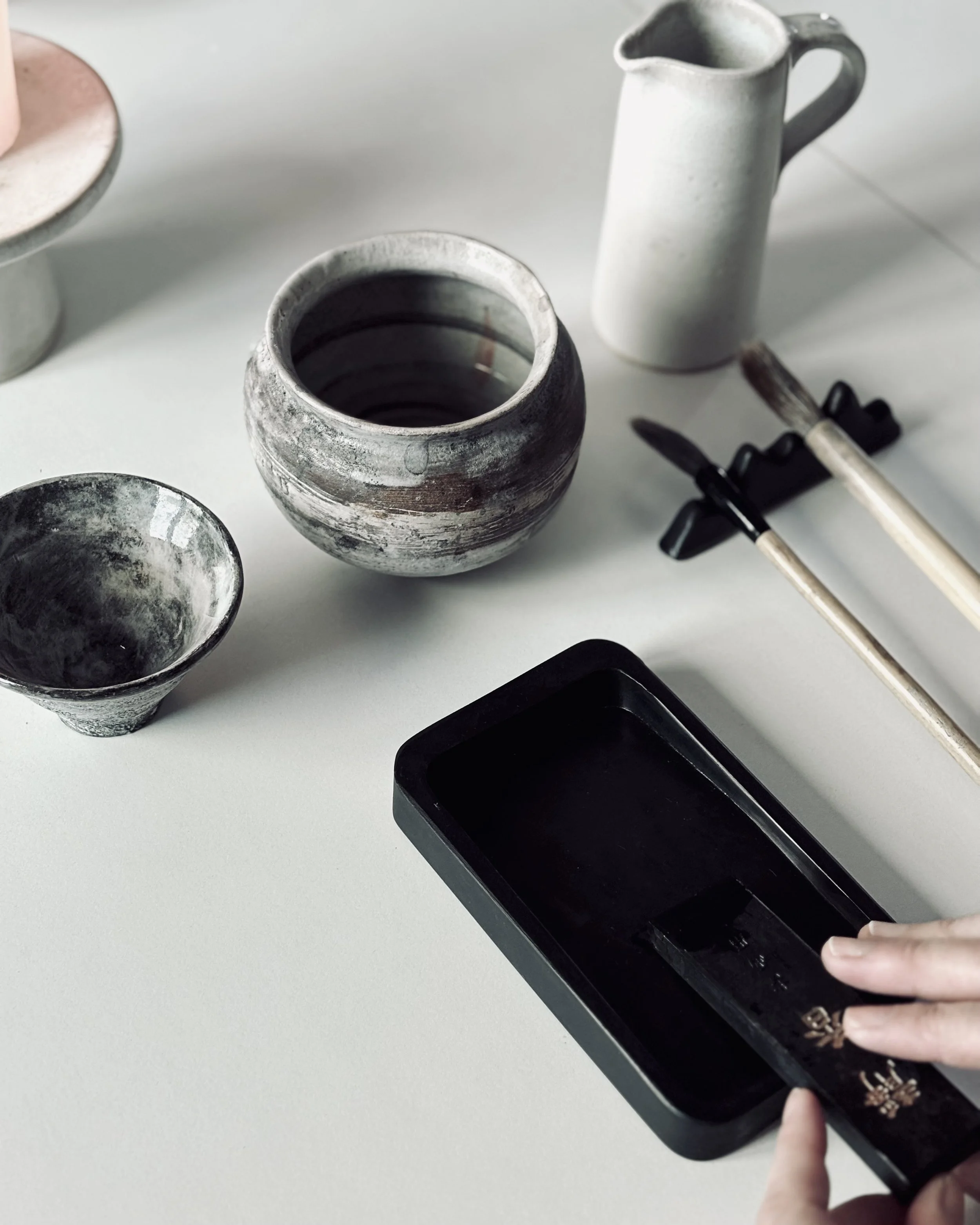
硯 — Suzuri
Ink stone — Inktsteen
The ink stone is used to grind the ink stick with water. This process is both practical and meditative. The texture of the stone affects how the ink develops. For beginners, a simple ink stone is sufficient. Over time, many practitioners develop a deeper sensitivity to the stone and its surface.
Additional Tools
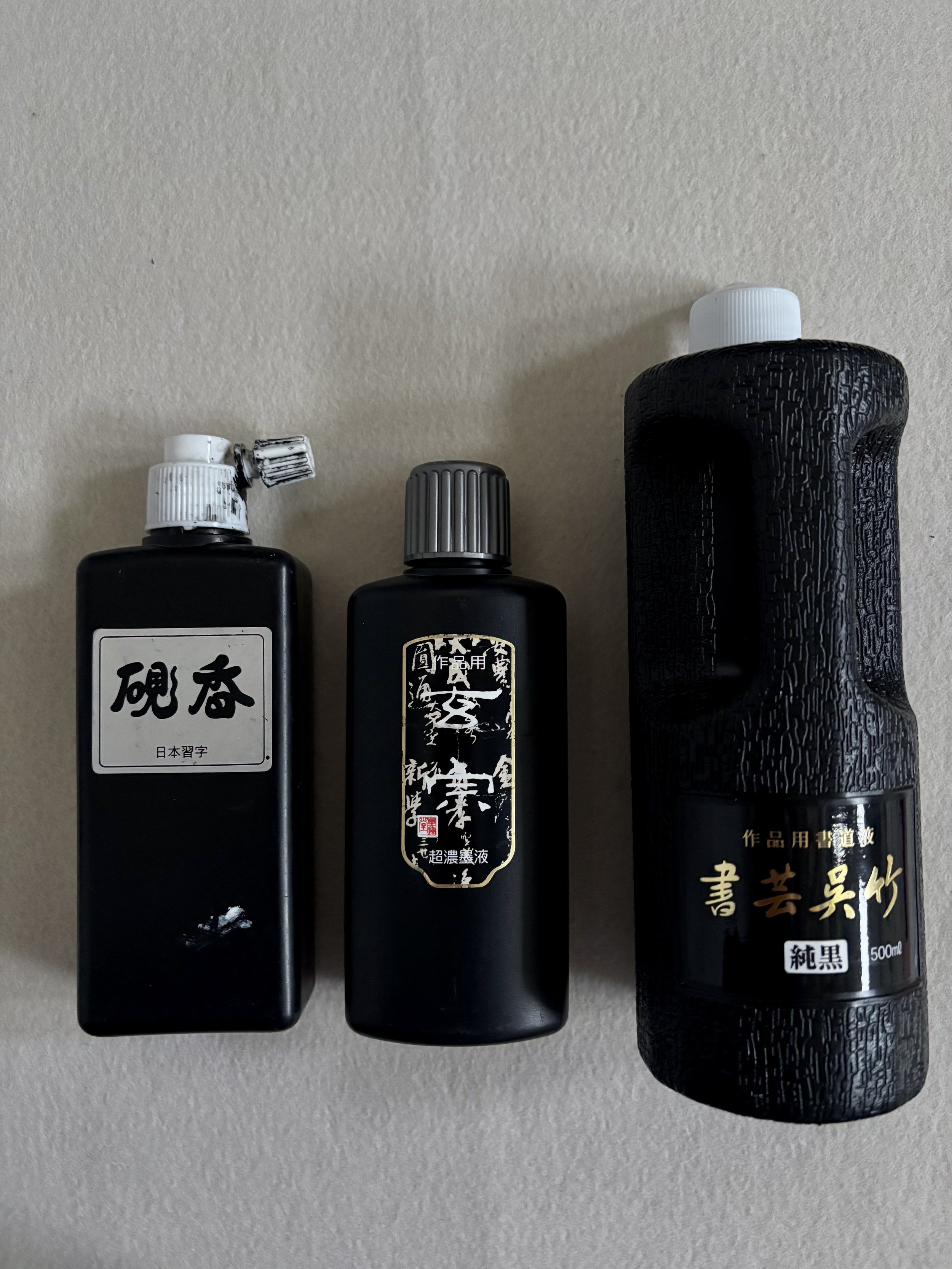
墨汁 — Boku-ju
Liquid ink — Vloeibare inkt
Traditionally, I was not allowed to use liquid ink during my training, as grinding ink is considered an essential part of learning discipline and sensitivity. That said, boku-ju can be very handy, especially for practice, workshops, or when time is limited. While it lacks the depth of freshly ground ink, it is a practical and accessible option.
水入れ — Mizu-ire
Water container — Waterbakje
Used for diluting ink and cleaning brushes. Any stable container can be used, though ceramic containers are commonly preferred.
下敷き — Shita-jiki
Underlay (felt mat) — Onderlegger (viltmat)
The underlay is placed beneath the paper to absorb excess moisture and protect the working surface. In Japan, black felt mats are traditionally used for calligraphy, while white mats are often used for ink painting, as they reflect light and make ink tones easier to observe.
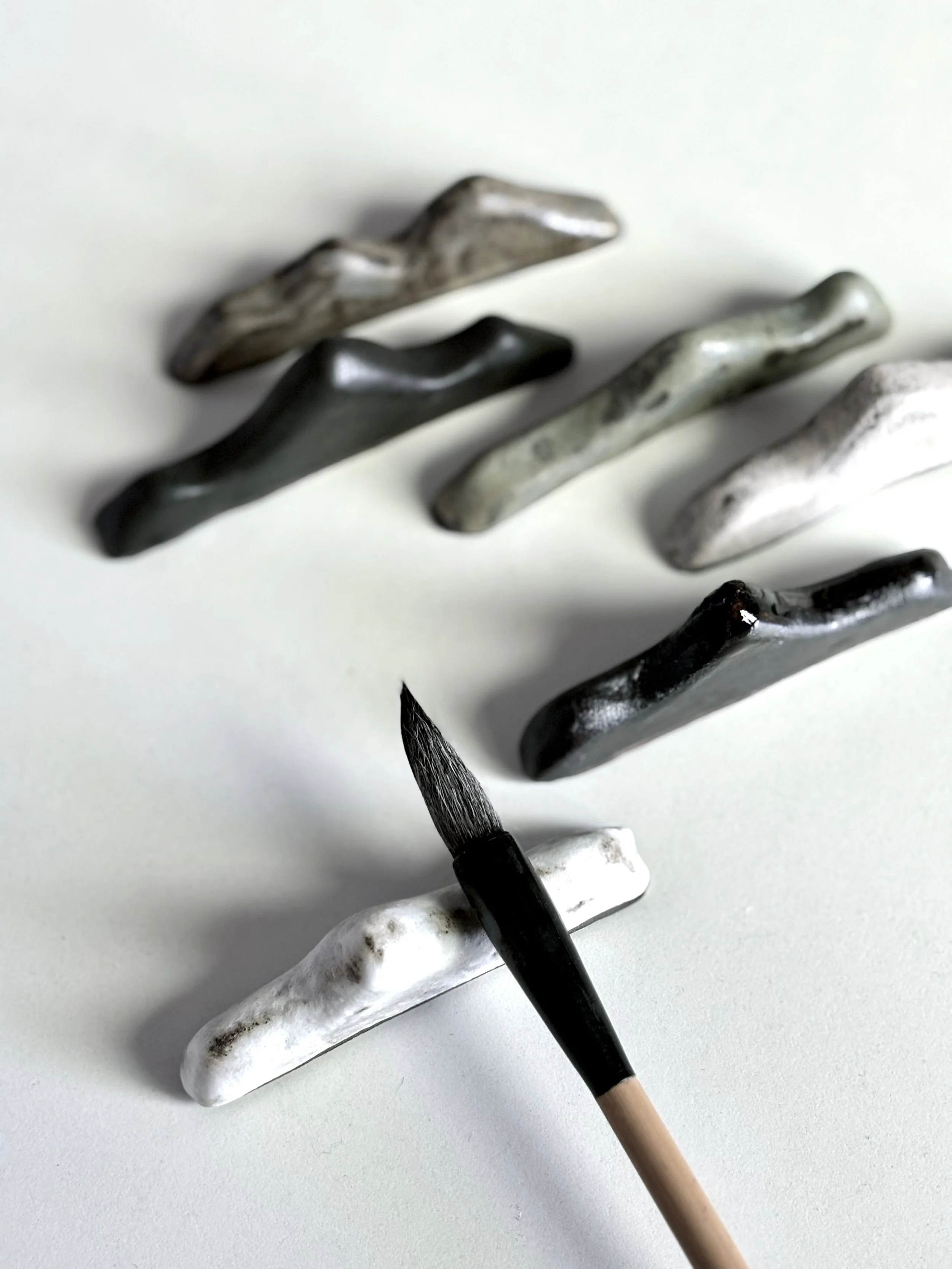
筆置き — Fude-oki
Brush rest — Penseelhouder
Used to rest brushes while working, helping to maintain the shape of the brush tip and keep the workspace clean.
水彩絵の具 — Suisai Enogu
Watercolour — Waterverf
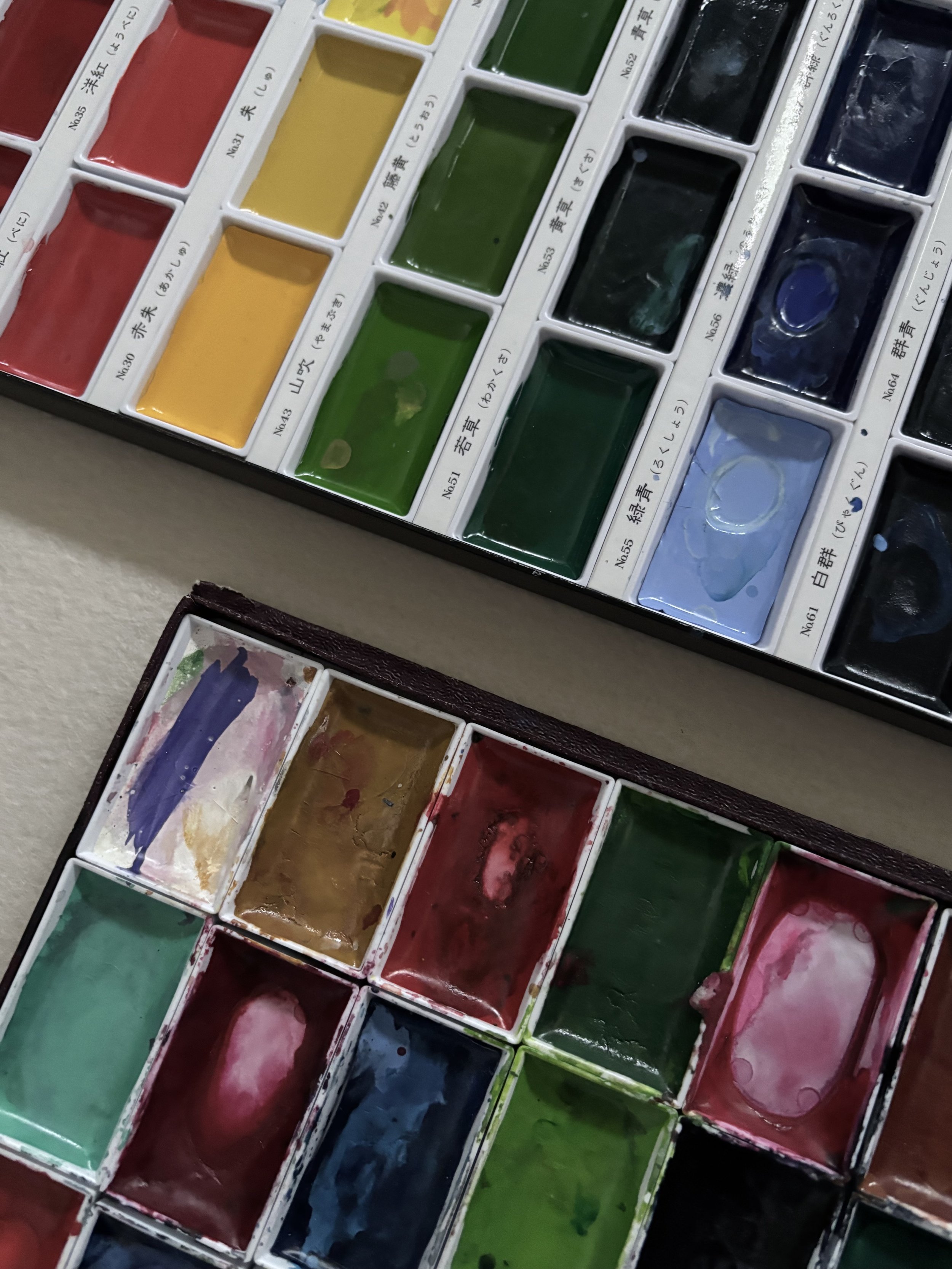
In Sumi-e, colour is sometimes added as a subtle accent. This can be done using traditional Japanese watercolours or general watercolours. High-quality paints contain richer pigments, allowing for clearer and more vibrant colour expression when needed.
Japanese Gansai watercolours, such as those by Kuretake, are a popular choice and can also be purchased in the Netherlands.
These tools exist in many variations: different origins (China, Korea, Japan), materials, and qualities. I recommend starting with tools that are not the cheapest, but also not the most expensive. As you practice, your sensitivity will grow and you can gradually explore other options.
Where to Buy Sumi-e Tools in the Netherlands
Recommended Art Supply Stores in Tokyo
If you have the opportunity to visit Japan, these stores are true treasure places for artists:
Sekaido, Tokyo(They have 12 branches in Tokyo but Shinjuku is the original and biggest one)
If you take part in my Sumi-e workshops or courses, I will introduce each tool in detail and explain how to use and care for them properly.
Course Information
Sumi-e courses run on Wednesdays (starting 21 January) and Saturdays (starting 17 January). Each group has one last spot available.
Private and group workshops are available by appointment.
For more information, please visit: www.hanato.site