
Plum Blossoms — Strength and Patience
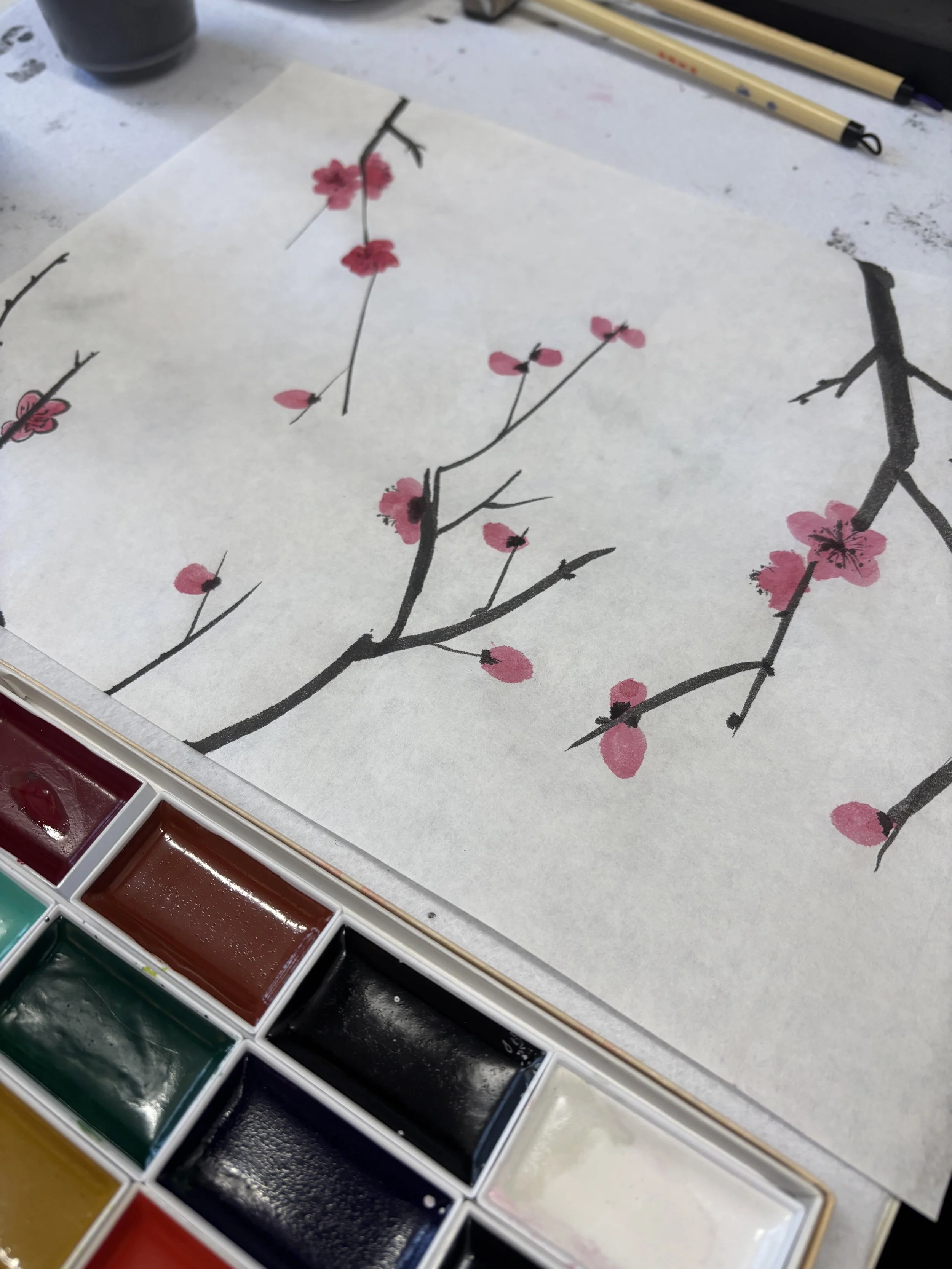
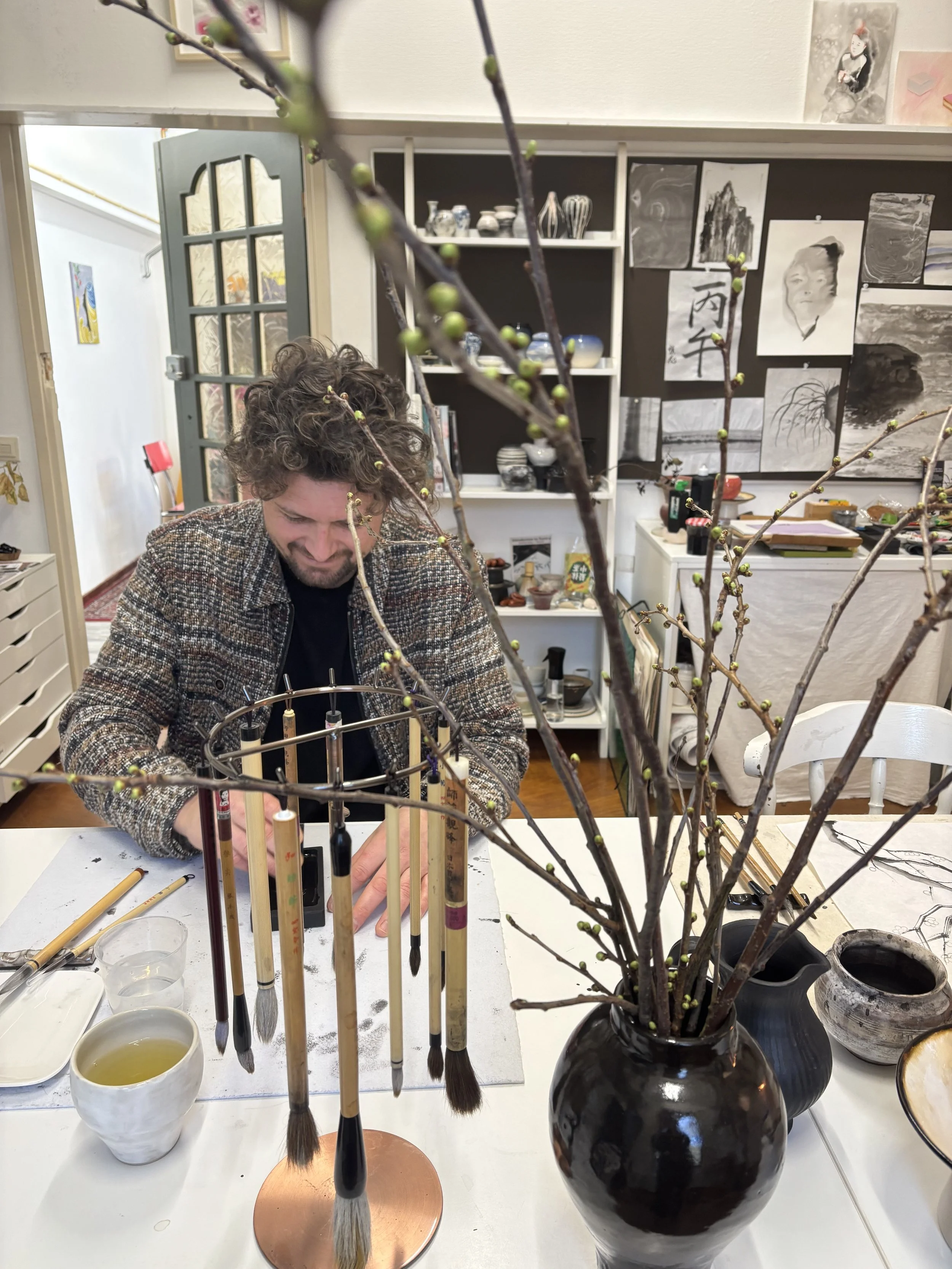
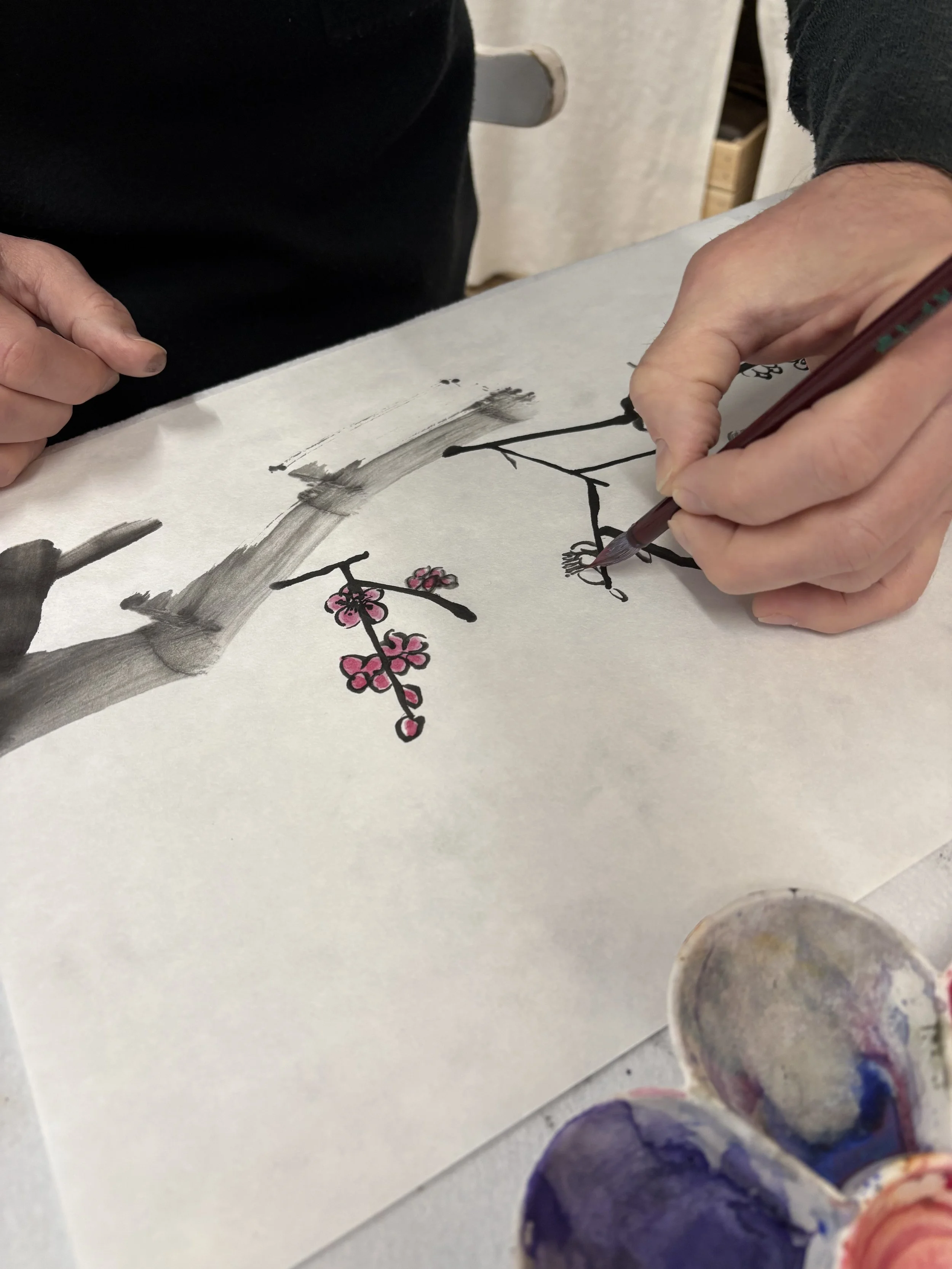
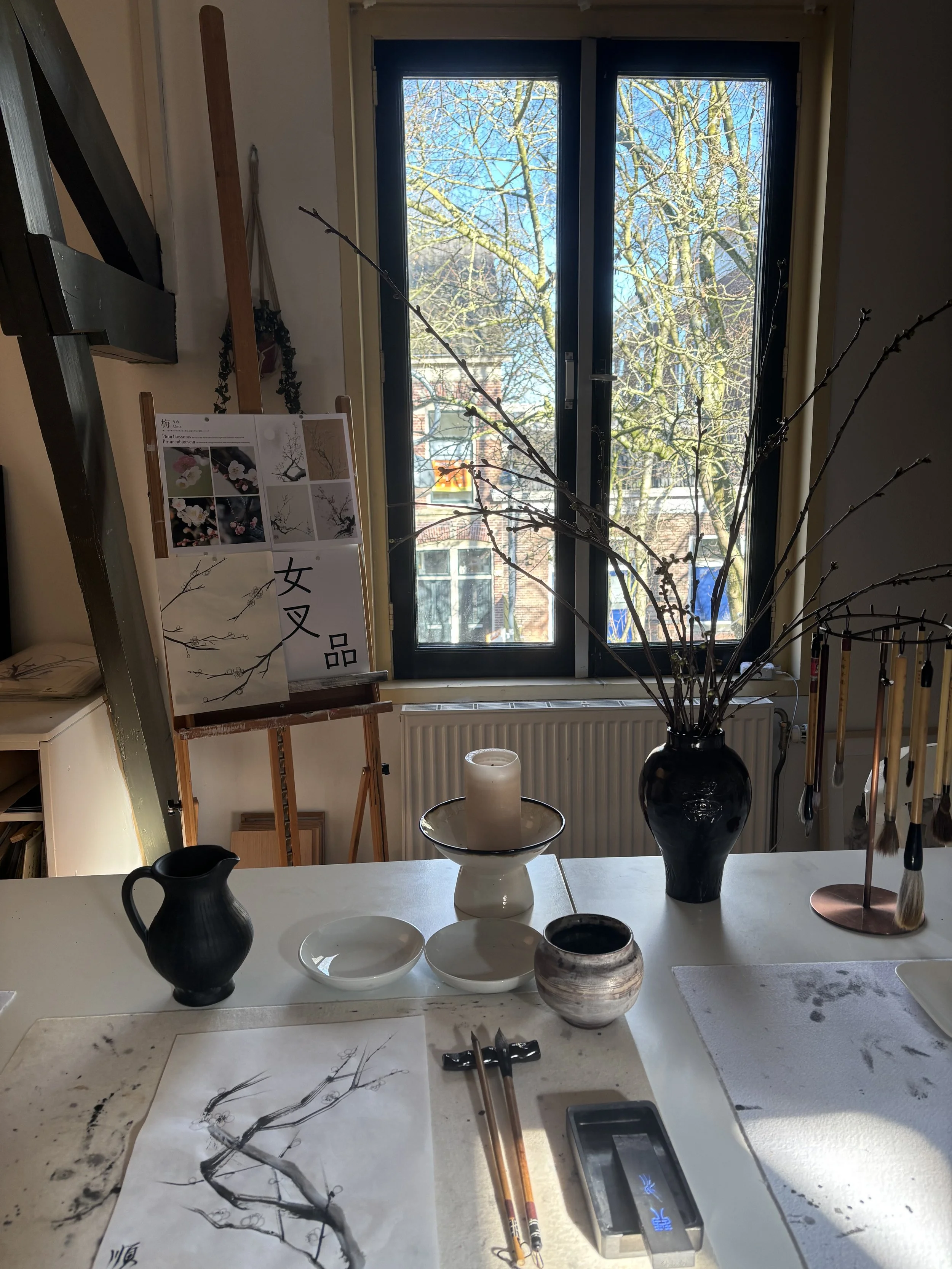
This time, we painted plum blossoms, one of the “Four Noble Ones” in East Asian art. Plums bloom in the cold just before spring, symbolizing endurance and vitality.
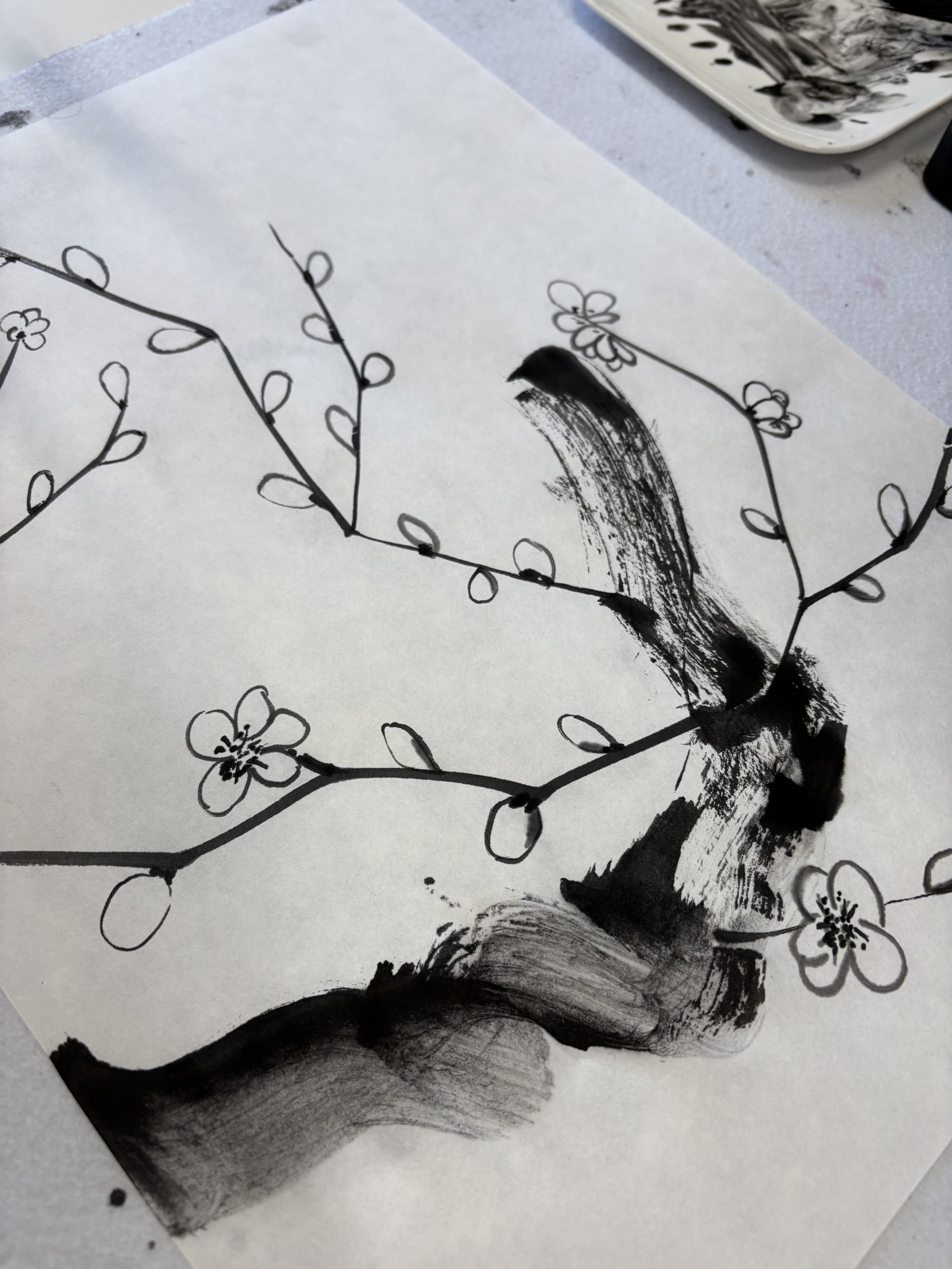
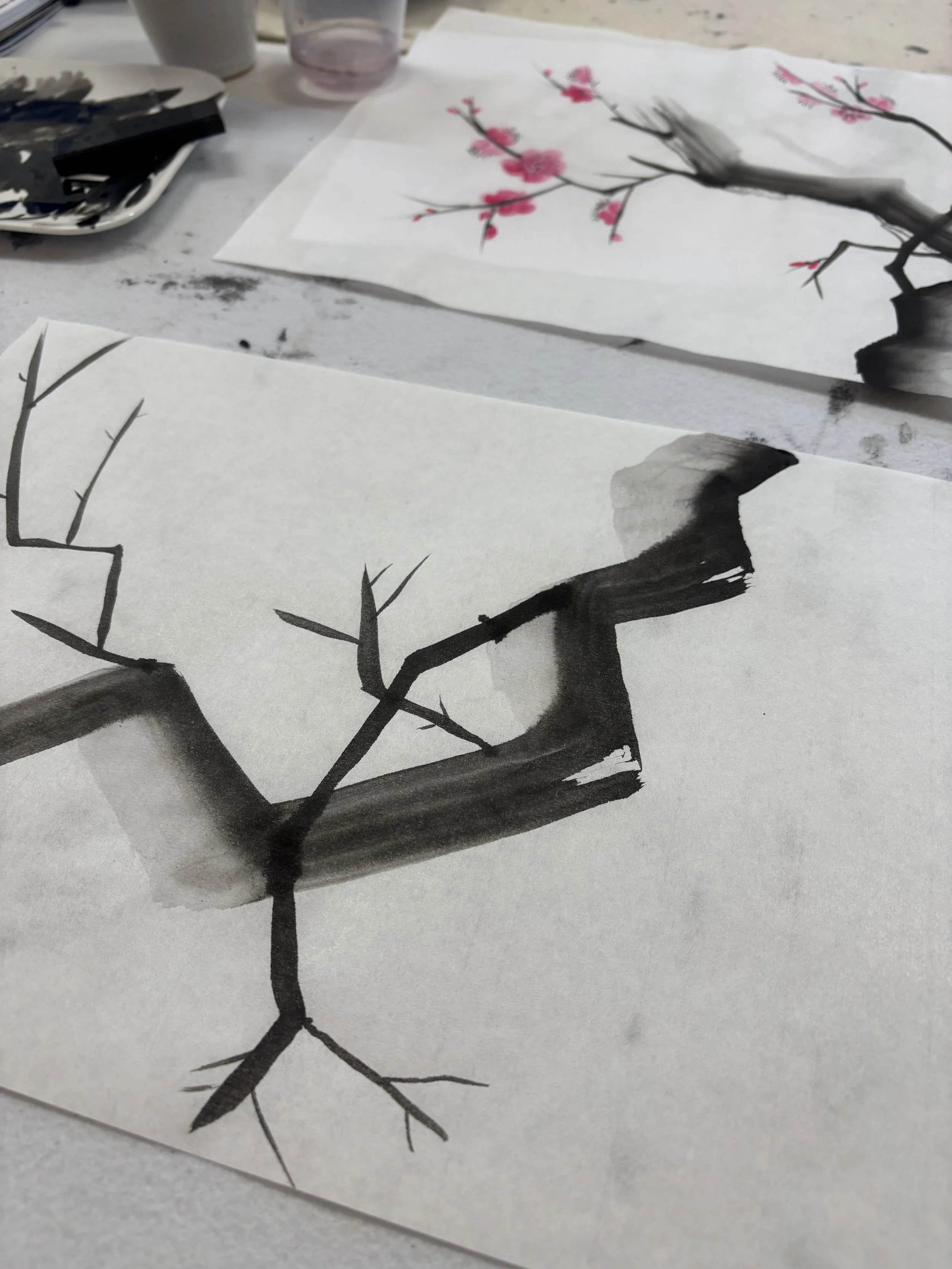
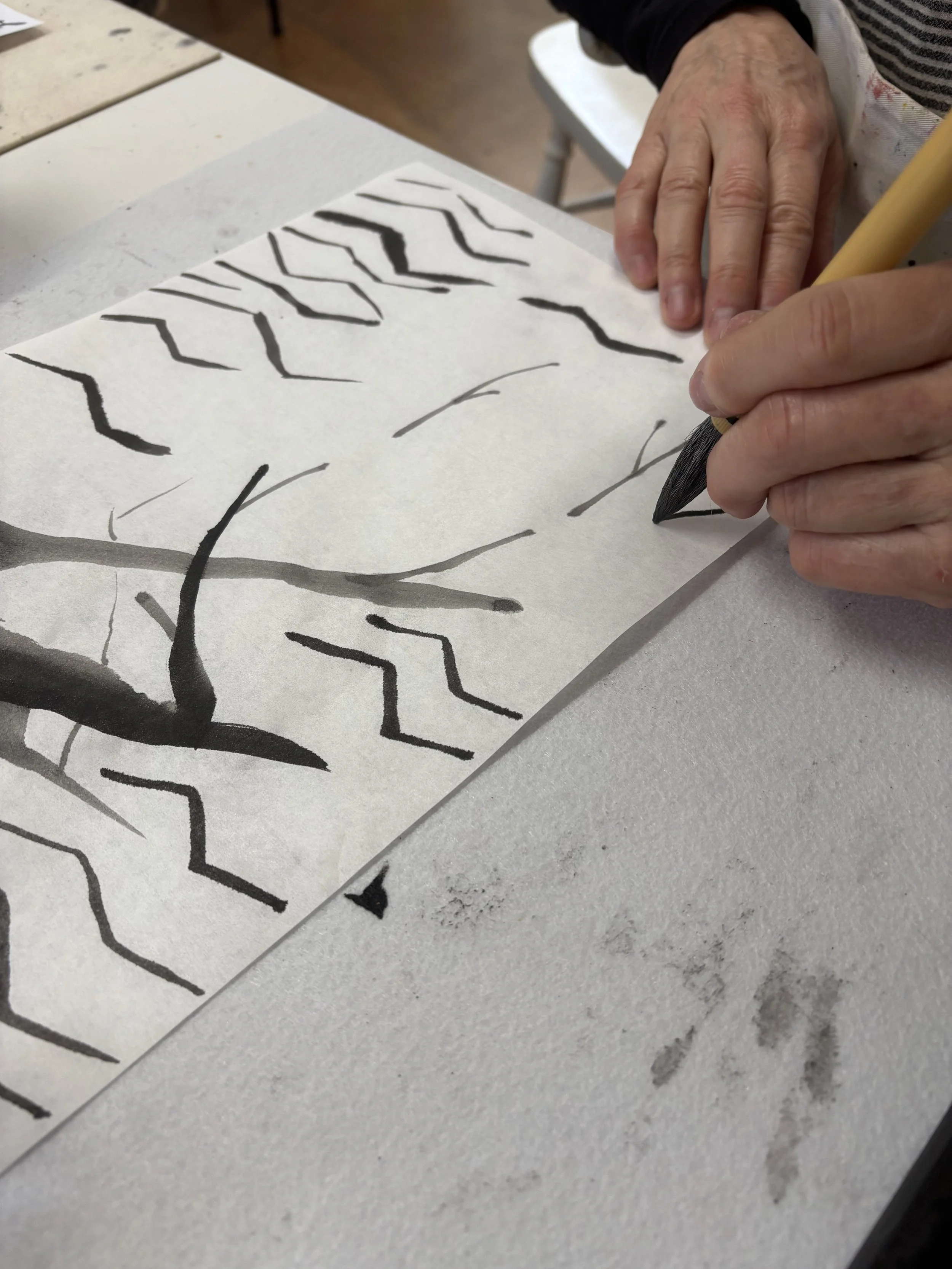
When painting the branches, we use a thick brush held at an angle to create strong, textured strokes. Too much ink will make it bleed, and too little ink will run out before finishing the thick branches. Finding the right balance of ink on the brush is a learning experience in itself.
Also, arranging the branches so they cross each other, like the shapes of the Chinese characters “女” or “叉,” is an important point.
As for the flowers, painting a single bloom is not so difficult. But painting many flowers with the same light ink and line thickness requires a lot of patience. In this way, painting plum blossoms truly reflects the flower’s qualities of strength and endurance.
Some students used a different kind of traditional Japanese paper this time. Watching how the ink tones changed dramatically depending on the paper made the interaction with the material even more fascinating.
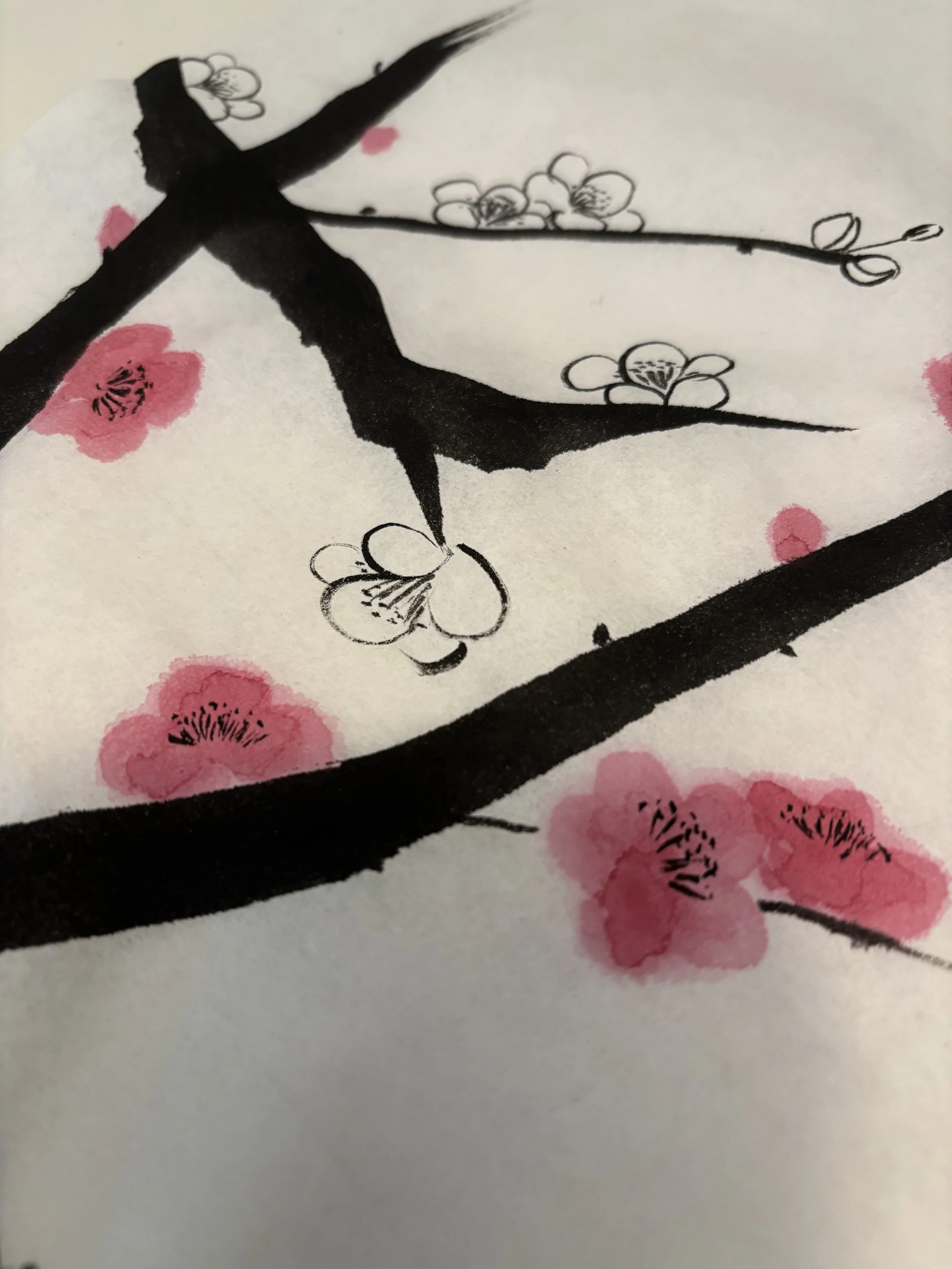
While exploring plum blossoms in paintings, I remembered something I had seen at the Shaolin Kungfu place I used to attend. There, a Chinese painting showed a single plum tree blooming with both red and white flowers. I later learned that the white flowers appear when the red color does not develop properly due to the absence of the pigment anthocyanin. Understanding this made me very happy, as it explained a mystery I had long wondered about. In Japanese, this is called Genpei-zaki.
Have you ever seen a plum tree with both white and red blossoms at the same time? I wonder — in your country or language, is there a specific name for this kind of tree?
In the northern Netherlands, spring break starts tomorrow.
I hope everyone has a wonderful week!
梅を描く ― 忍耐と生命力
今回は、みんなで梅を描きました。梅は、春を目前にした厳しい寒さの中で咲き始める花。古来より、忍耐強さや生命力の象徴とされてきました。
梅の枝は、太い筆を寝かせ、力強い掠れを生かしながら描きます。墨が多すぎると滲み、少なすぎると太い枝を描き終える前に尽きてしまう。適量の墨を筆に含ませるためには、筆と墨の絶妙なバランスを感じ取る感覚が必要です。
また、漢字の「女」や「叉」の形を思わせるように枝を交叉させることも、大切なポイントです。
一方で、花びらは、一輪を描くこと自体はそれほど難しくありません。しかし、同じ薄墨、同じ線の太さで多くの花を描き重ねていく作業には、かなりの忍耐力が求められます。
まさに、梅を描くという行為そのものに、梅の特質である「力強さ」と「忍耐強さ」が宿っているのです。
今回は、いつもとは異なる和紙を使った生徒さんもいました。紙の種類によって墨の階調が劇的に変化する様子を目の当たりにし、素材との対話の奥深さを改めて感じました。
梅の絵を見ていると、以前私が通っていた少林寺拳法の道場で目にしたことが思い出されました。そこには、中国の梅の花の絵が飾られていて、一本の木に赤と白の花が同時に咲いていました。後で知ったのですが、白い花は、赤い花を作る色素(アントシアニン)がうまく発色しなかった場合に咲くそうです。このことを知り、ずっと気になっていた不思議が解けて、とても嬉しく思いました。日本では、この現象を「源平咲き」と呼びます。みなさんの国や言語では、一本の木に赤と白の花が咲く現象に、特別な名前はありますか?
オランダ北部は明日から春休みです。
みなさま、どうぞ楽しい週をお過ごしください。

Image resource
Wang Guxiang
White and Red Plum Blossom, 1546
Ink and color on paper
Public domain (via Minneapolis Institute of Art / Wikimedia Commons)