
Pine Trees and Kappitsu-hō in Sansuiga
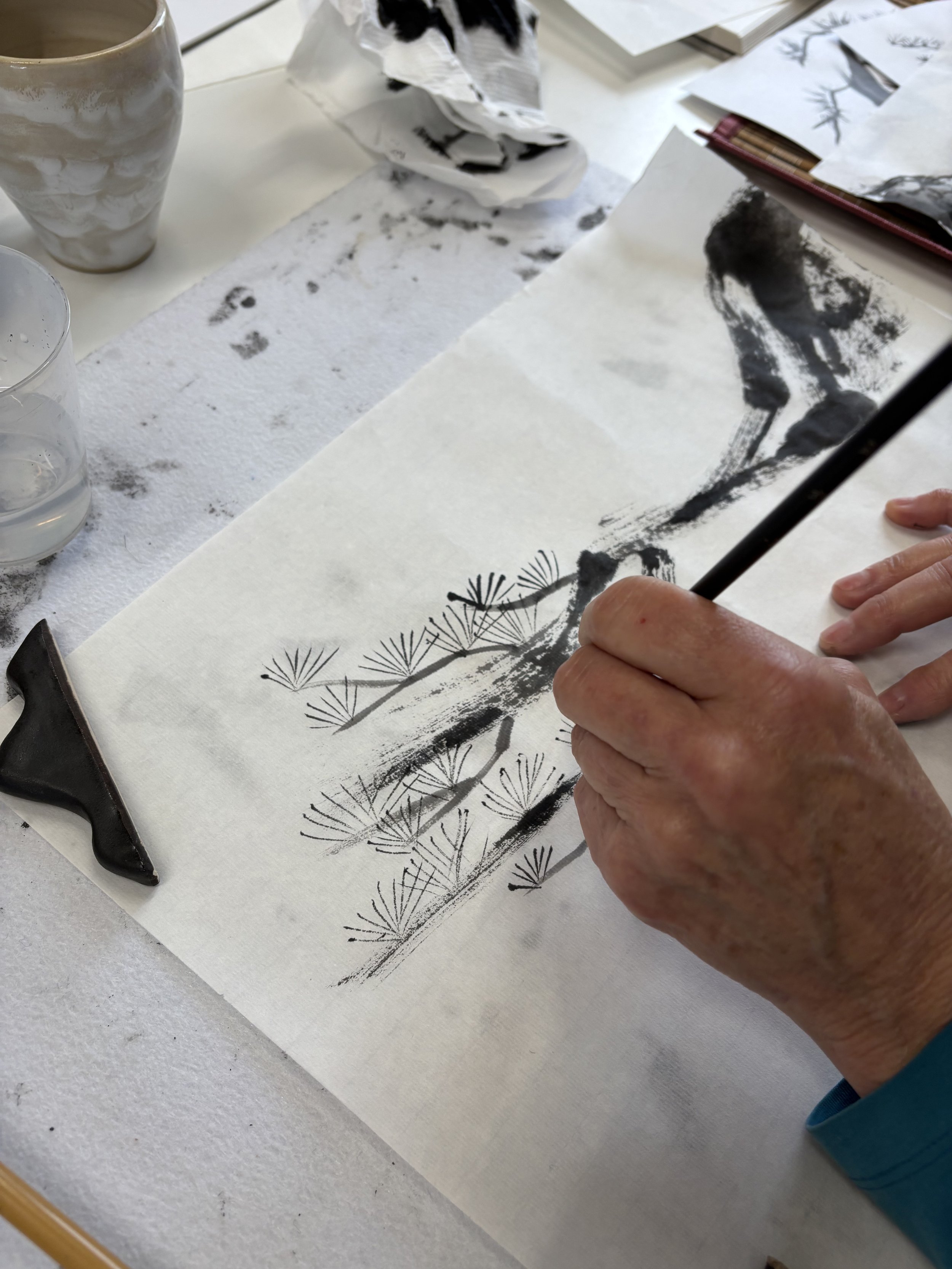
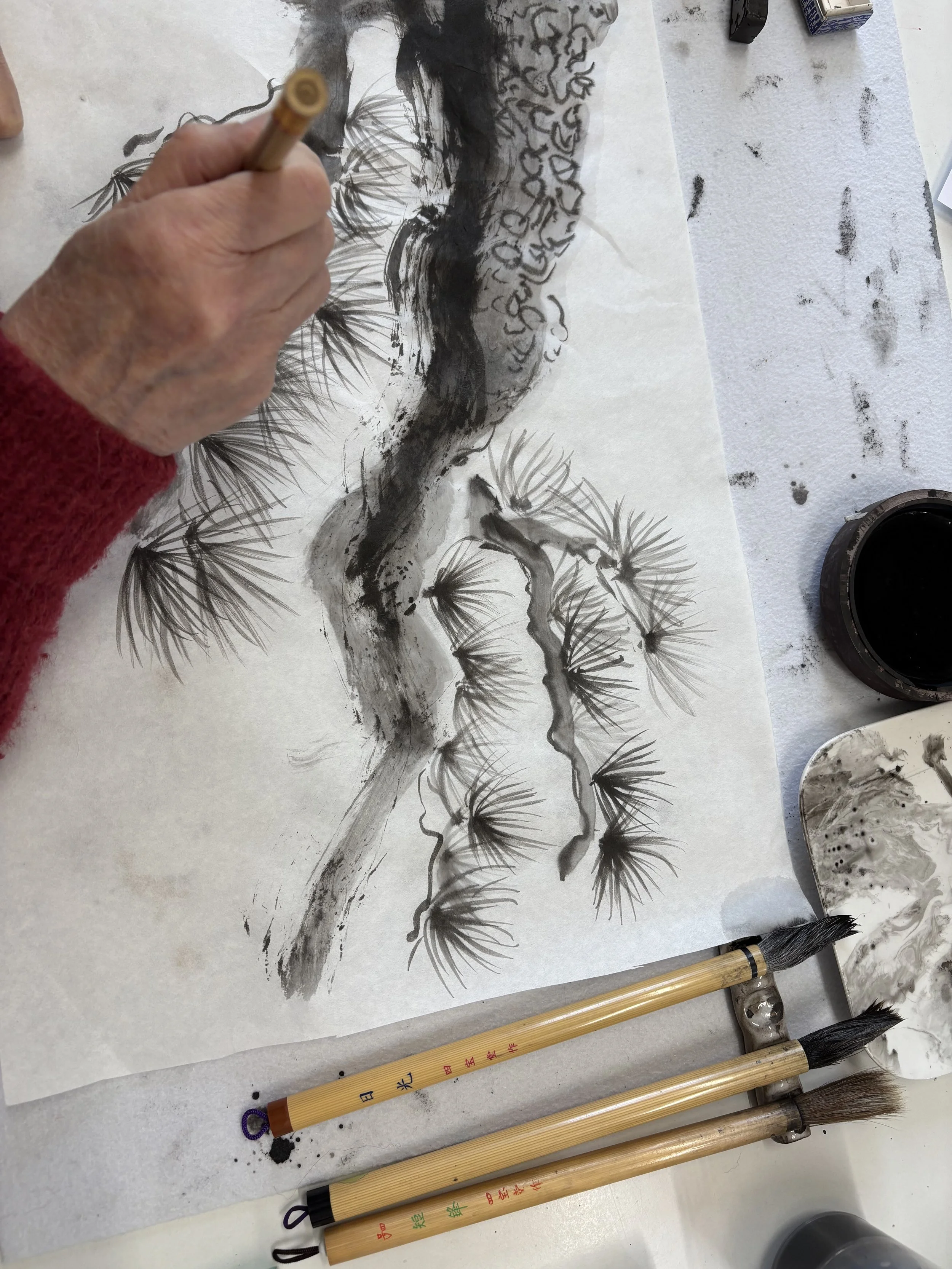
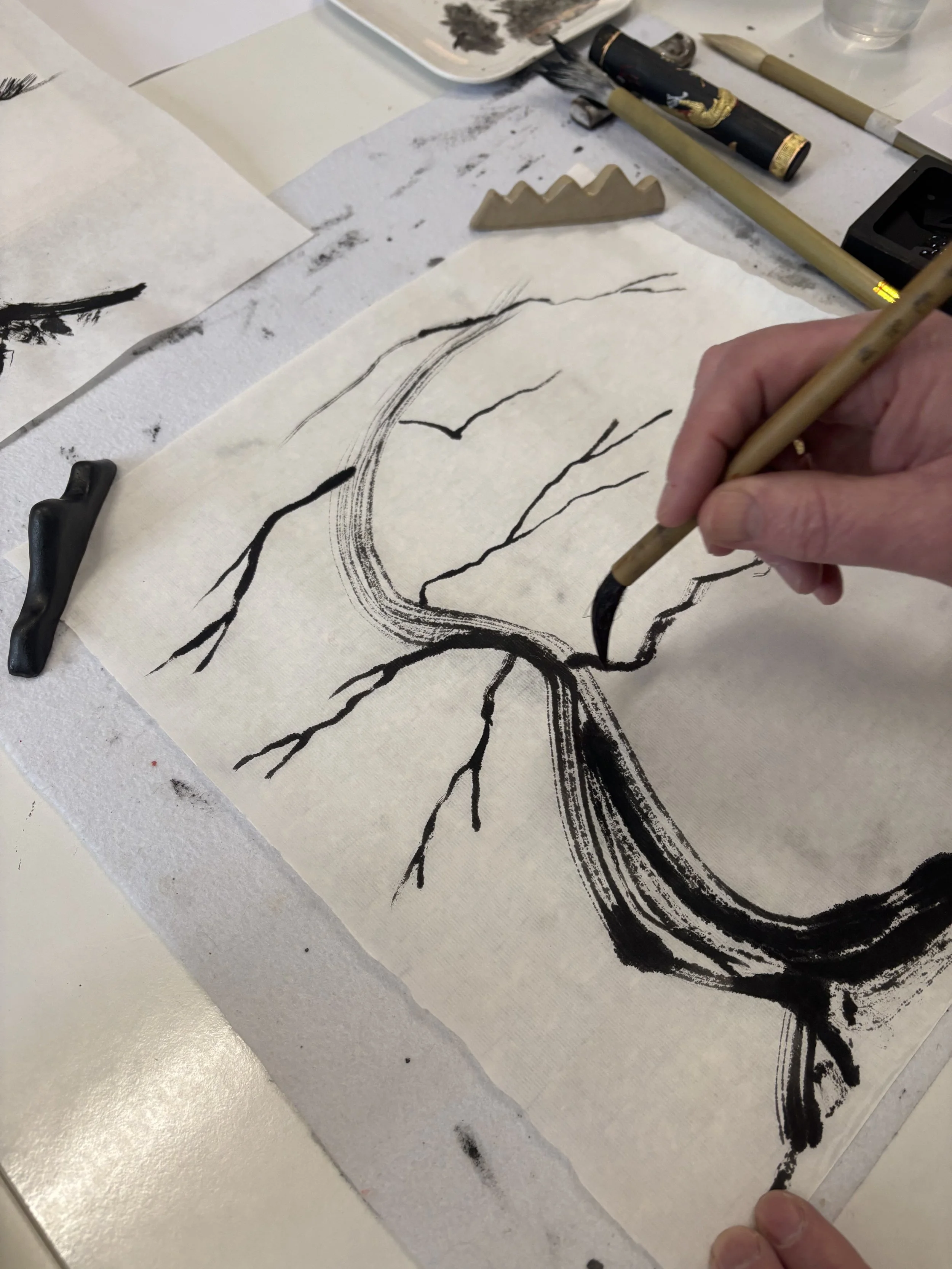
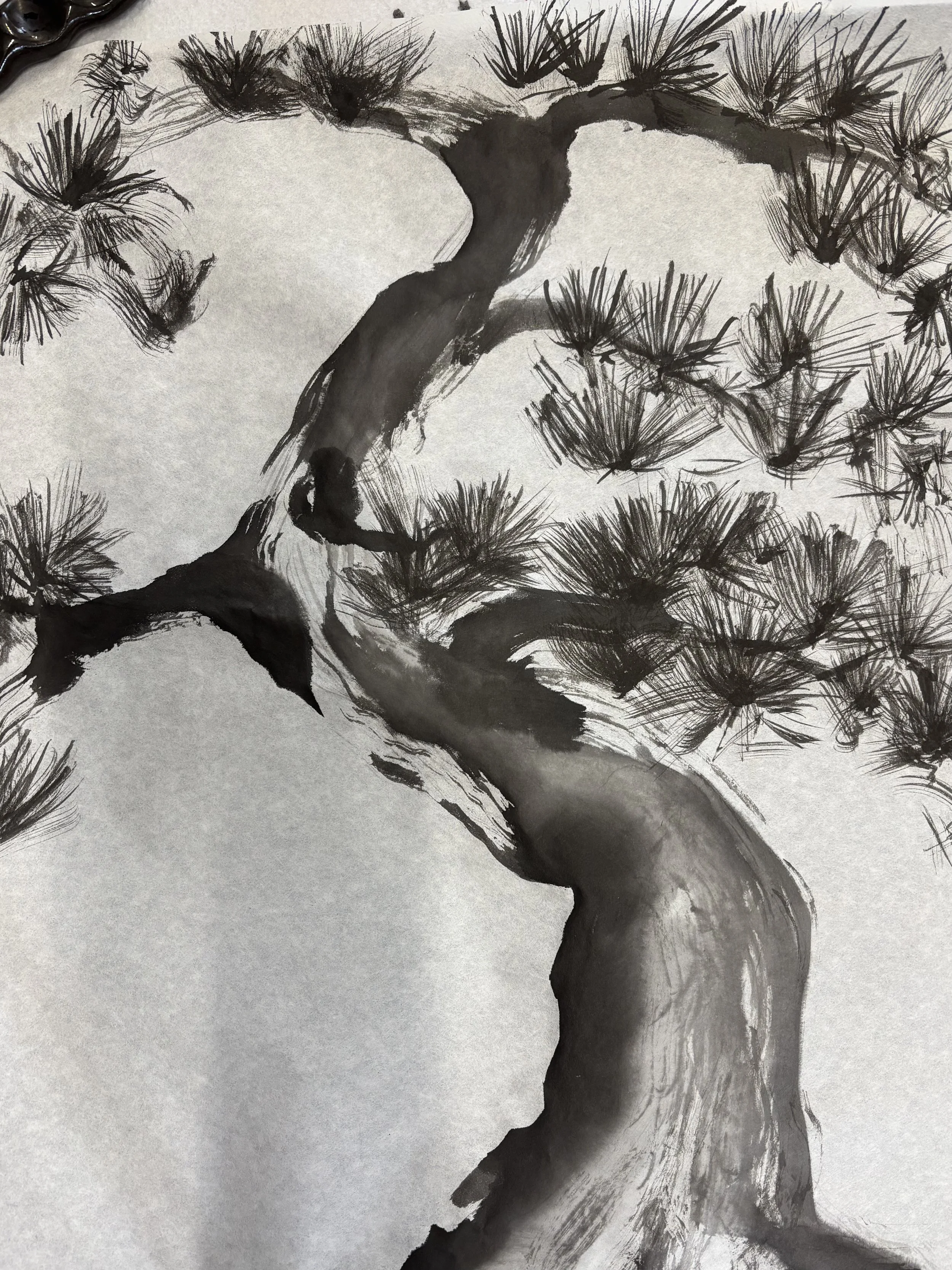
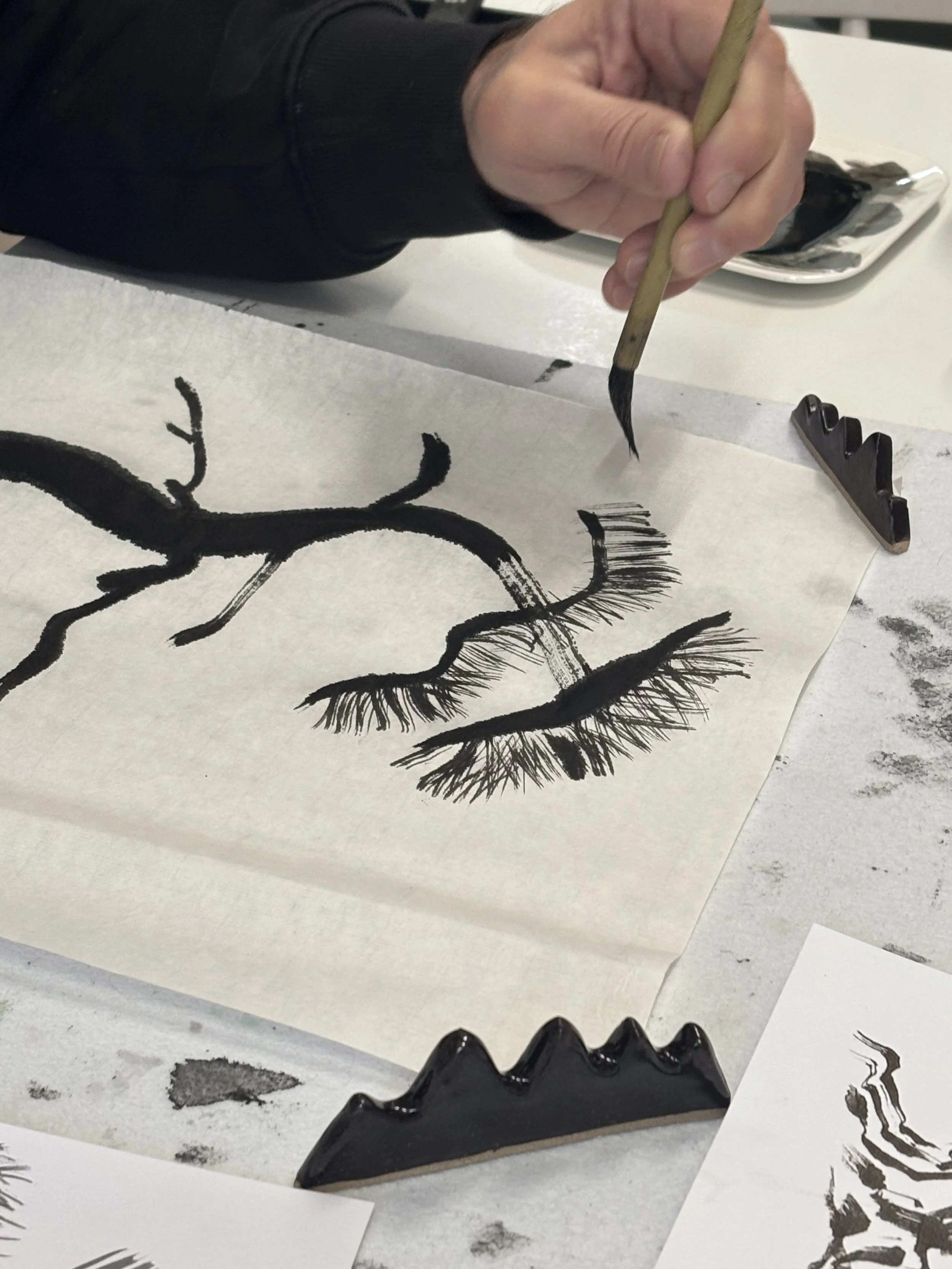
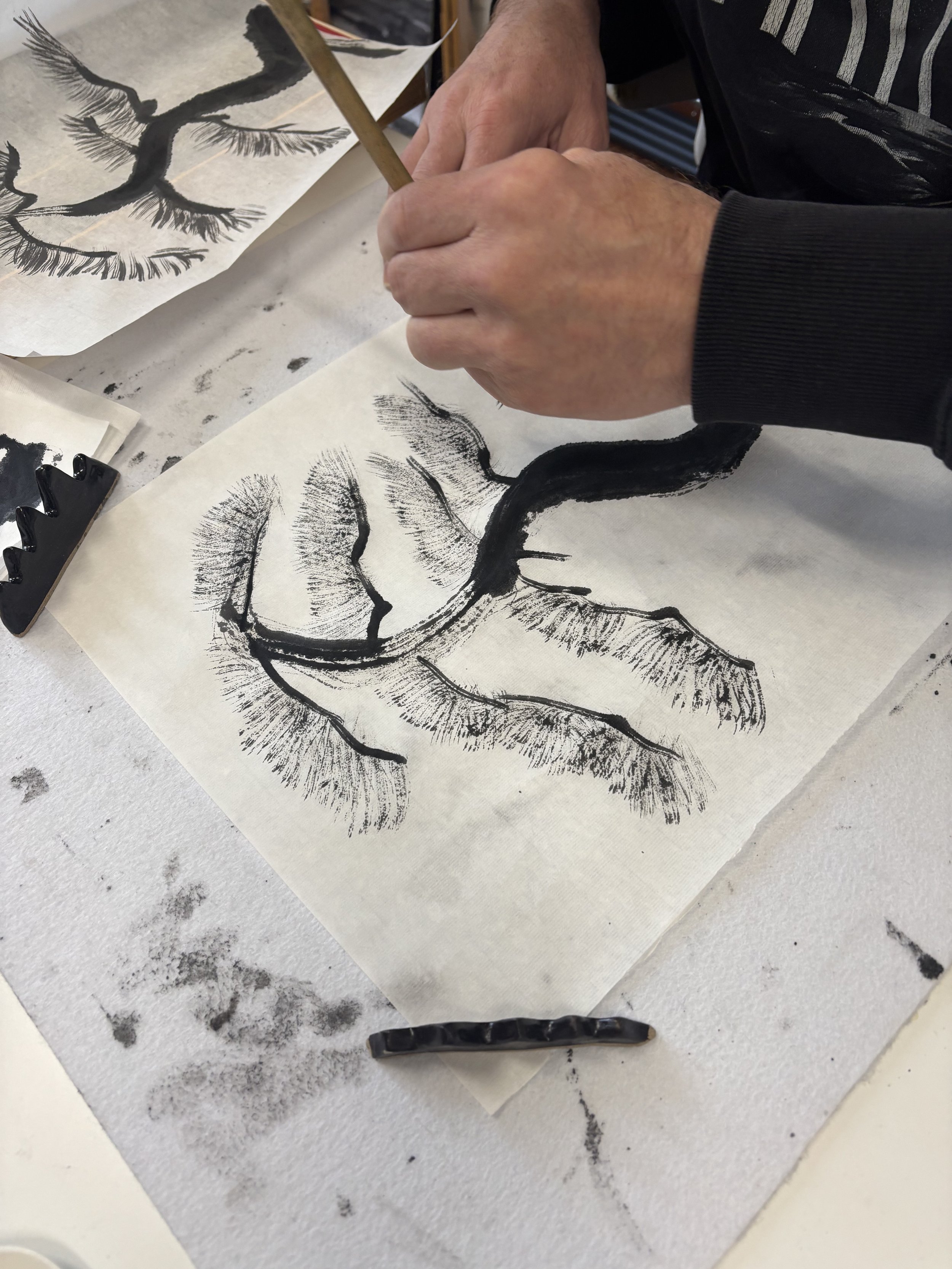
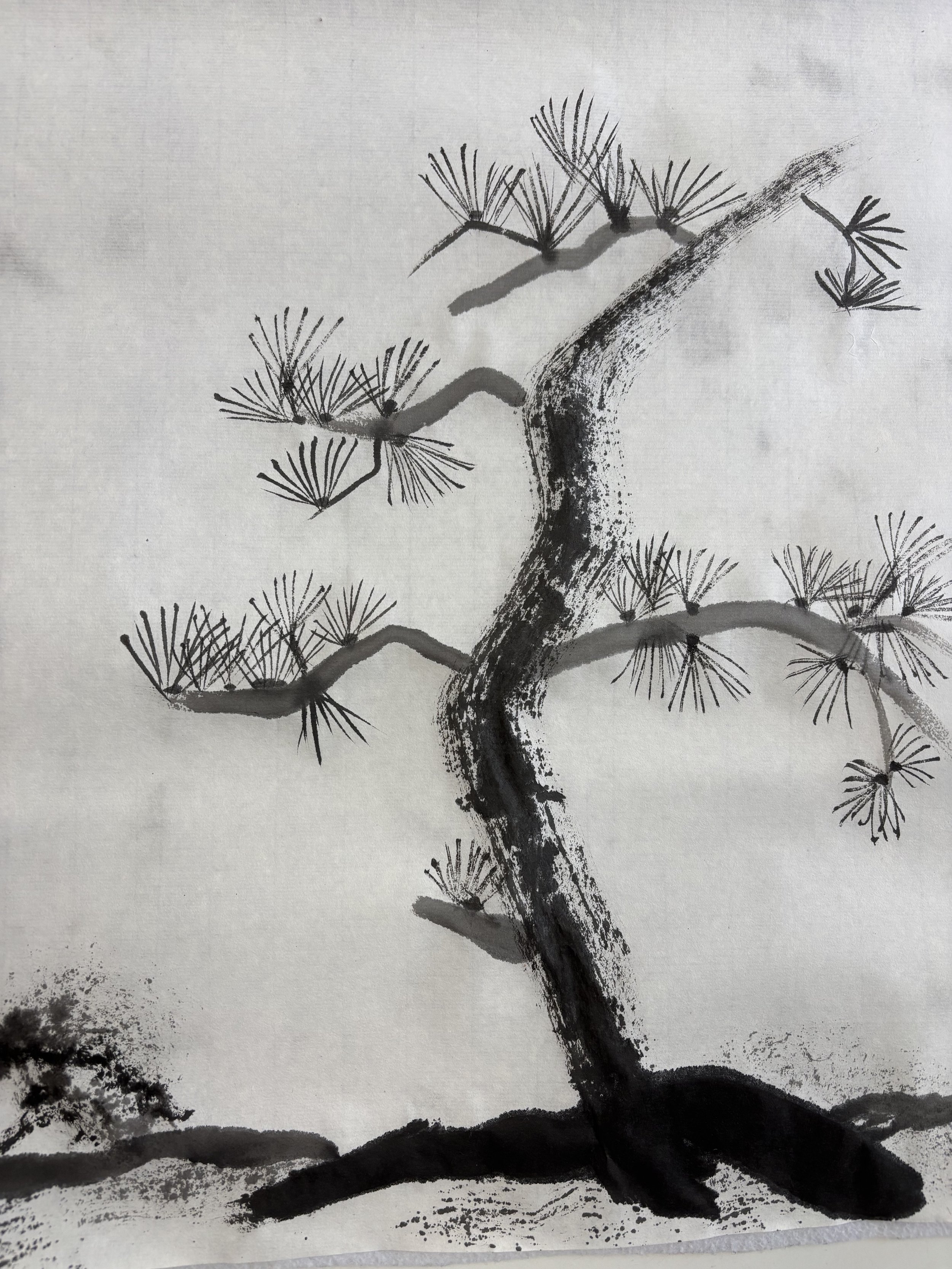
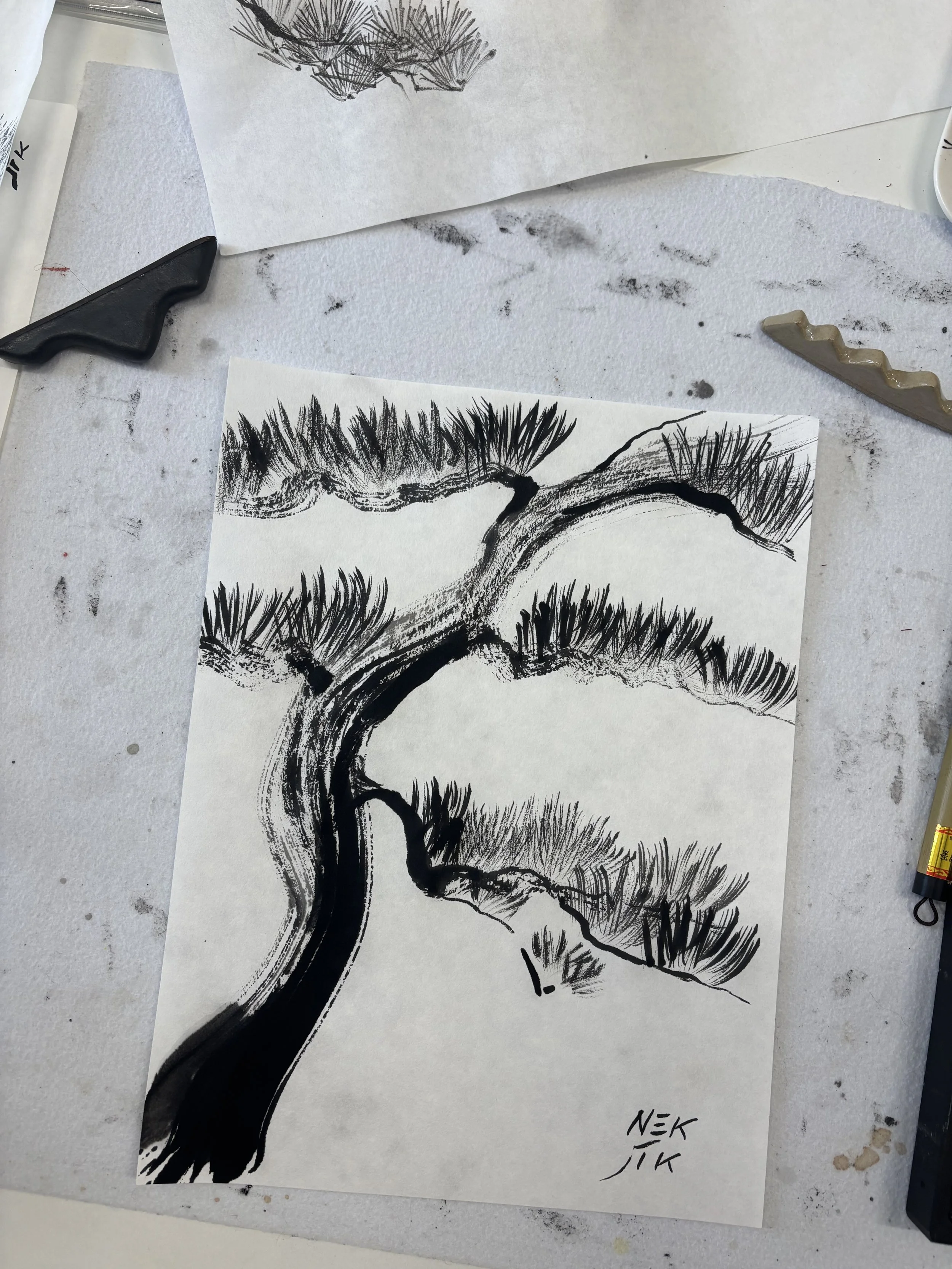
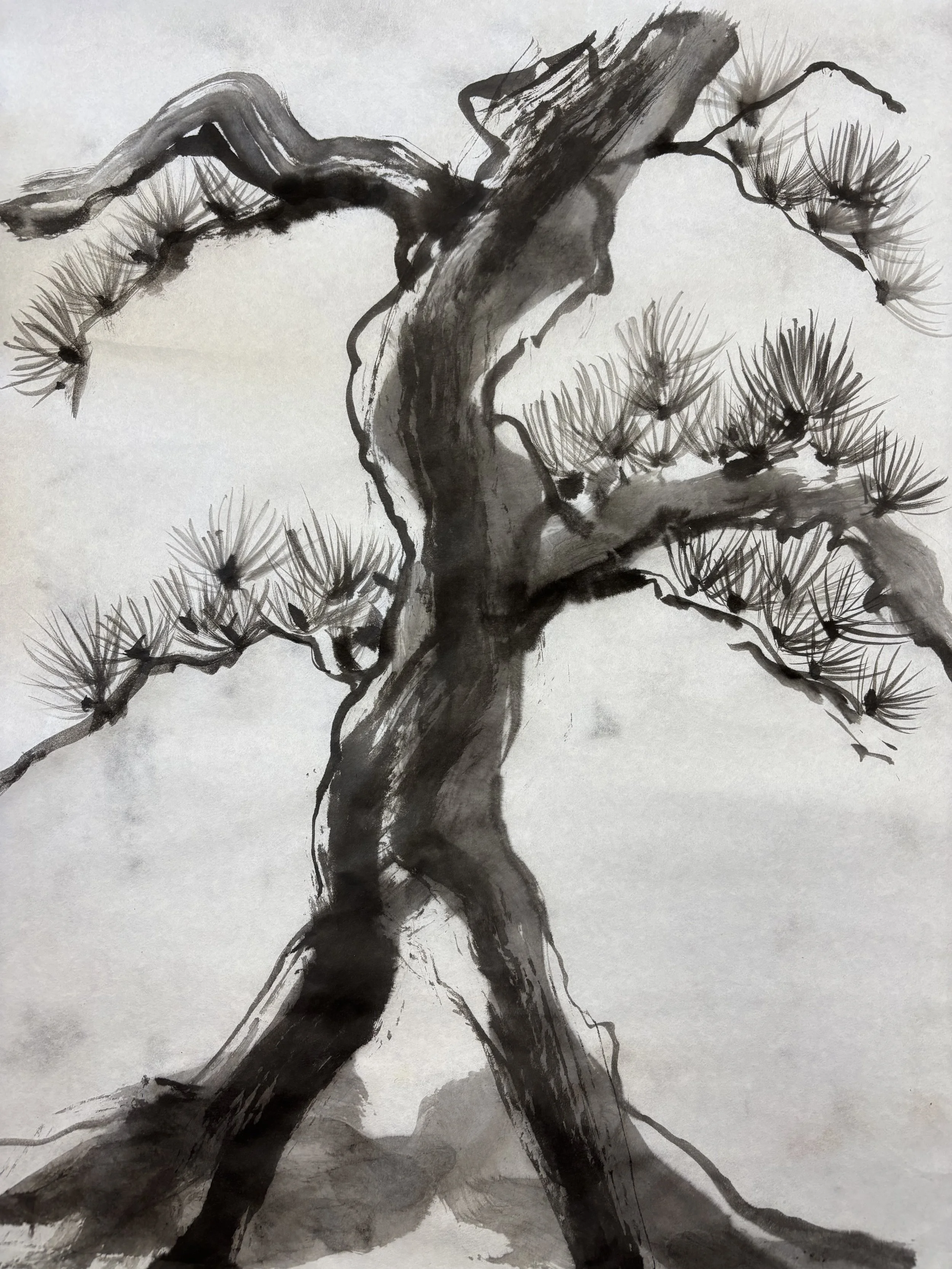
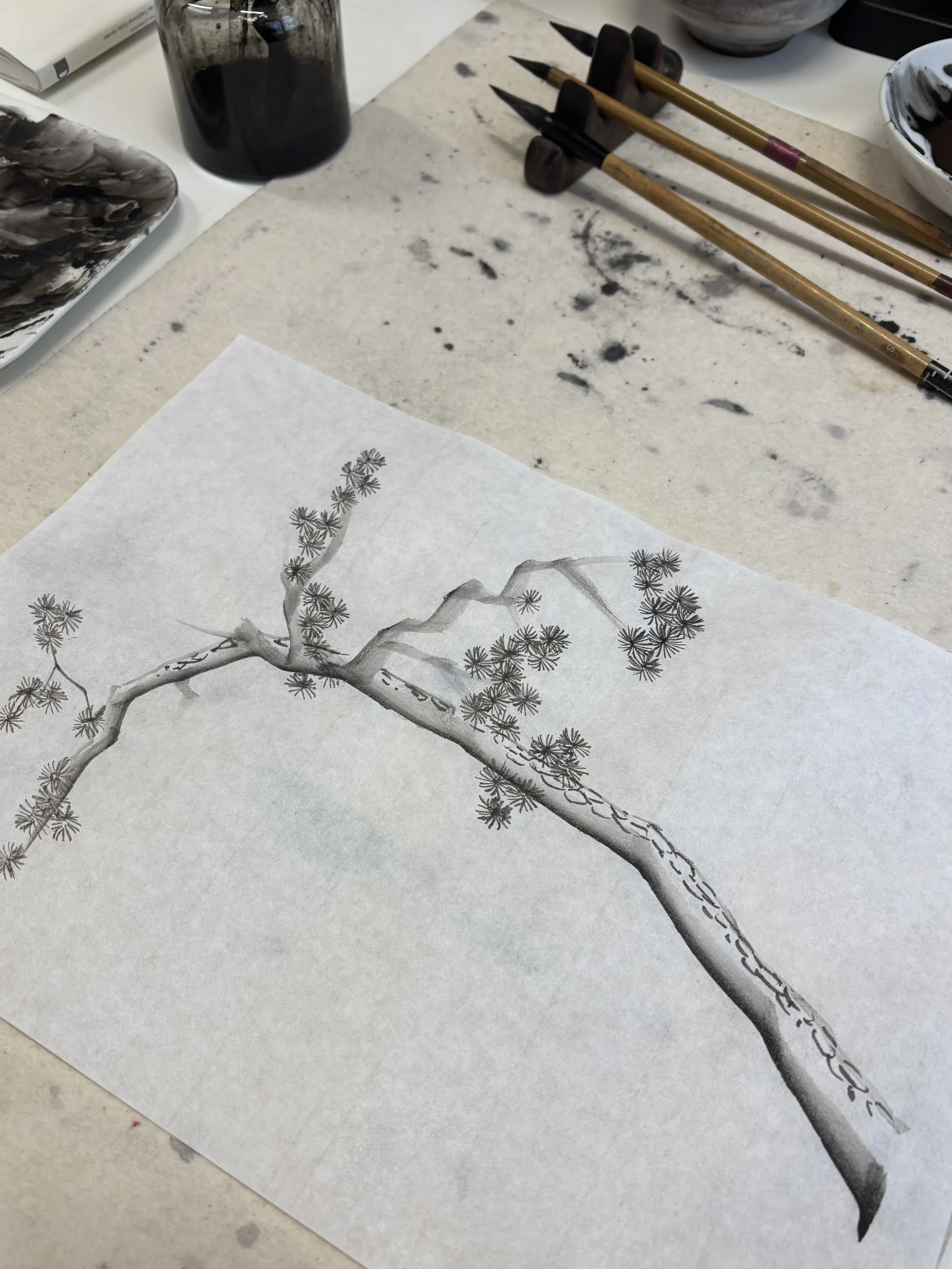
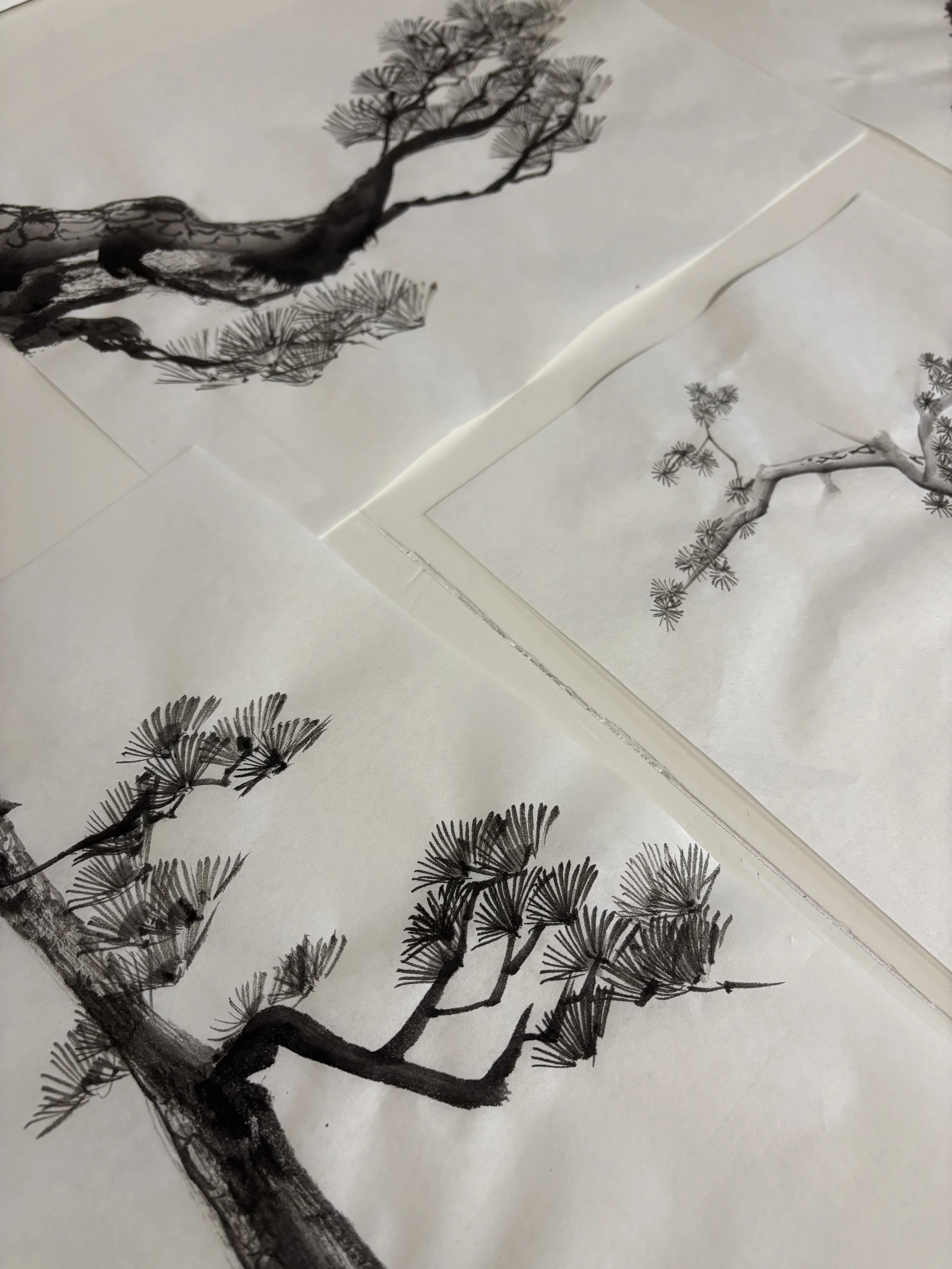
From this session, we moved into Sansui-ga (山水画: landscape painting). Sansui-ga is a form of Sumi-e that expresses not just the scenery itself, but also the air, stillness, and the inner landscape that flows through mountains, water, trees, and rocks. Building on the brushwork we practiced with the Four Noble Ones, we gradually expanded into the world of landscapes.
We began by drawing the trees and rocks that structure the scenery. The tree we focused on was the pine, a subject frequently seen in ink painting. Unlike the straight, symmetrically spreading pines common in the Netherlands, Japanese pines extend their branches asymmetrically, and their trunks often follow organic curves that reflect the movement of wind and growth over time.
This time, we also practiced Kappitsu-hō (渇筆法) to express the texture of tree trunks and rocks. By using less water in the brush and a smaller amount of ink, we created natural “skipped” strokes. In Sansuiga, this technique helps convey the strength of nature.
In Japan, pines have long been symbols of longevity, endurance, and constancy, and are considered sacred trees where the divine may dwell. They also appear in kadomatsu, the traditional New Year decoration, marking a fresh and pure beginning. In landscape painting, pines are an important and meaningful subject.
Although it may be challenging to capture pines we’ve never seen in real life, everyone drew elegant and majestic trees in their own way. The individuality and breath in each line made the results truly impressive. I’m very much looking forward to completing the Sansuiga in the next session.
今回から山水画に入りました。山水画は墨絵の表現のひとつで、山や水、木や岩など自然の要素を通して風景だけでなく、その中に流れる空気や静けさ、そして心の風景を表していきます。これまで描いてきた四君子の筆づかいを生かしながら、少しずつ風景の世界へと広げていきます。
まずは風景を構成する木と岩から描き始めました。木は墨絵の作品の中でも頻繁に描かれる松です。オランダで見かける、まっすぐに立ちシンメトリックに葉を伸ばす松と違って、日本の松は非対称に枝を広げ、幹は風や時間の流れを感じさせるような有機的な曲線を描く姿が印象的です。
今回は木の幹や岩の質感を表すために渇筆法(かっぴつほう)にも取り組みました。筆の水分を少なくし、墨を少なめに取って描くことで、かすれを生かした表情が生まれます。山水画ではこうしたかすれの表現が、自然の力強さを感じさせてくれます。
日本では松は古くから長寿や不変、忍耐の象徴とされ、神様が宿る木としても大切にされてきました。また、お正月の門松にも見られるように、新しい年を迎える際の清らかな目印としても用いられます。山水画の中でも松はとても大切な存在として描かれてきました。
見たことのない松を感じながら描くのは難しいかもしれないと思いましたが、みなさん思い思いに優雅で立派な松を描いてくれました。それぞれの線の中に個性や呼吸が感じられてとても印象的でした。次回、山水画を完成させるのがとても楽しみです。