
From Elements to Landscape: Practicing Mountains in Ink
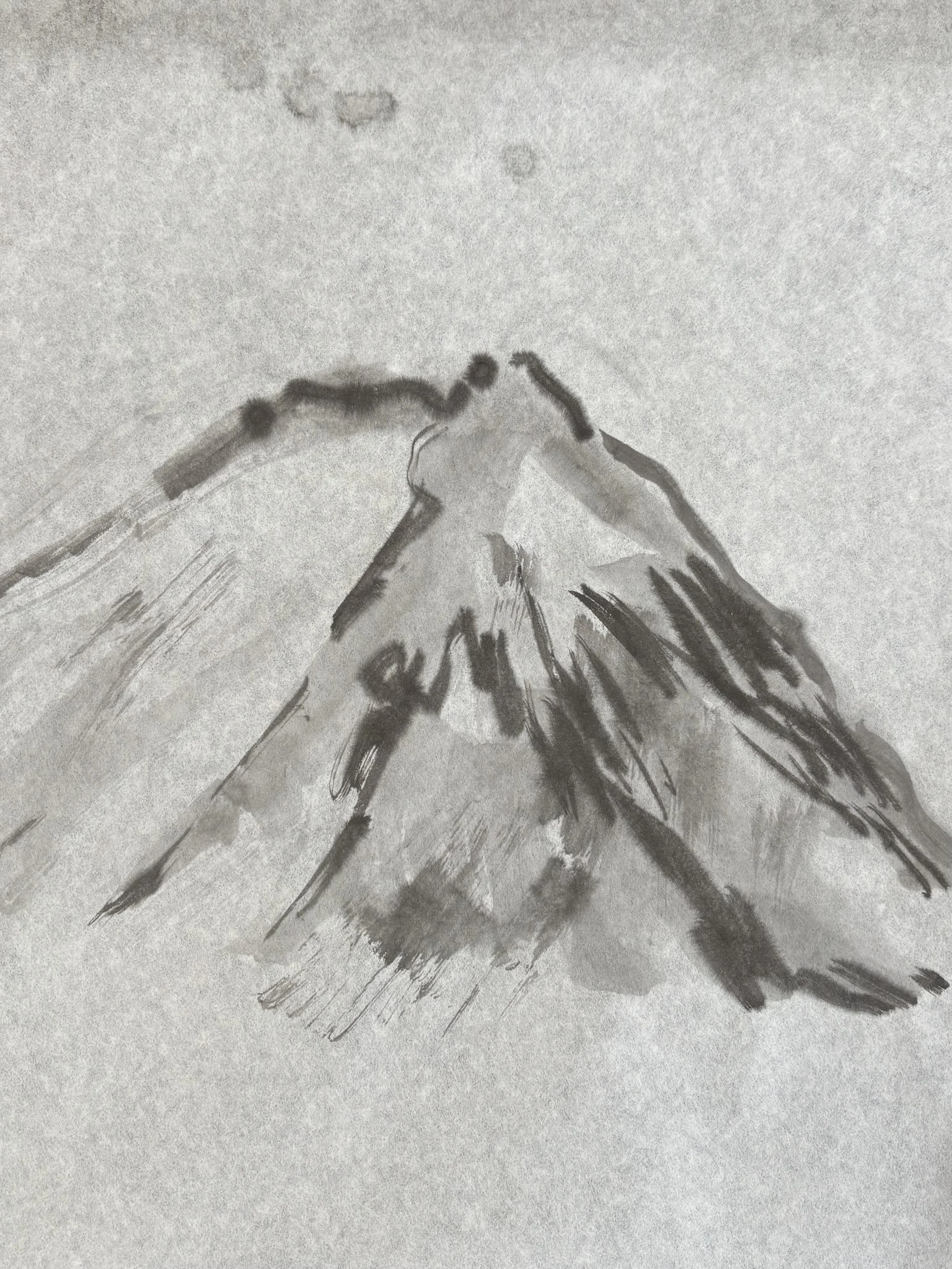
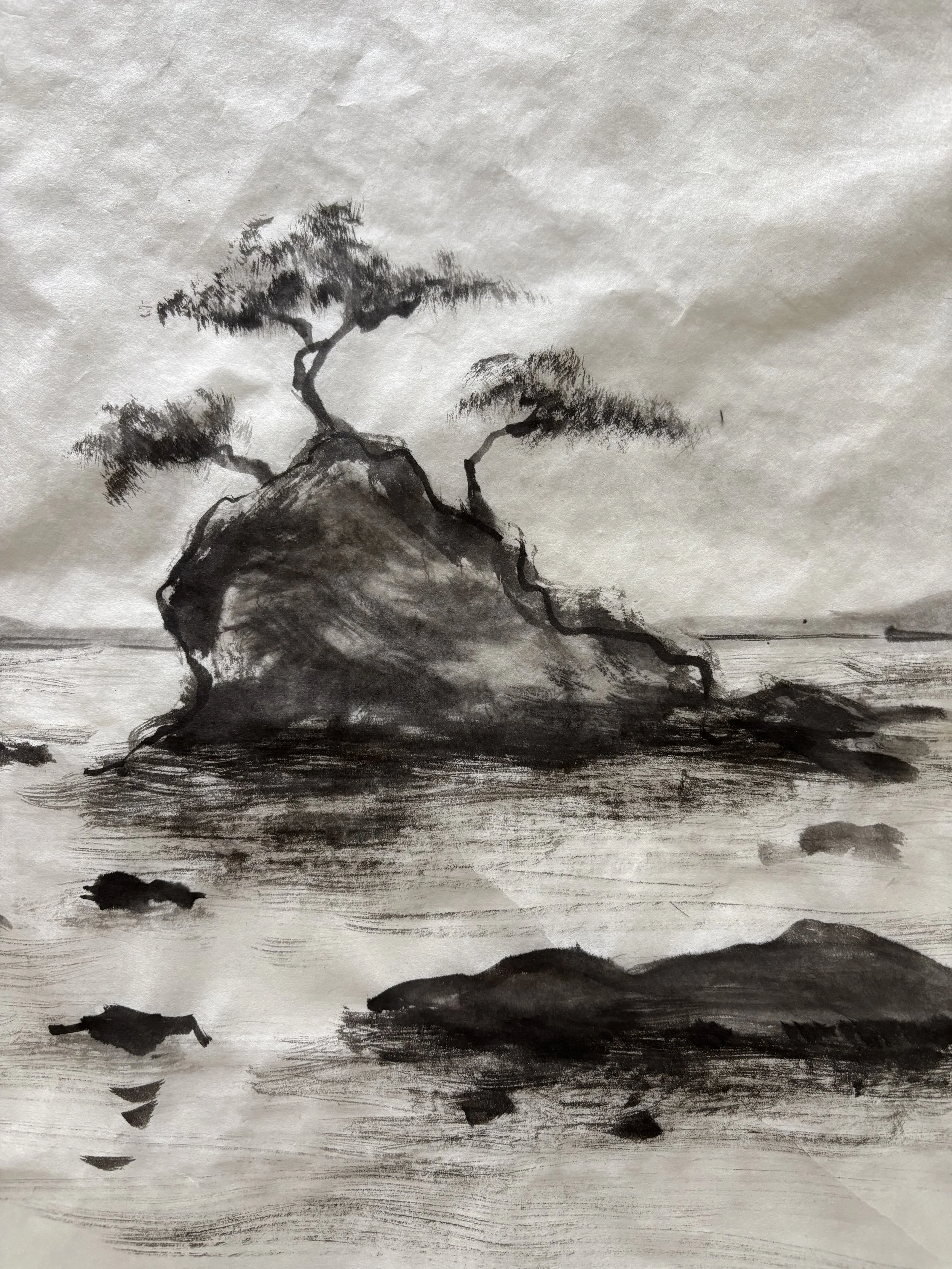
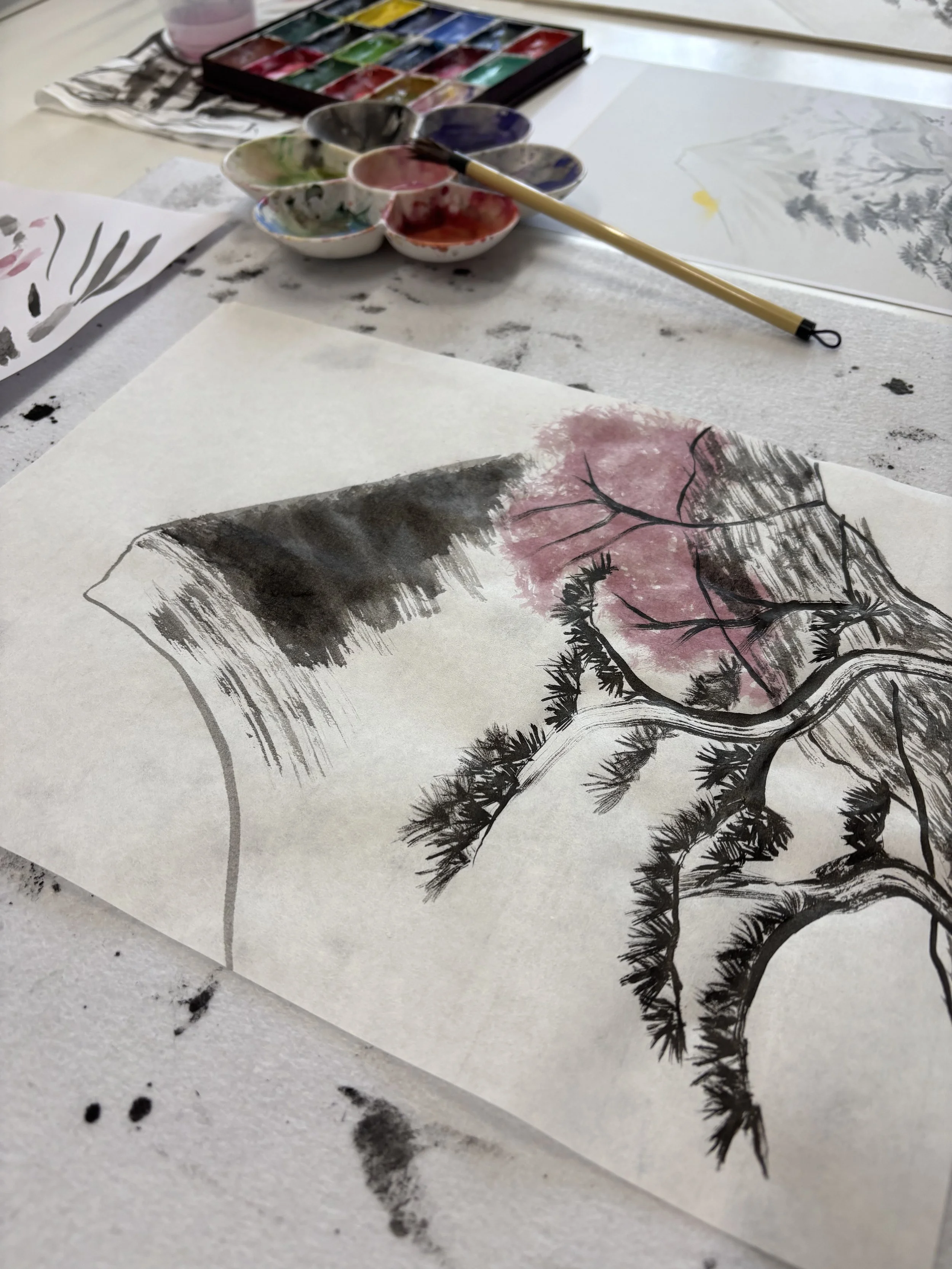
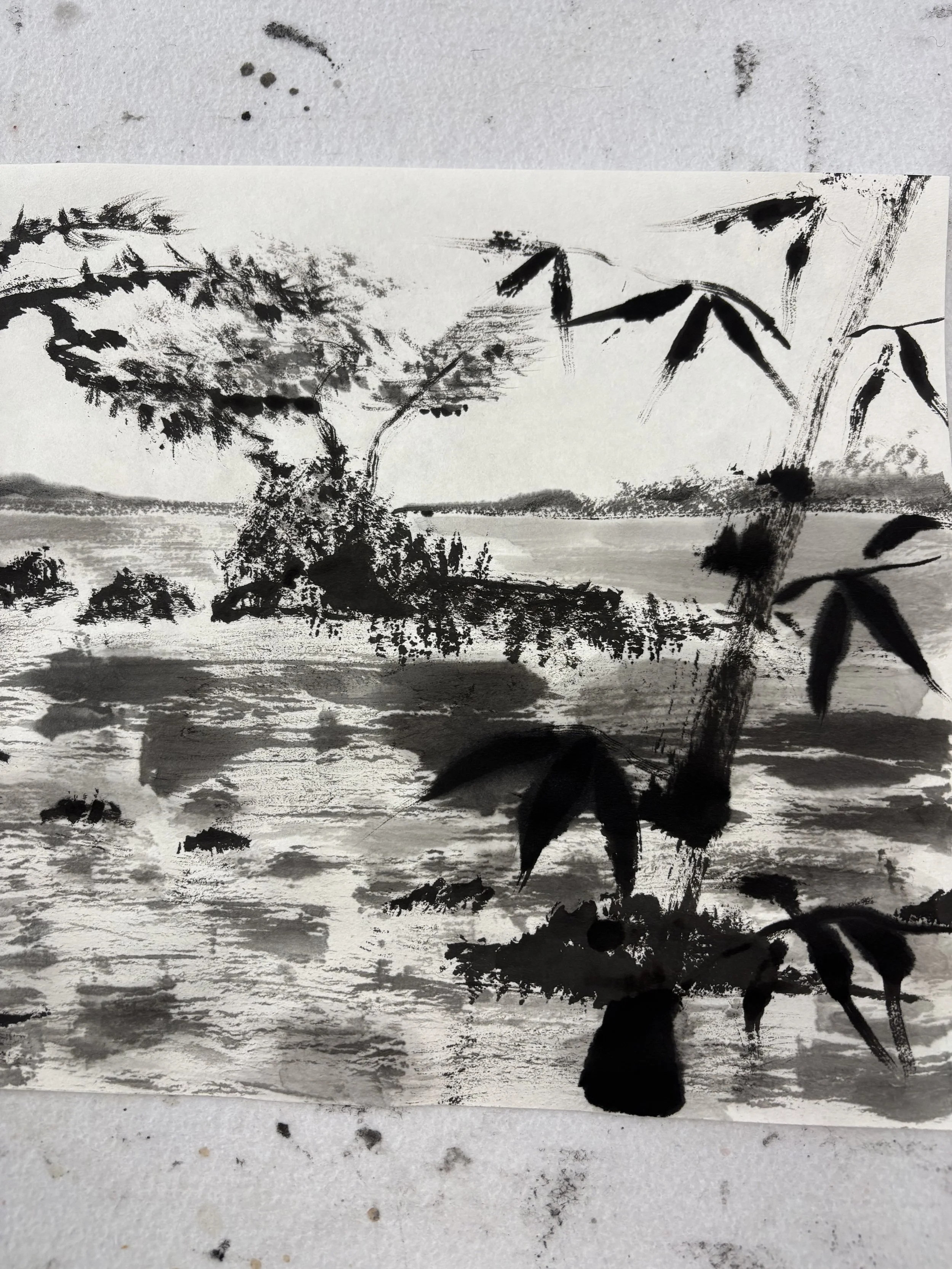
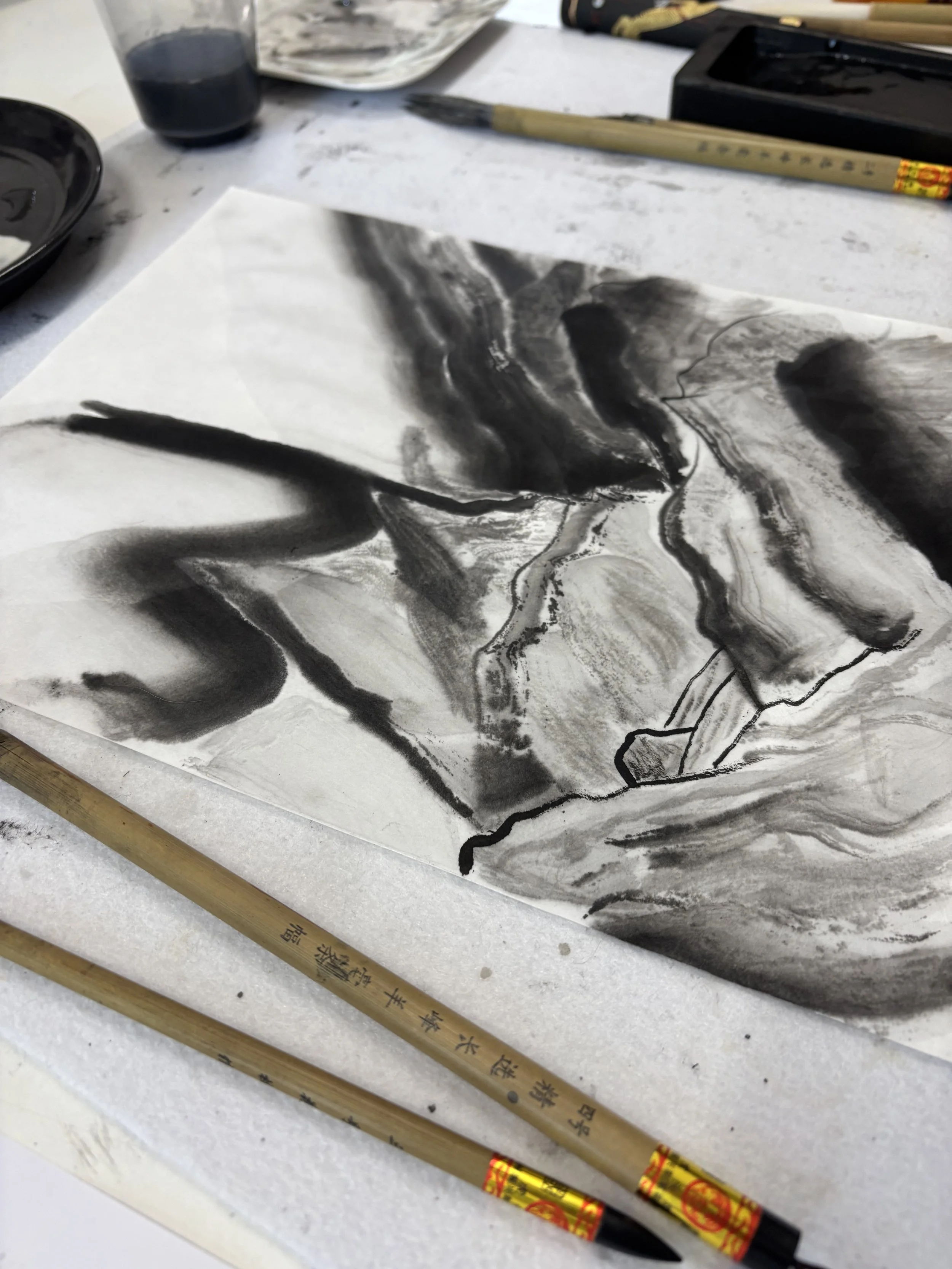
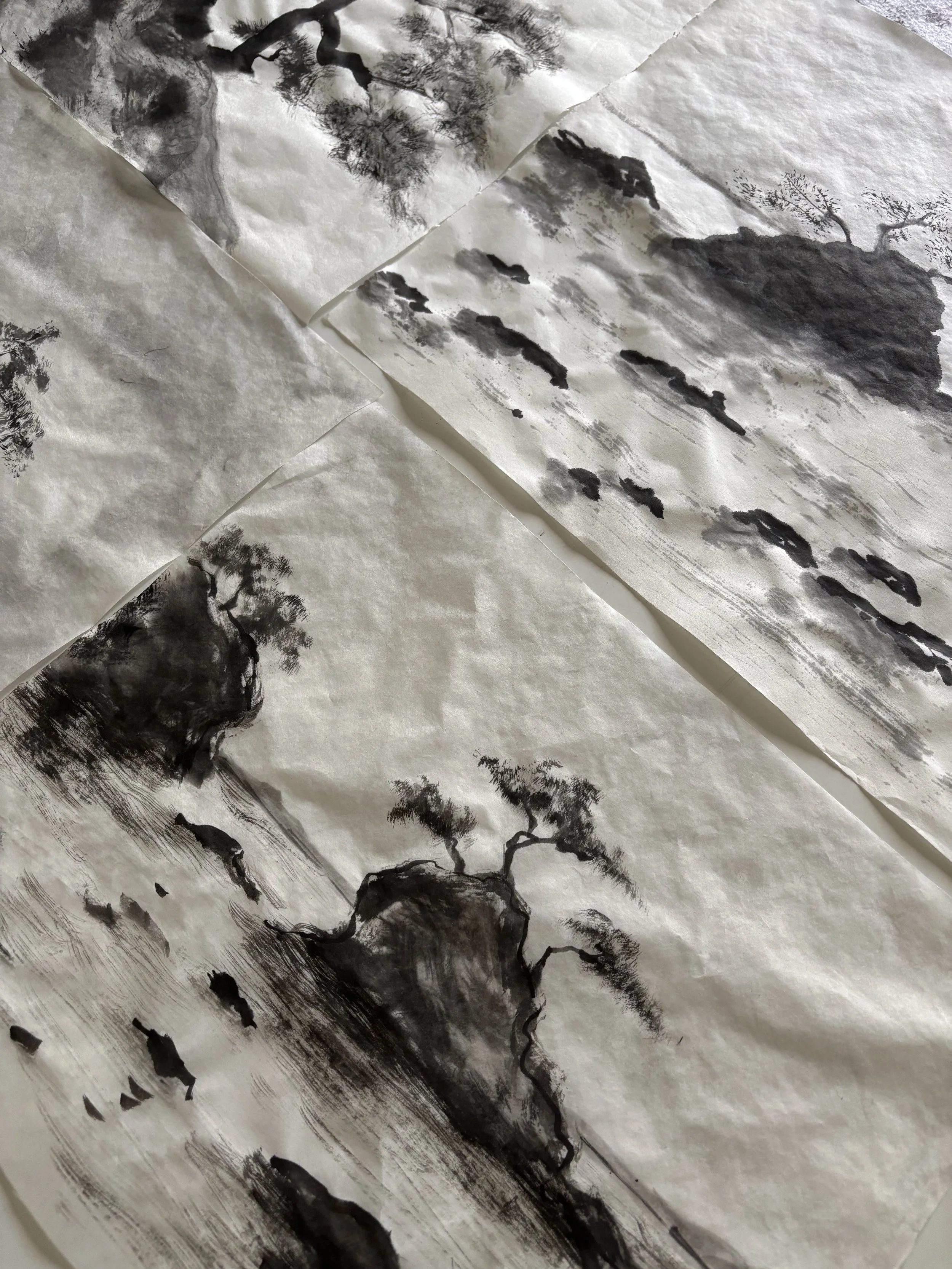
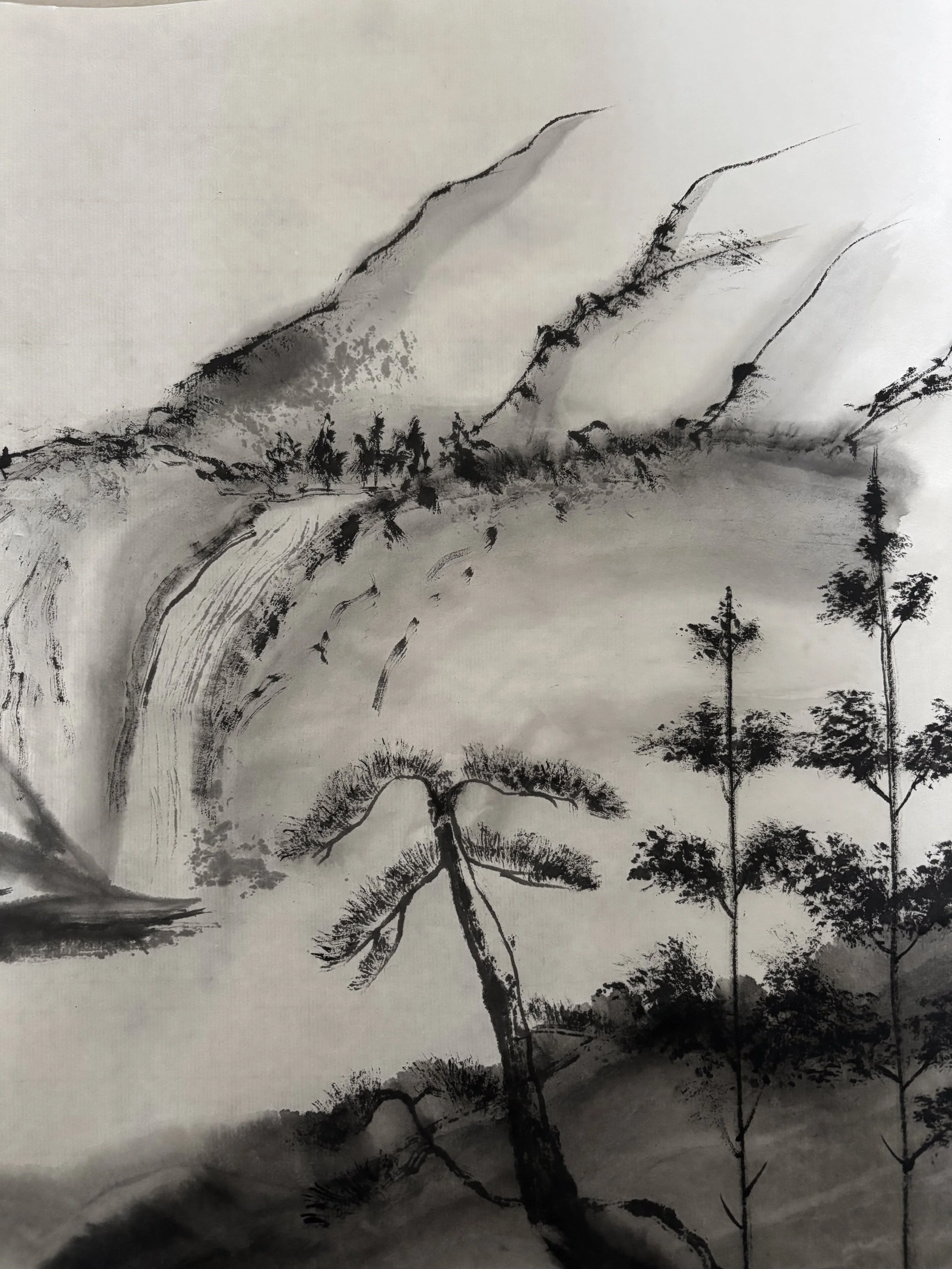
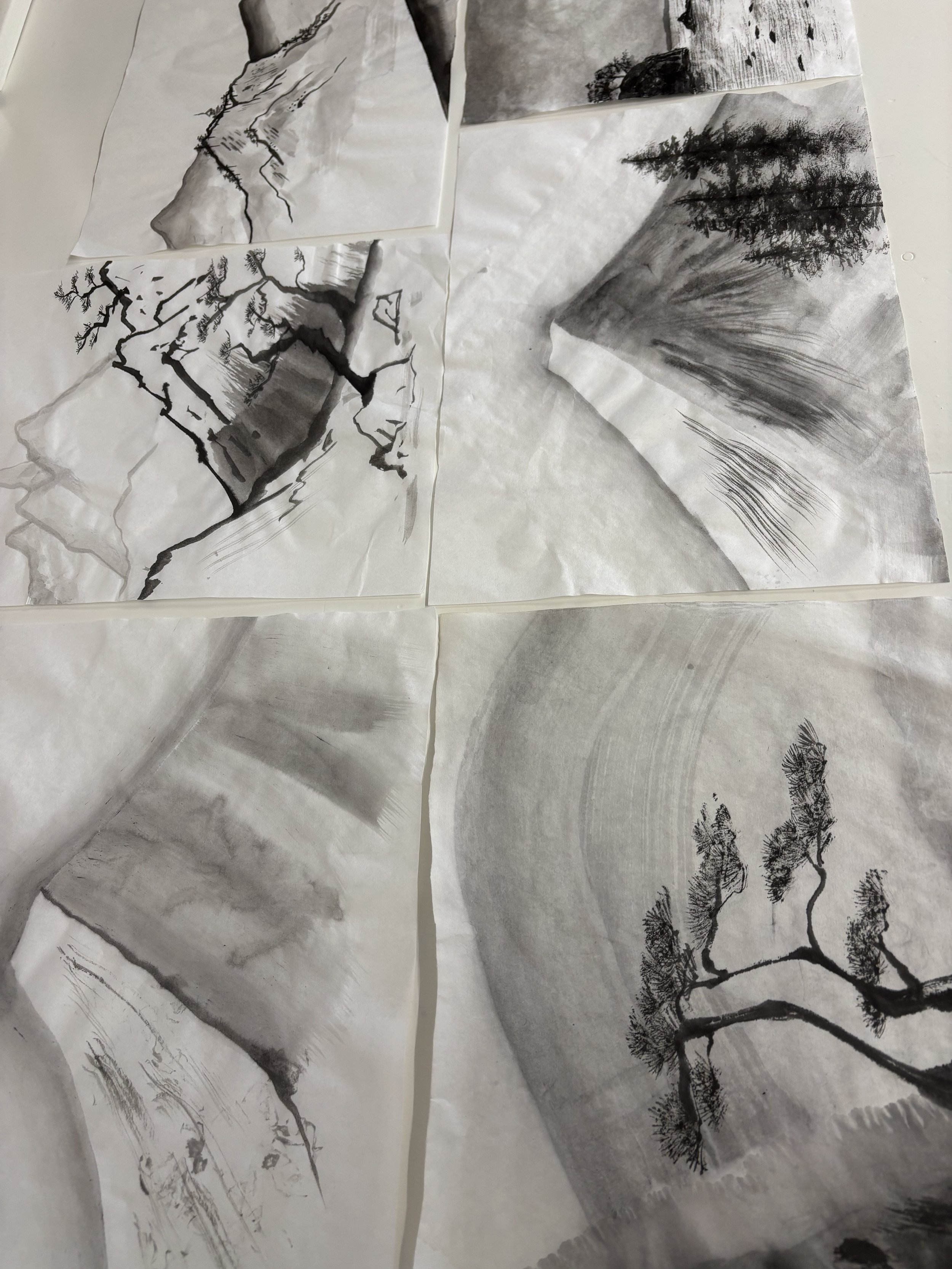
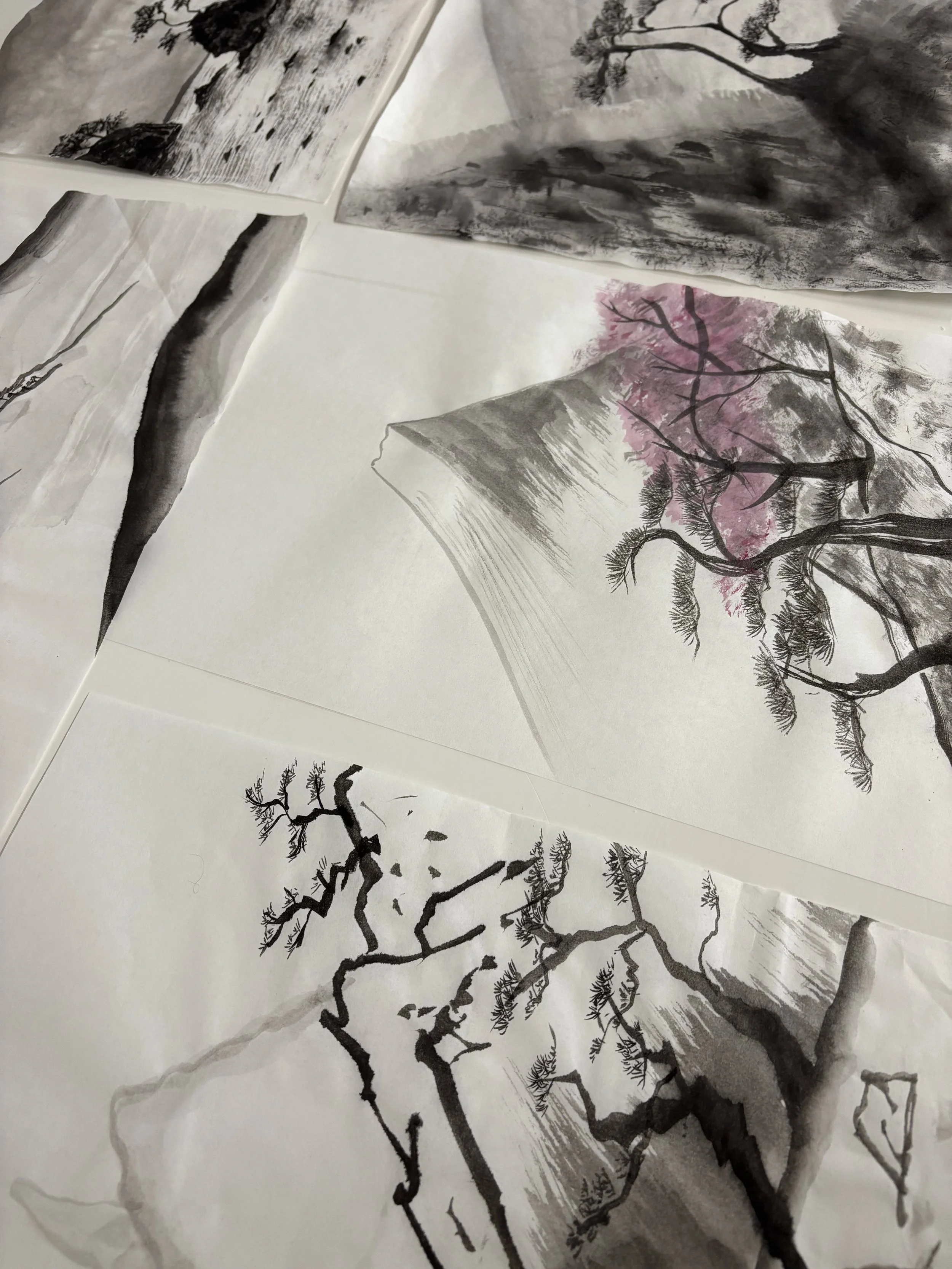
Since last week, we have started working on sansui-ga (landscape painting). As I mentioned before, sansui-ga is a form of landscape painting that is built from learning individual elements such as trees, rocks, mountains, and waterfalls. This time, we focused especially on painting mountains.
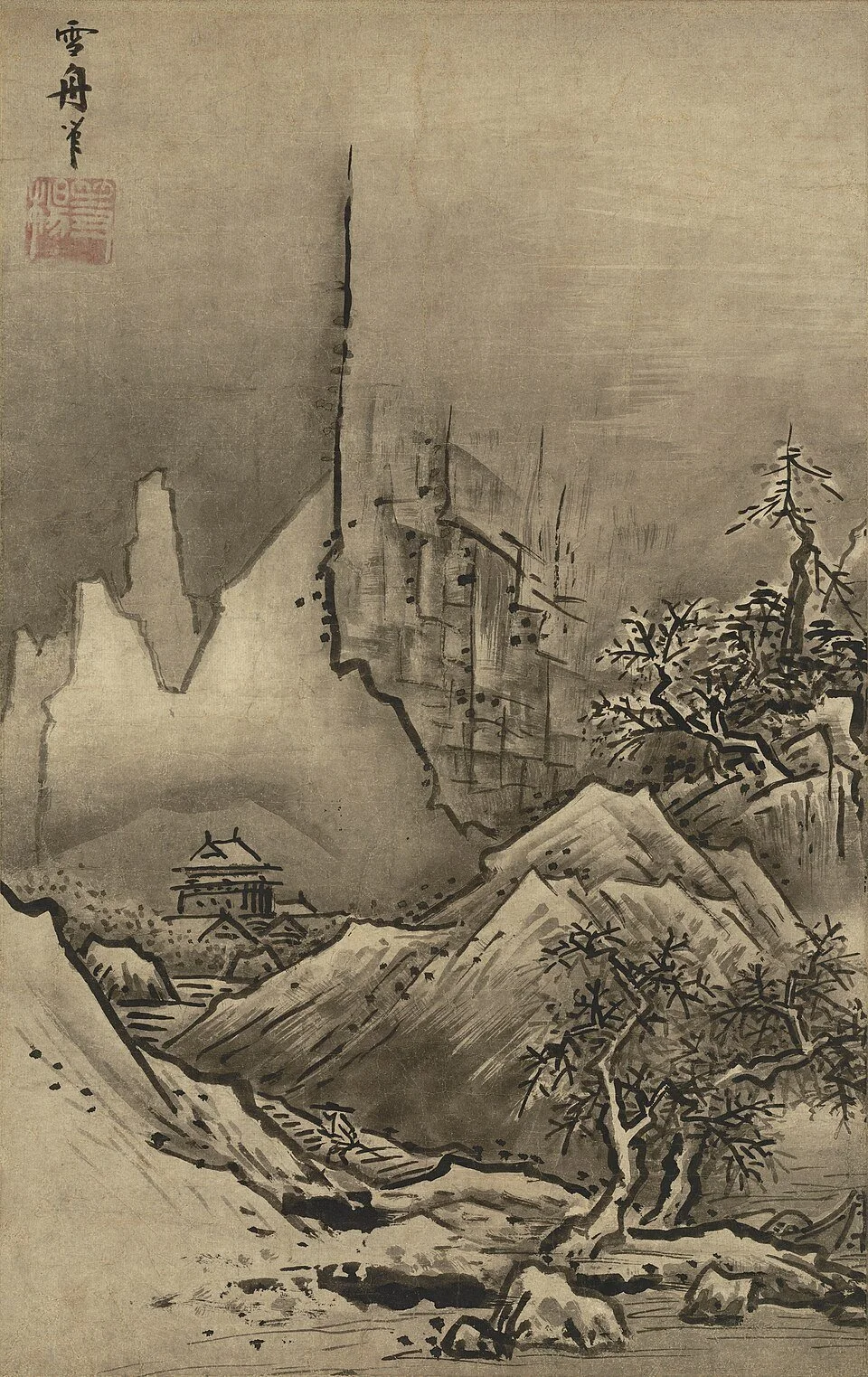
Before beginning the exercises, I introduced the students to works by Sesshū Tōyō (1420–1506), who is an important figure in Japanese ink painting. Everyone was surprised by his bold and sometimes almost abstract way of expressing mountains. I would have loved to look together at more ink paintings from China and Korea as well, but within our limited time we concentrated on practicing mountain forms. Some students were inspired by Sesshū’s work and began constructing their own unique landscapes.
Landscape painting includes many different elements and requires time and patience. At the same time, unlike painting plants, it allows a more spacious approach. Rather than focusing on small details, students could use their whole body in the process and work in a more relaxed and open way.
Sesshu "Autumn And Winter Landscapes" Winter. Muromachi period, late 15th–early 16th century. Creative Commons
先週から山水画に取り組んでいます。先日も少し触れましたが、山水画とは風景画のことで、木、岩、山、滝など、それぞれの要素を学んでからこそ構築できるものです。今回はその中でも、山を中心に描きました。
制作に入る前に、日本の水墨画において重要な存在である雪舟(1420年–1506年)の作品を皆さんに見ていただきました。その斬新で抽象的ともいえる山の表現に、皆さんも驚かれていました。本当は中国や韓国の水墨画も含め、さらに多くの作品を一緒に鑑賞したかったのですが、限られた時間の中で山を描く練習に集中しました。雪舟の作品にインスパイアされ、独自の風景を構築する生徒さんもいらっしゃいました。
山水画は描く要素が多く、時間もかかるため忍耐力が必要ですが、植物を描くときとはまた違い、細部にとらわれすぎず、おおらかに身体全体を使って、少しリラックスした気持ちで制作できたように感じます。
雪舟作「秋冬山水図」より、冬景図。室町時代・15世紀末~16世紀初の作品。