
Orchid — The Elegance and Spirit of Spring
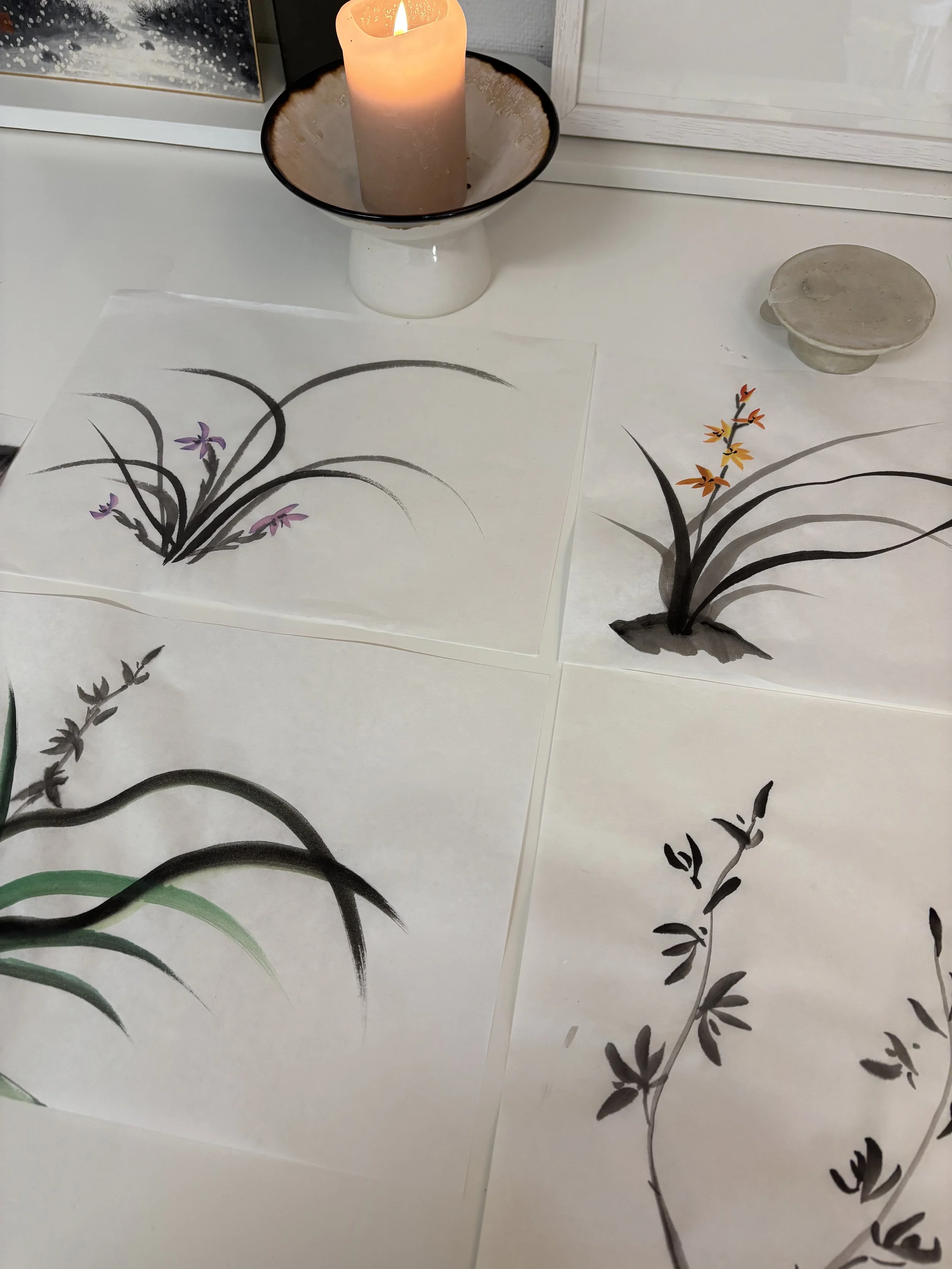
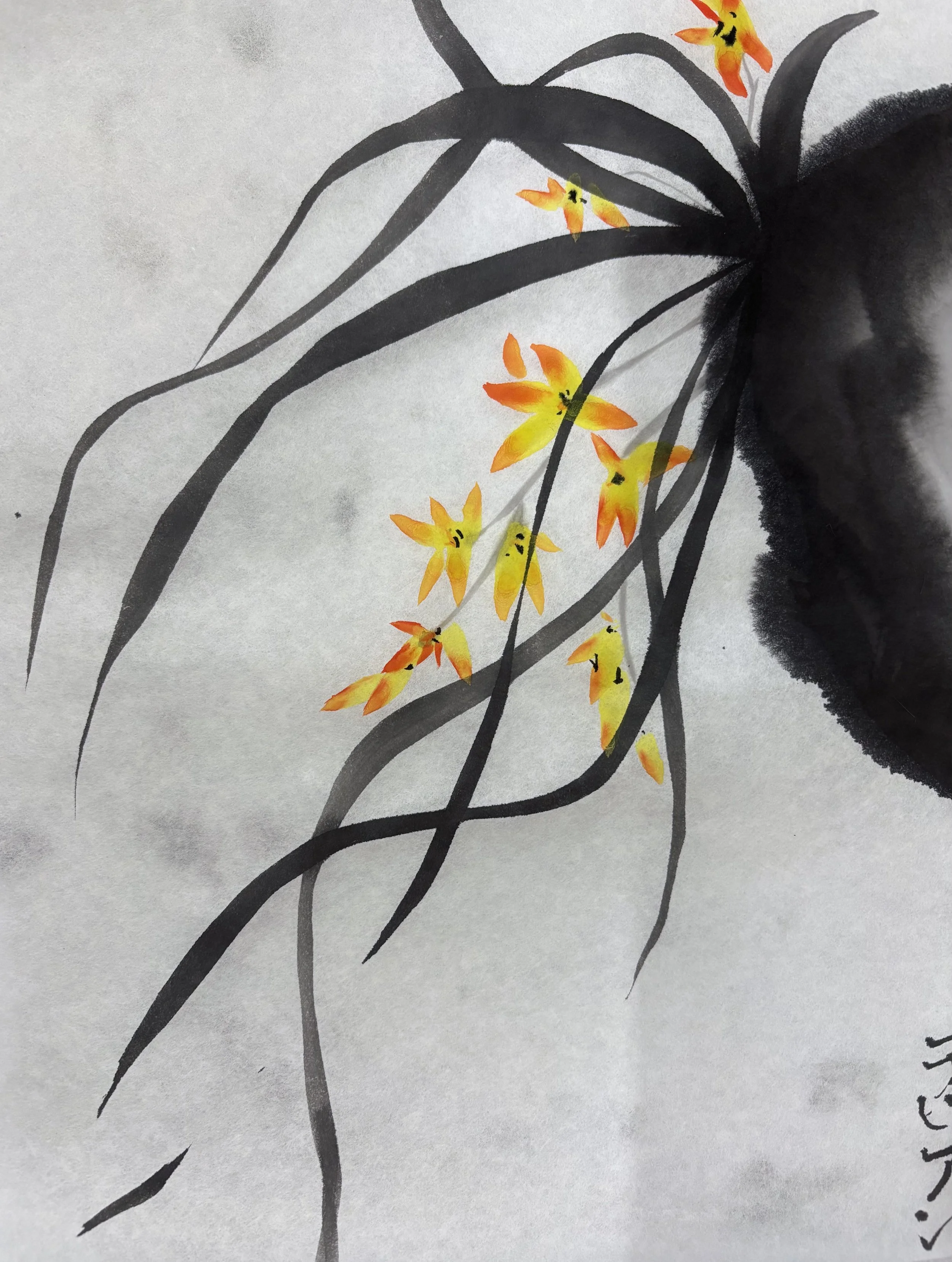
The orchid is one of the Four Noble One (plum, orchid, bamboo, chrysanthemum) and has long been depicted in East Asian ink painting as a symbol of spring. Growing quietly in the wild, its delicate and elegant form represents grace, purity, and modesty rather than flamboyance. While understated, its leaves and flowers carry a natural rhythm and vitality, symbolizing the arrival of spring and the joy of new life. Understanding this meaning helps to deepen one’s appreciation of both the appearance and the depiction of orchids in painting.
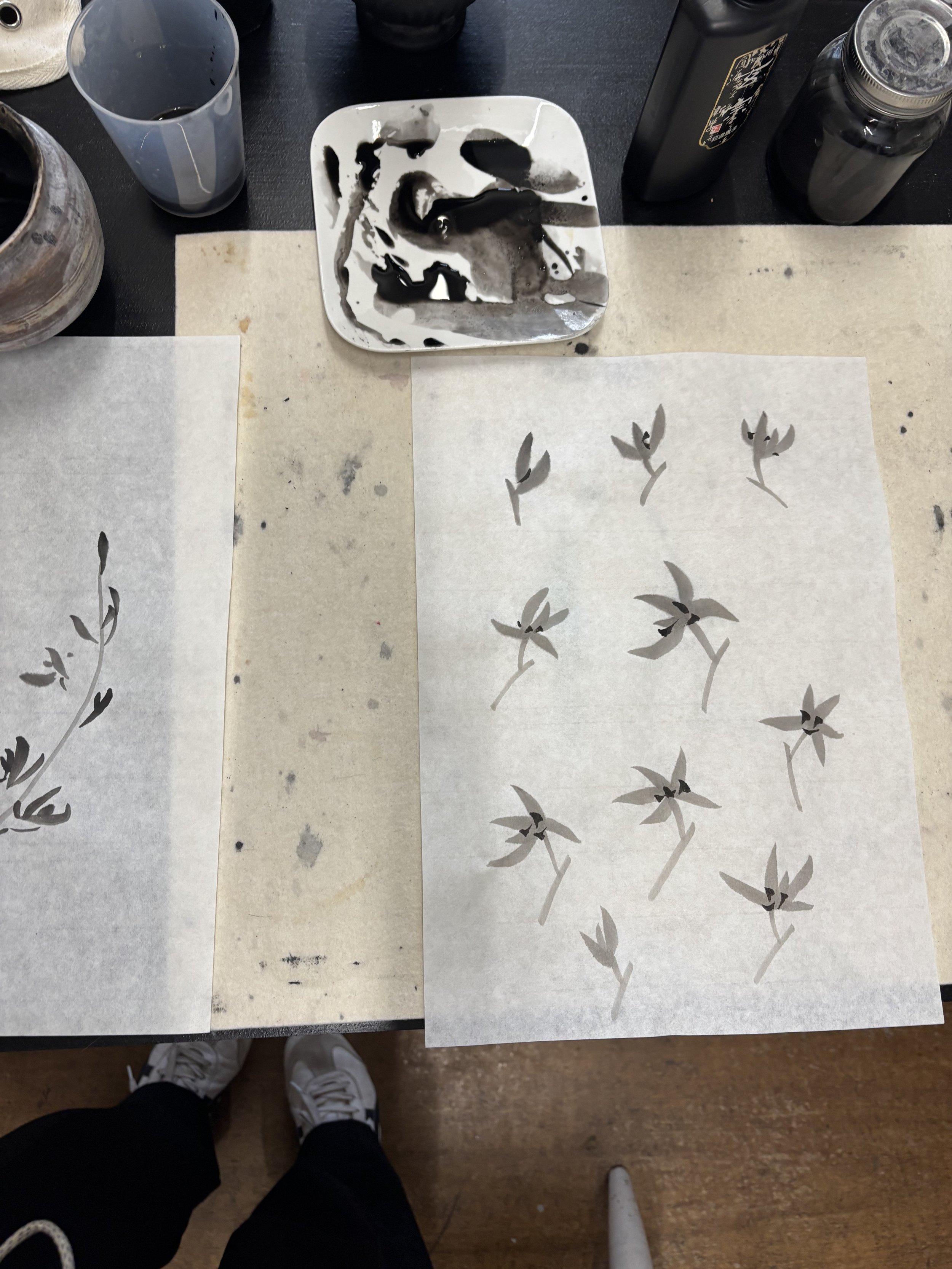
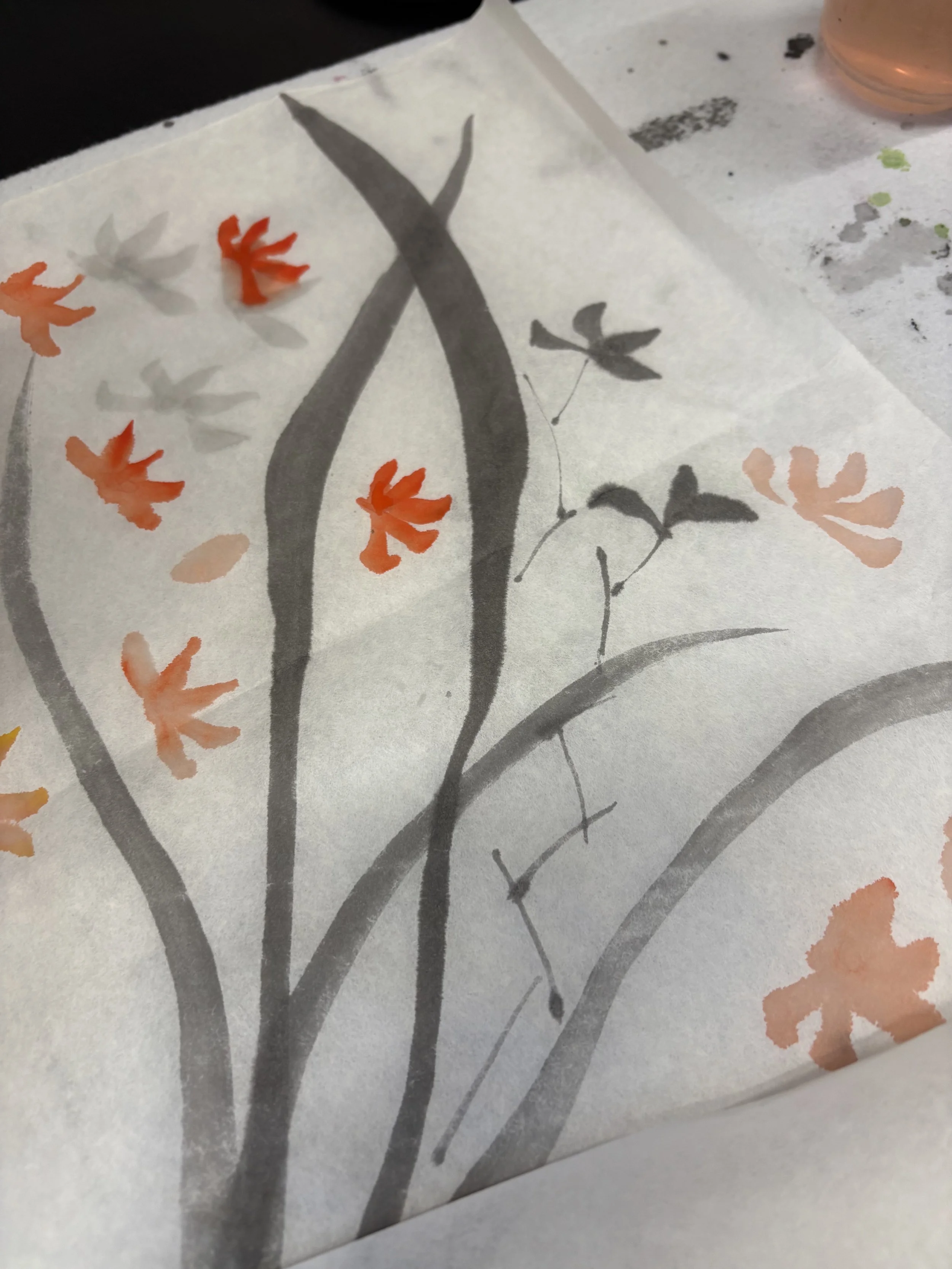
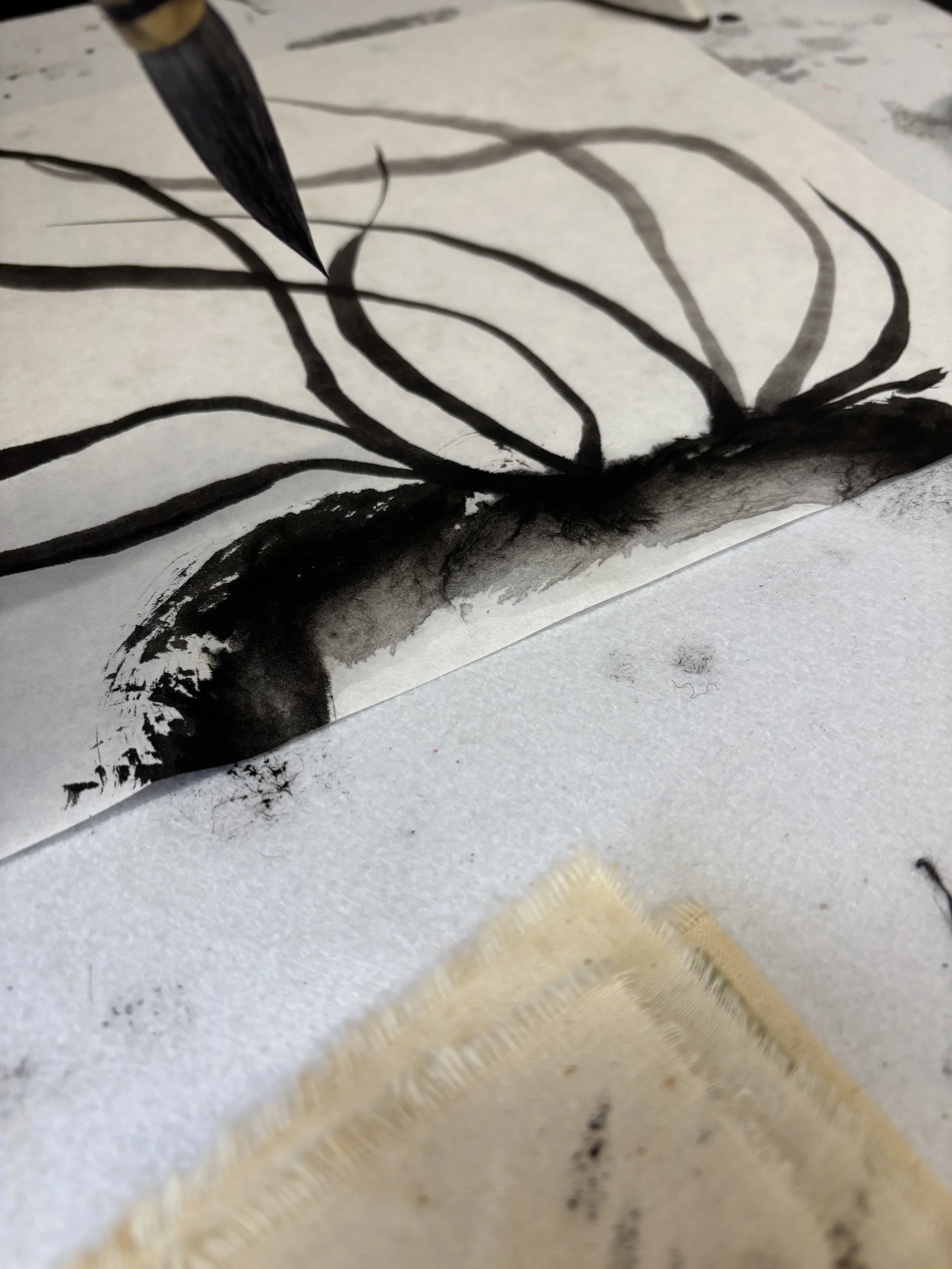
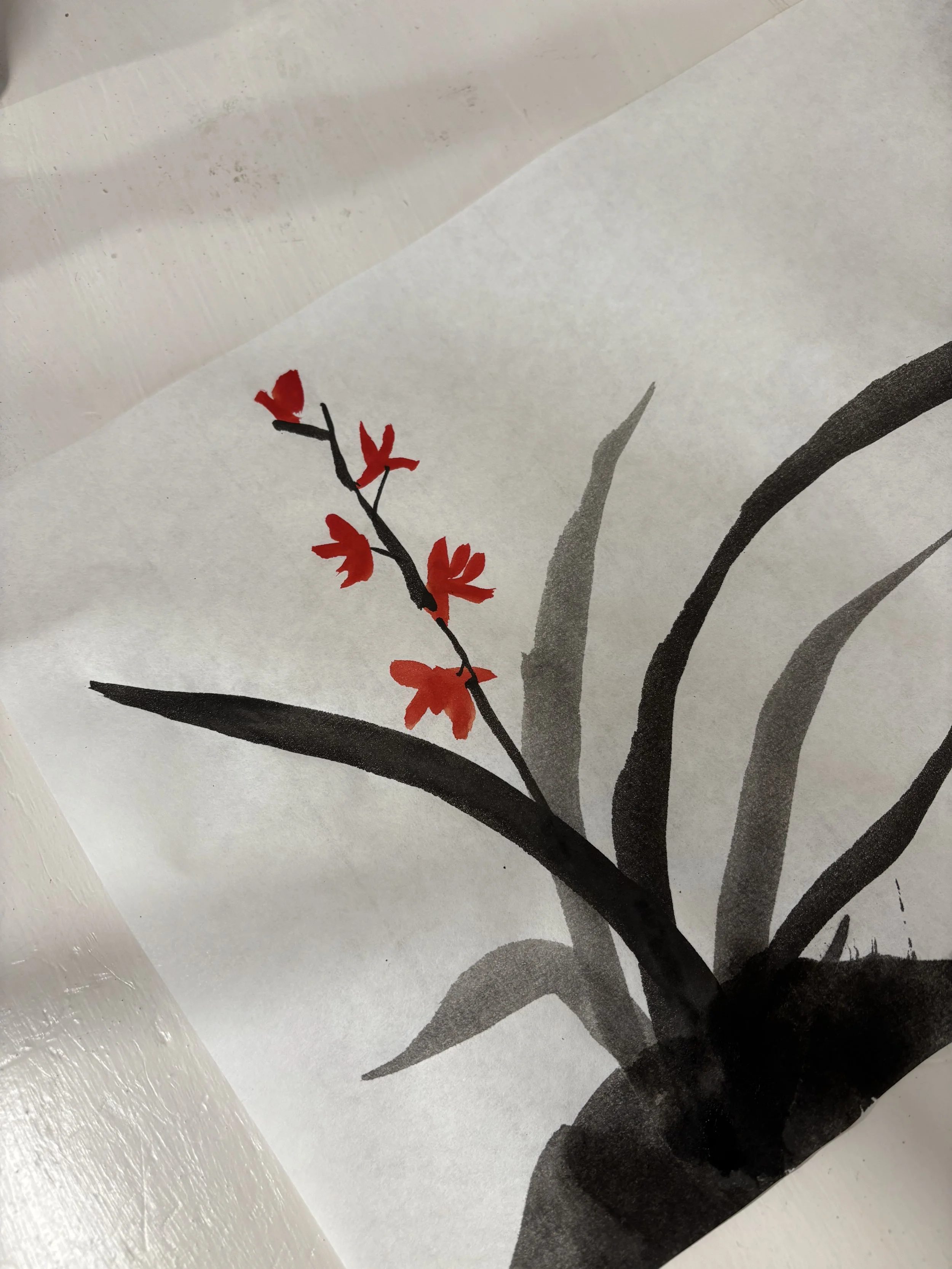
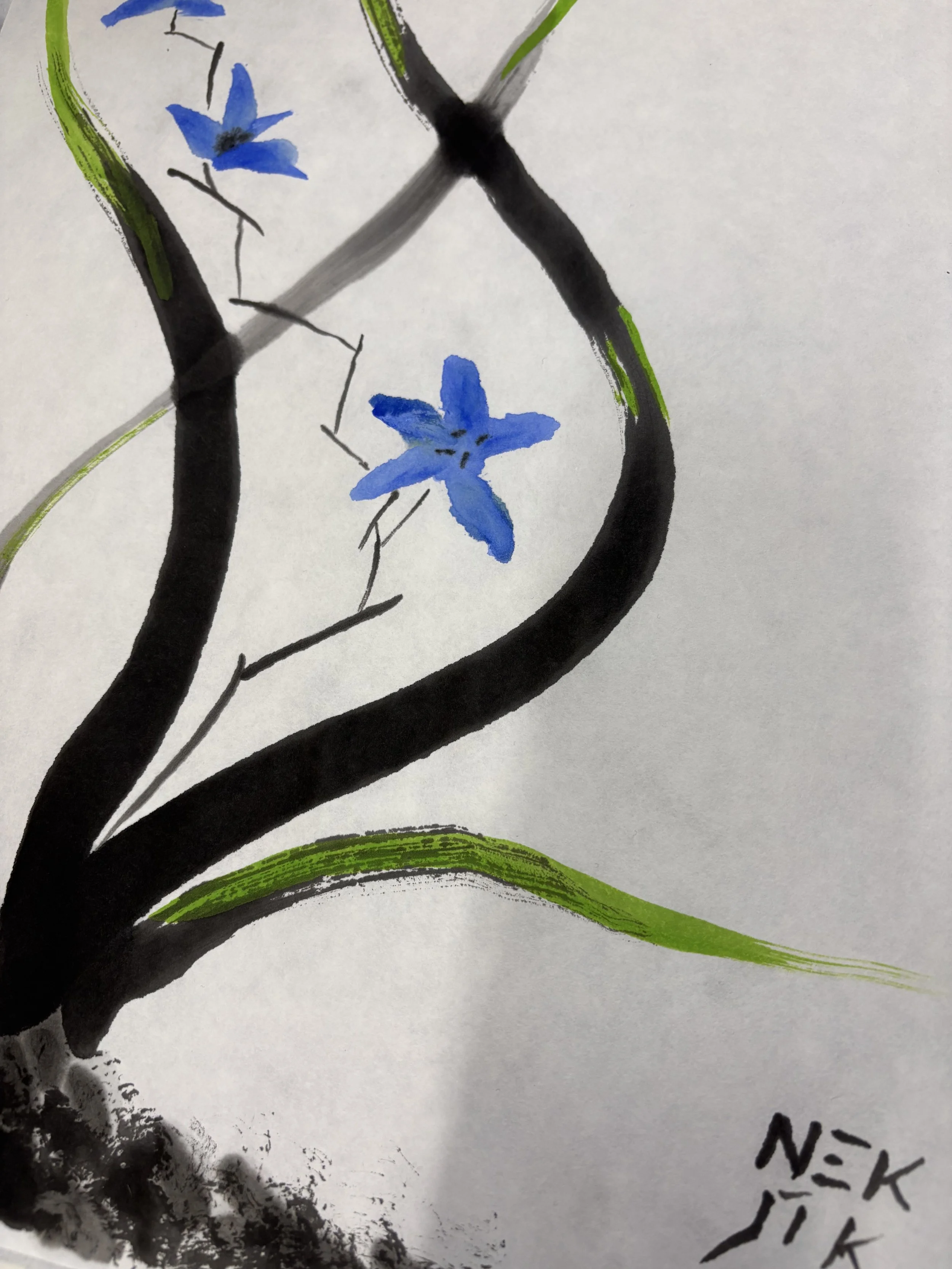
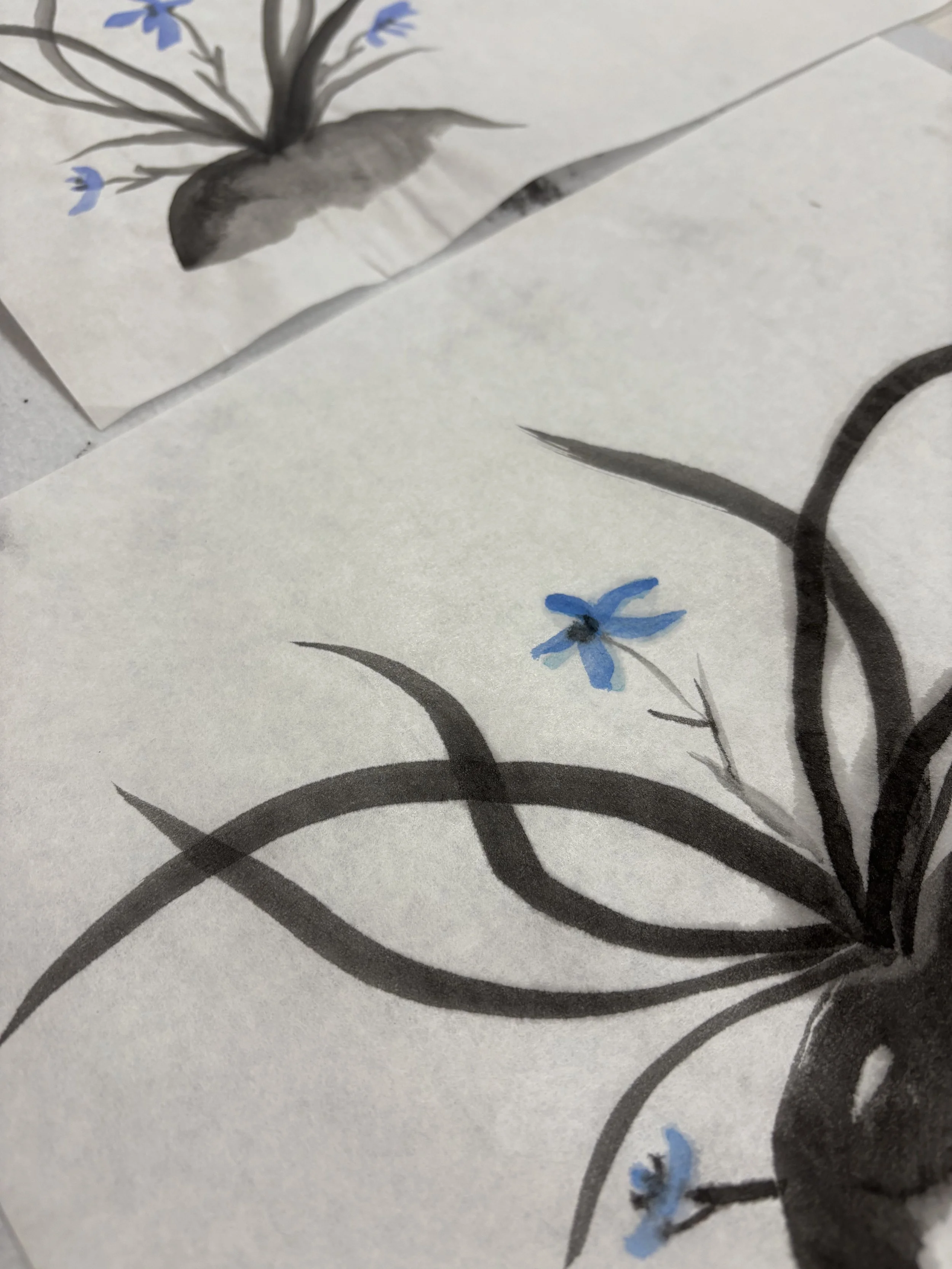
In the final session of the Four Noble One sessions, we focused on learning how to paint orchids. While the brush techniques can mostly be applied from what we have learned in previous sessions, the main challenge lies in composing the leaves in a balanced and natural way.
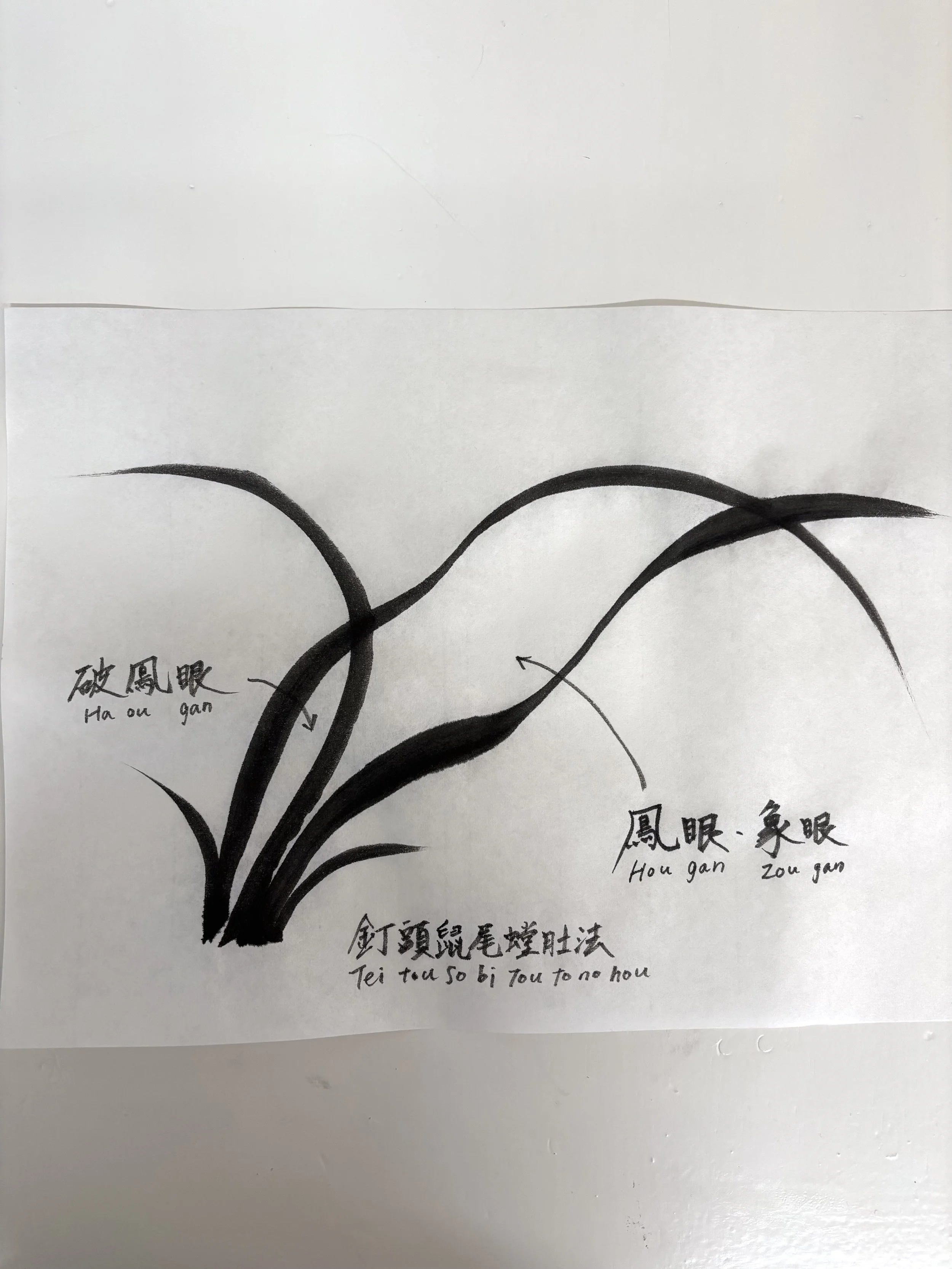
When painting the leaves, the base is drawn like a nail head, the middle bulges like a mantis’s abdomen, and the tip tapers like a mouse’s tail. This brush method is called “Tei-tou-sobi-touroudo (釘頭鼠尾蟷螂肚)”.
It is also important to cross the leaves within the composition. The space formed by the crossing resembles the eye of an elephant or a phoenix, and is called “Zou-gan (象眼):Elephant Eye” or “Hou-gan(鳳眼):Phoenix Eye ”. Adding another leaf into this space is called “Ha-ou-gan (破鳳眼): Breaking the Phoenix Eye”. Following these rules gives the orchid leaves a natural rhythm and balance.
What we learned in this session is not only applicable when painting orchids, but can also be applied to future ink paintings. Being aware of leaf crossings and rhythmic flow helps create balanced compositions with any motif. These traditional rules act like a visual grammar in painting, and knowing them allows one to enjoy and understand ink paintings on a deeper level.
蘭 — 春の気配と優雅さを学ぶ
蘭は四君子(梅・蘭・竹・菊)の一つで、春を象徴するモチーフとして古くから東アジアの墨絵や文人画に描かれてきました。野にひっそりと咲くその姿は、華やかさではなく静かな気品や優雅さ、純粋さを表します。また、控えめでありながら、葉や花に美しいリズムと生命の気配を感じさせることから、春の訪れや新しい生命への喜びも象徴しています。こうした意味を理解することで、蘭の見え方や描き方がより深く感じられます。
四君子の最後の回では、蘭の描き方を学びました。蘭の筆法自体は、これまでの回で学んだ技術をほぼ応用できますが、特に注意が必要なのは構図の組み立て方です。
葉の形は、根元を釘の頭のように打ち、中央をカマキリのお腹のようにふくらませ、先端をねずみの尾のように細く収めます。この筆法は「釘頭鼠尾蟷螂肚(ていとうそびとうろうど)」と呼ばれます。構図の中で葉と葉を交差させることも重要です。交差してできる空間は象の眼や鳳凰の眼に似ていることから、「象眼(ぞうがん)」「鳳眼(ほうがん)」と呼ばれます。さらに、その空間にもう一本の葉を入れる技法は「破鳳眼(はおうがん)」と呼ばれます。こうしたルールを意識することで、蘭の葉に自然なリズムとバランスを持たせることができます。
この回で学んだことは、蘭を描くときだけでなく、今後の墨絵作品でも活かせます。葉の交差やリズムを意識することで、どんなモチーフでもバランスの取れた構図が作れるようになります。こうした決まりごとは、絵の中の視覚的な文法のようなもので、知っていると墨絵を見るときもより味わい深く感じられます。アジア人でもきっとこのようなことを知っている人は少ないと思いますが、オランダで生まれ育った方がこのようなことを学びながら、描く姿をみるたびに、感激しています。次は鳥か魚を描こうと思っています:)